Rescuers Save Family Pinned Underneath Commercial Dump Truck
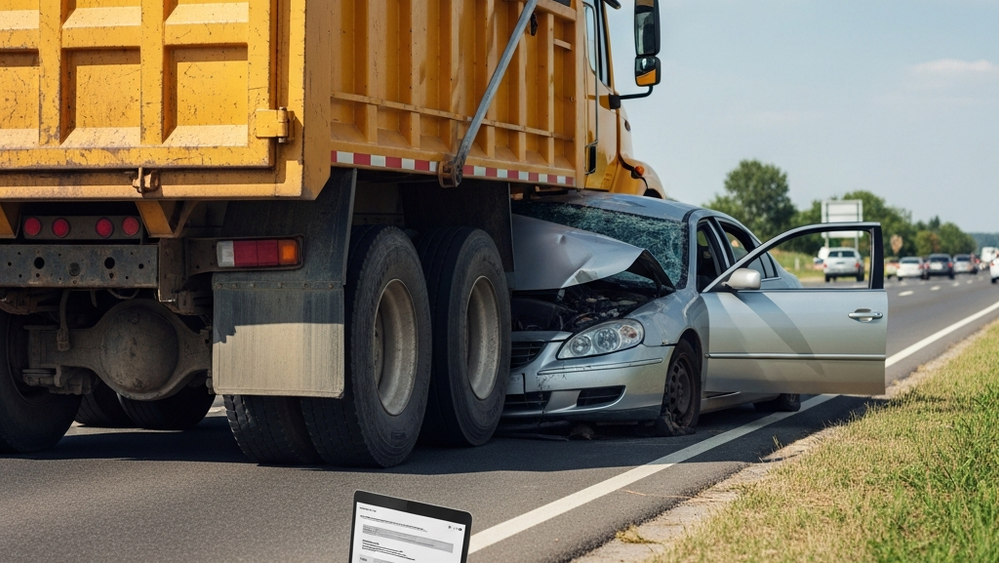
A horrifying scene unfolded recently when a family vehicle collided with a commercial dump truck, leaving the occupants trapped beneath the massive vehicle. According to recent reports, emergency responders worked feverishly to extricate the victims from the wreckage after the smaller passenger car became wedged under the truck’s rear. Such accidents, often referred to as underride crashes, are notoriously dangerous because the car’s safety features, like crumple zones and airbags, may not deploy effectively. Witnesses described a chaotic rescue operation requiring specialized heavy-lifting equipment to stabilize the dump truck before the family could be reached. Fortunately, initial reports indicate that while the damage to the vehicle was catastrophic, the rescue effort was successful in safely removing all trapped family members from the crushed sedan.
Affected by a Motor Vehicle Issue?
Our specialized tool can help you estimate the potential worth of your case based on current laws and precedents.
Establishing Liability in Complex Underride Collisions
When a passenger vehicle ends up underneath a commercial truck, the legal liability often extends beyond just the driver to the trucking company itself. Investigators must look at whether the dump truck was equipped with a functional rear underride guard as required by the National Highway Traffic Safety Administration. If the guard was missing, poorly maintained, or improperly designed, the company could be held strictly liable for the severity of the injuries sustained. Furthermore, driver fatigue, improper lane changes, or mechanical failures like brake malfunctions often play a central role in these high-stakes collisions. Establishing a "case within a case" is crucial, as outlined in our guide on attorney malpractice, to ensure every negligent party is identified and held accountable.
Essential Steps for Victims Following a Trucking Accident
The moments following a major collision are critical for both your physical recovery and any future legal claims you may pursue. Victims should prioritize immediate medical evaluations even if injuries seem minor at first, as internal trauma often takes hours or days to manifest fully after a significant impact. Securing evidence at the scene, such as photos of skid marks, the truck’s position, and company identification numbers, is vital for building a strong foundation for your legal case. Following a car accident legal protection guide can help ensure you do not miss any critical documentation requirements during the initial 24 hours of the recovery process. To get an immediate sense of the potential recovery for your specific situation, you can use our free case calculator to estimate your claim's value.
Understanding the High Value of Commercial Truck Settlements
Settlements involving commercial vehicles are typically much higher than standard car accidents because of the severe nature of the injuries and the larger insurance policies involved. Victims may be entitled to recover damages for medical expenses, long-term physical rehabilitation, lost earning capacity, and significant pain and suffering. It is important to understand why truck accident settlements pay more than typical passenger car crashes, often due to federal insurance mandates for commercial carriers. Legal experts also consider non-economic damages, such as the profound psychological trauma associated with being trapped in a vehicle for an extended period. Accurate documentation of all out-of-pocket costs and missed work days is essential to maximizing the final settlement amount you receive.
Federal Regulations and State Negligence Standards
Commercial dump trucks are subject to rigorous safety standards overseen by the Department of Transportation. These regulations govern everything from how many hours a driver can be behind the wheel to the frequency of vehicle inspections and the maintenance of safety equipment like underride guards. According to safety protocols from the Occupational Safety and Health Administration, employers have a non-negotiable duty to maintain equipment that protects both workers and the public. Victims must also be mindful of the statute of limitations in their specific state, as missing a filing deadline can permanently bar any recovery. Proving a breach of duty requires demonstrating how the driver or company failed to meet the legal standards of negligence.
Take the First Step Toward Your Family's Recovery
Recovering from a catastrophic crash underneath a dump truck is a long and difficult journey that no family should have to face without professional guidance. Our team provides the resources necessary to understand the true financial impact of your injuries and the legal paths available for achieving justice. By acting quickly, you can preserve the evidence needed to hold negligent trucking companies and their insurers accountable for their actions. If you were injured in the Golden State, we encourage you to try our California motor vehicle accident calculator to see what your claim might be worth. Do not let the insurance companies dictate your future; use our tools to empower your legal journey and secure the compensation your family deserves today.
Disclaimer: This blog post is for informational purposes only and does not constitute legal advice. For specific legal guidance regarding your situation, please consult with a qualified attorney.