
Injury Guide

Broken Bone Settlement Amounts: A Fracture-by-Fracture Guide

“A broken bone” is not one injury — it is a family of claims that settle very differently. A hairline wrist fracture in a cast and a surgically plated femur are both “broken bones,” separated by an order of magnitude in treatment, recovery, and value. This guide sorts the fractures insurers see most, and the three questions that price every one of them.

Quick answer

Three questions price a fracture claim: which bone, did it need surgery, and is anything permanent (hardware, reduced motion, arthritis risk). Simple fractures treated with casting are commonly cited in the low-to-mid five figures in published settlement literature; surgically repaired fractures with plates, screws, or rods are reported meaningfully higher, and multi-fracture or joint-involved injuries higher still. The free calculator prices your specific treatment and state.

Free · Private · Takes about 2 minutes · No sign-up

By the CaseValue.law Editorial TeamLast updated and source-checked July 20, 2026How we estimate

What drives the value: severity

Most injury settlements are negotiated from a simple frame: economic damages (medical bills plus lost wages, the “specials”) multiplied by a severity factor, then adjusted for fault-sharing and state rules. Our methodology uses severity bands of roughly 1.5x (minor), 2.5x (moderate), 4x (severe), and 6x (catastrophic), with case-specific modifiers layered on top. Here is what those bands mean for this injury specifically:

Minor (simple, closed, casted)

A clean break that stays aligned — treated with a cast or boot, healing on a normal timeline with full recovery expected. Think undisplaced wrist, hand, or foot fractures.

Roughly the 1.5x band; few modifiers apply.

Moderate (displaced or reduced)

The bone shifted and needed reduction (setting), with longer immobilization, physical therapy, and real time off work. Full recovery likely but slower.

Roughly the 2.5x band; ongoing treatment supports the higher end.

Severe (surgical / ORIF, joint involvement)

Open reduction internal fixation — plates, screws, or rods — or a fracture line into a joint surface. Adds surgical specials, hardware, and post-traumatic arthritis risk.

Roughly the 4x band; permanent-injury and hospitalization modifiers commonly apply.

Catastrophic (multiple, open, or complicated)

Multiple fractures, open (compound) fractures with infection risk, crush patterns, nonunion requiring revision surgery, or fractures with nerve or vascular damage.

The 6x band, with future-surgery and earning-capacity damages in play.

Which best describes the injury?

Your own bills, wages, and recovery set the number. The free calculator applies the severity bands and your state’s rules in about two minutes.

What's My Case Worth?

Why one fracture settles for 10x another
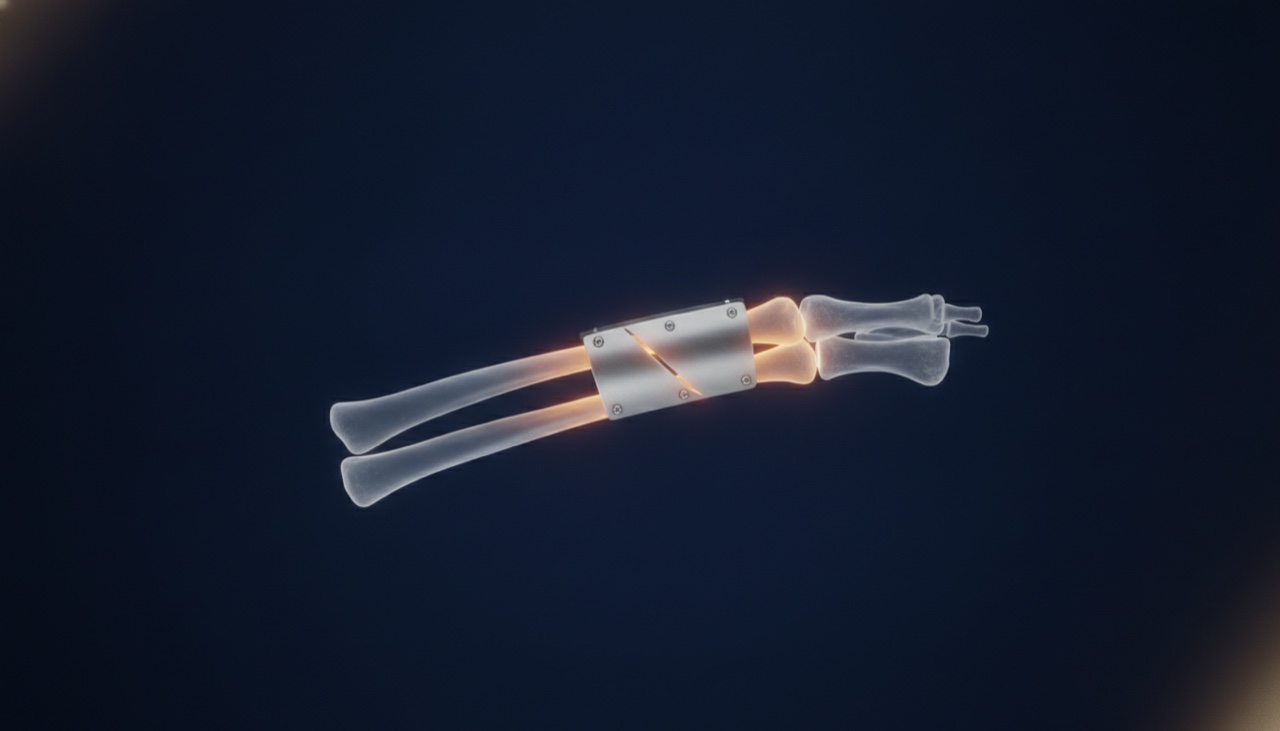
Fracture claims have a built-in advantage over soft-tissue claims: the injury photographs. An X-ray showing a break ends the did-it-happen argument on day one. What remains is entirely a severity argument, and severity in fracture claims is concrete: surgical versus non-surgical, joint-involved versus shaft, hardware versus no hardware, complications versus clean healing.

That is why the same phrase — “I broke my arm” — can describe a claim that resolves in the low five figures or one that reaches multiples of that. The three questions that separate them: Which bone (a femur is not a finger)? Did it need surgery (ORIF roughly doubles the medical story)? And is anything permanent — retained hardware, lost range of motion, or a joint surface that will develop post-traumatic arthritis years from now?

Upper body: the fractures insurers see most

Mechanism, typical treatment, and what moves value for each. Workers’ comp body-part categories noted where they apply.

  • Wrist (distal radius)

    The classic fall-on-outstretched-hand injury from slips and bike accidents. Undisplaced breaks cast well; displaced ones often need plating (ORIF). Grip strength and rotation losses matter enormously for manual occupations — comp category: hand/wrist/fingers.

  • Hand and fingers

    Small bones, outsized stakes: function loss percentage drives value, and workers’ comp states pay scheduled awards per digit. A stiff finger for a surgeon or mechanic is an earning-capacity claim, not a small claim.

  • Collarbone (clavicle)

    Common in car, motorcycle, and bicycle crashes from belt or direct impact. Most heal without surgery; badly displaced ones get plated. Visible deformity (“bump”) can add a modest disfigurement element.

  • Arm (humerus) and elbow

    Elbow fractures are joint fractures — stiffness is the enemy, and permanent loss of extension is common enough that it belongs in the demand. Humeral shaft fractures risk radial-nerve involvement (wrist drop), which changes the claim class.

  • Ribs

    No cast exists: treatment is pain management and time, so specials run low while suffering runs high — a mismatch worth documenting through pain records and breathing-complication notes. Multiple ribs or a punctured lung reclassify the claim upward; in older adults, rib fractures carry documented complication risks.

Lower body and high-energy fractures

  • Hip (proximal femur)

    The premises-liability signature injury — most often an older adult falling on a hazard. Nearly always surgical (pinning or replacement), with documented mortality and independence consequences in the elderly that make these among the most serious fall claims. Comp category: hip/pelvis.

  • Femur (thigh)

    The strongest bone in the body — breaking it takes high energy (car and motorcycle crashes), and treatment is almost always a surgical rod. High specials, long rehab, and permanent hardware make femur claims consistently upper-band.

  • Tibia / fibula (lower leg)

    Common in motorcycle, pedestrian, and fall-from-height injuries. Open tib-fib fractures are among the most infection-prone; expect external fixation or rodding, months of restricted weight-bearing, and real permanency questions.

  • Ankle (bimalleolar / trimalleolar)

    A joint fracture that frequently needs plates on both sides. Post-traumatic arthritis is common enough that future ankle-fusion or hardware-removal surgery belongs in the damages conversation, not just past bills.

  • Foot (calcaneus and midfoot)

    The heel bone breaks in falls from height — a ladder-and-scaffolding injury, which is why calcaneus fractures are a workers’ comp staple. Notoriously painful, slow to heal, and career-altering for anyone who works standing.

  • Pelvis

    High-energy crashes and crush events. Pelvic fractures travel with internal-injury risk (bleeding, organ damage) and long non-weight-bearing recoveries — claims that should never be priced from the fracture alone.

  • Vertebral compression fractures

    A crushed vertebra from a crash or fall. Distinct from disc herniation (see that guide) — but when either travels with neurological symptoms, the claim escalates toward the spinal-injury track.

Hardware, joints, and the permanence question

Surgical fixation changes a fracture claim twice. Immediately, it adds the surgery itself — anesthesia, hospitalization, implants, months of therapy — which multiplies the economic damages. Permanently, it leaves metal in the body: plates and screws that can require a second removal surgery, cause cold sensitivity or prominence pain, and complicate any future injury to the same site. A demand that prices only the first surgery gives away the second.

Joint involvement is the other quiet value driver. When a fracture line crosses a joint surface — ankle, elbow, wrist, knee — even a perfect surgical repair leaves cartilage damaged, and post-traumatic arthritis develops on a timescale of years. Treating physicians will often document the risk in prognosis notes if asked; that sentence in the record is what supports future-damages math, so make sure someone asks.

Reported ranges and an illustrative example

Published settlement literature bands fracture outcomes by treatment intensity. Reported figures, not predictions:

  • Casted, uncomplicated fractures

    Commonly cited in the low-to-mid five figures — ER, imaging, casting, follow-ups, and modest lost work.

  • Surgical (ORIF) fractures

    Reported meaningfully higher — surgical specials plus the severe band plus permanency arguments move these claims into a different tier.

  • Multiple, open, or complicated fractures

    Published reporters show these claims valued around complications and future surgeries rather than the original break — nonunion, infection, and nerve involvement each rewrite the number.

Illustrative example — not a prediction
Medical specials (ER, surgery/ORIF ankle, hardware, 16 PT sessions)
$52,000
Lost wages (9 weeks off work)
$8,100
Economic damages (specials)
$60,100
Severity band applied
Severe (≈4x)
Illustrative claim frame
≈ $240,400

Real outcomes adjust for comparative fault, policy limits, and state rules — and surgical claims in particular are frequently limited by available coverage rather than by their math. The frame shows the negotiation logic, not a promise.

Protecting a fracture claim

  1. 1

    Get the imaging and keep copies

    Your X-rays and operative reports are the spine of the claim. Request copies as you go — retrieving them years later is harder.

  2. 2

    Complete the therapy course

    Range-of-motion outcomes are measured at discharge. Stopping early both worsens your recovery and hands the insurer a mitigation argument.

  3. 3

    Document function, not just pain

    What you cannot lift, grip, climb, or stand through — tied to your actual job duties. Fracture value lives in function loss.

  4. 4

    Ask about permanency at discharge

    Hardware plans, arthritis risk, and any permanent restrictions — in writing, from the treating physician. This is the sentence that funds future damages.

  5. 5

    Track every out-of-pocket cost

    Crutches, braces, rides to therapy, help you paid for at home. Small receipts are still specials.

  6. 6

    Mind the deadline

    Two to three years in most states, shorter in a few — and much shorter with government defendants. The state module below shows yours.

Your state changes the rules

Fracture claims answer to your state’s filing deadline, comparative-fault rule, and — for workplace breaks — comp benefit rates and scheduled awards. Pick your state to see the numbers.

Car Accident claims: the national picture

  • Filing deadlines range from 1 to 6 years by state (average 2.7)
  • 12 states use no-fault auto insurance, which changes when you can claim pain and suffering

Workers' Compensation claims: the national picture

  • Filing deadlines range from 0.25 to 6 years by state (average 1.8)
  • Typical wage-replacement rate is about 68% of your average weekly wage
  • State maximum weekly benefits average about $1,243, but vary widely

Which case type is your potential case?

The same situation runs through different legal lanes depending on how it happened — and the lane changes what you can recover.

Frequently Asked Questions

Keep reading

Sources & review

Information on this page reflects laws and published figures as of 2026-07-20. This is general information, not legal or medical advice, and not a prediction for any potential case. Verify current rules with a licensed attorney before making decisions. Learn about our methodology.

See what your potential case may be worth

Your own medical bills, lost wages, and recovery matter more than any average. The free calculator applies your state’s rules to your answers — private, instant, no sign-up.

What's My Case Worth?

Prefer to talk it through? Call (866) 575-2304 for a free potential-case review.

Attorney Advertising · CaseValue.law is operated by Marv Media LLC (dba Lead Vera Media), a marketing company — not a law firm and not a lawyer referral service. Attorneys pay to advertise here and to receive the inquiries this site generates; information you submit may be sold or transferred to Copper State Law Firm. We do not recommend or select any attorney for you, and we are not affiliated with any government agency.