
The six-level bite scale, translated
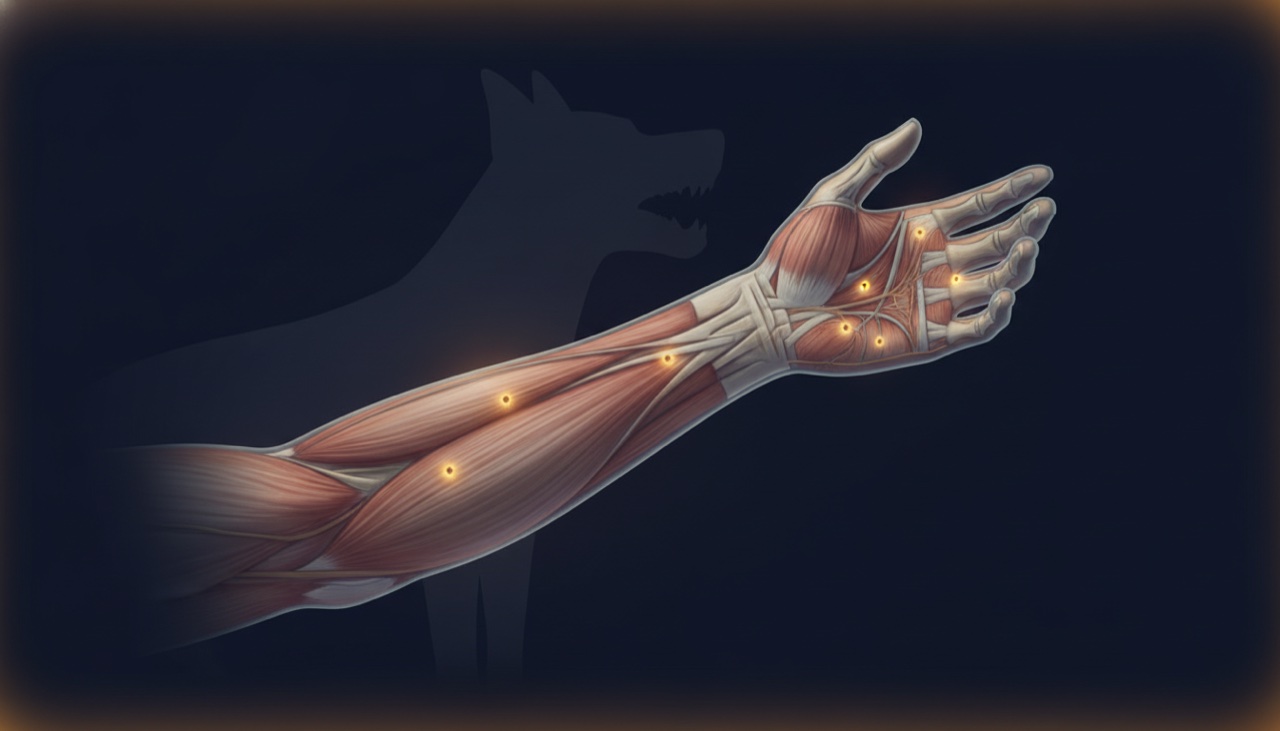
The scale most professionals use descends from veterinary behaviorist Dr. Ian Dunbar. Level 1: aggressive behavior, no skin contact. Level 2: teeth touch skin, no puncture. Level 3: one bite, shallow punctures. Level 4: one bite with deep punctures — deeper than half the length of the dog’s canine tooth — often with bruising from clamping or shaking. Level 5: multiple Level-4 bites in one attack. Level 6: the victim dies. The scale was built to assess dogs, but it maps cleanly onto how claims get valued, because depth and repetition predict exactly the things damages compensate: tissue damage, infection, scarring, and trauma.
Most bites that become legal claims sit at Levels 3 and 4. Below that, medical costs are usually small (with the important exception of young children, where psychological injury and facial proximity change the analysis). Above it, at Levels 5–6, claims move into reconstructive-surgery and catastrophic territory where the priority is coverage: homeowner’s and renter’s policies, umbrella policies, and sometimes landlord liability all come into play.