Understanding the Disparity in Settlement Values
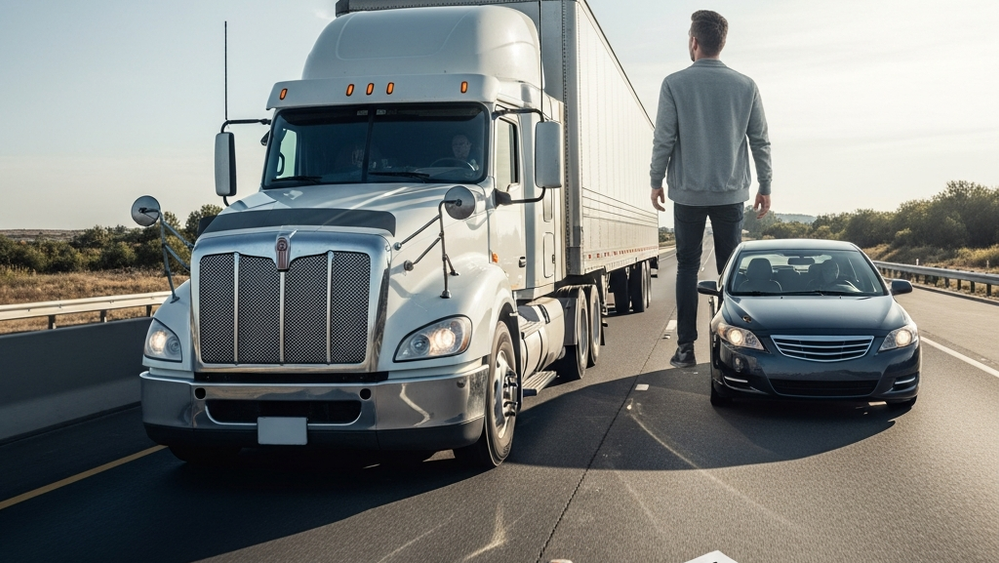
When a passenger vehicle collides with another passenger vehicle, the resulting legal claim is typically straightforward. However, when that same passenger vehicle is struck by a semi-truck, tractor-trailer, or commercial delivery van, the complexity and potential value of the case escalate dramatically. If you have been involved in such an incident, you may wonder why truck accident settlements often reach seven or eight figures while standard car accidents frequently cap at the five-figure mark.
The primary reason for this disparity is not just the size of the vehicles, but the massive legal and financial framework that governs the trucking industry. Commercial trucking is a multi-billion dollar sector regulated by strict federal standards. When these standards are violated, the consequences are catastrophic. Victims of these accidents often face a lifetime of medical expenses, lost wages, and permanent disability. Understanding how these factors influence your claim is the first step in ensuring you receive fair compensation.
Affected by a Legal Tips Issue?
Our specialized tool can help you estimate the potential worth of your case based on current laws and precedents.
The Role of High Insurance Policy Limits
One of the most immediate reasons truck accident settlements are higher than car accident claims is the sheer amount of insurance coverage available. Most personal auto insurance policies carry limits between $25,000 and $100,000. If your damages exceed these limits, you may find yourself in a difficult position, even if you are hit by an uninsured driver.
In contrast, the Federal Motor Carrier Safety Administration (FMCSA) mandates significantly higher insurance minimums for commercial vehicles. Under 49 CFR § 387.9, the following minimum levels of financial responsibility apply:
- Non-hazardous freight moved in vehicles over 10,000 lbs: $750,000
- Hazardous materials: $1 million to $5 million, depending on the substance
- Passenger carriers (buses): $5 million
Because these policy limits are so much higher, there is more "room" for victims to recover the full value of their damages without hitting a policy ceiling. In a standard car accident, even if your case is worth $1 million, you might be limited to the defendant's $50,000 policy. In a trucking case, that $1 million is much more likely to be covered by the carrier's primary or umbrella policies.
Vicarious Liability and Respondeat Superior
In a typical car accident, you usually sue the individual driver. In a commercial truck accident, the legal doctrine of respondeat superior (Latin for "let the master answer") often allows you to sue the trucking company itself. This concept, also known as vicarious liability, holds employers responsible for the negligent acts of their employees committed within the scope of their employment.
Holding a corporation liable is a game-changer for settlement values. Corporations have deeper pockets and larger insurance structures than individuals. Furthermore, a trucking company can be held directly liable for its own negligence, such as:
- Negligent hiring (failing to check a driver's history of DUIs or accidents)
- Negligent training (failing to ensure the driver can handle a heavy rig)
- Negligent supervision (allowing drivers to exceed their legal driving hours)
- Failing to maintain vehicles in a safe condition
This is similar to how liability functions in other professional contexts, such as when a passenger is injured in a rideshare accident, where the corporate relationship between the driver and the platform complicates the insurance landscape.
The Physics of Force: Catastrophic Injury Potential
It is an immutable law of physics: Force equals mass times acceleration. A fully loaded semi-truck can weigh up to 80,000 pounds, while the average passenger car weighs about 4,000 pounds. When these two collide, the car is almost always obliterated. The sheer force involved in these crashes means that injuries are rarely minor.
While a rear-end collision with another car might result in whiplash or soft tissue damage, the same collision involving a truck often results in:
- Traumatic Brain Injuries (TBIs)
- Spinal cord injuries and paralysis
- Internal organ damage and crushing injuries
- Amputations and loss of limb function
- Severe burns or permanent scarring
The costs associated with these injuries are astronomical. Life-care plans for a paralyzed victim can cost millions of dollars over a lifetime, including 24/7 nursing care, home modifications, and specialized medical equipment. Since the settlement value is tied directly to the cost of care and the severity of the injury, truck accidents naturally yield higher payouts.
Federal Motor Carrier Safety Administration (FMCSA) Regulations
The trucking industry is governed by a complex set of federal laws that do not apply to regular drivers. These regulations are designed to keep the public safe, and any violation can serve as powerful evidence of negligence in a lawsuit. Key regulations include:
- Hours of Service (HOS): Drivers are strictly limited on how many hours they can drive per day and per week to prevent fatigue. FMCSA HOS regulations require drivers to take mandatory breaks and maintain logs.
- Drug and Alcohol Testing: Drivers must undergo pre-employment, random, and post-accident testing.
- Weight and Loading: Overloaded trucks are harder to stop and more likely to roll over.
- Maintenance Standards: Every truck must undergo regular inspections. Failing to fix faulty brakes or worn tires is a direct violation of federal law.
When a lawyer discovers that a trucking company encouraged a driver to falsify logs to meet a deadline, it can lead to punitive damages—additional money awarded to punish the company for egregious behavior—which further inflates the settlement value.
Multiple Liable Parties Increase Payout Potential
In a car accident, fault usually lies with one or two drivers. In a truck accident, the web of liability can extend to four or five different entities. Each of these entities likely has its own insurance policy, creating multiple avenues for compensation. Liable parties may include:
- The Truck Driver: For speeding, distracted driving, or driving under the influence.
- The Trucking Company: For poor training or maintenance.
- The Cargo Loader: If shifting cargo caused the truck to tip or prevented it from braking correctly.
- The Maintenance Facility: If a third-party mechanic failed to properly repair the truck's steering or brakes.
- The Manufacturer: If a defective part, like a tire blowout or brake failure, caused the crash.
By identifying multiple defendants, your legal team can stack insurance policies to ensure that your total damages are fully covered. To understand how these factors affect your specific claim, you can use a motor vehicle accident calculator to estimate the potential value based on your medical bills and lost wages.
The "Black Box" and Electronic Evidence
Proving fault in a car accident often relies on witness statements and police reports. In truck accidents, we have access to a wealth of electronic data that acts as a "silent witness." Most modern commercial trucks are equipped with Electronic Control Modules (ECMs) or "Black Boxes."
This data provides an objective record of the seconds leading up to a crash, including:
- The speed of the truck at the moment of impact
- When and if the brakes were applied
- The throttle position and engine RPMs
- Steering angles and sudden maneuvers
- GPS location and duration of the trip
This evidence is incredibly difficult for the defense to dispute. If the data shows the truck was traveling 75 mph in a 55 mph zone and never hit the brakes, the liability is clear. However, this data must be preserved quickly through a "spoliation letter," as trucking companies are often allowed to overwrite or destroy these records after a certain period if a legal hold is not placed on them.
Complex Litigation and Corporate Defense Strategies
Trucking companies do not pay out large settlements willingly. They often have rapid-response teams—investigators and lawyers who arrive at the scene of a crash within hours to begin building a defense. They may try to steer the narrative, blame the weather, or even blame the victim.
Because the stakes are so high, these cases involve expert witnesses that are rarely seen in small car accident cases. These may include:
- Accident reconstructionists who use physics to recreate the crash
- Vocational experts who testify about your inability to work
- Life-care planners who project future medical costs
- Bio-mechanical engineers who explain how the forces of the crash caused your specific injuries
This complexity requires a higher level of legal expertise. In some cases, if a driver was fired for reporting safety issues that eventually led to a crash, there may even be whistleblower implications, showing a systemic culture of safety violations within the company.
Economic vs. Non-Economic Damages in Trucking Claims
The total value of a settlement is divided into two main categories: economic and non-economic damages. In trucking cases, both are typically higher than in car accidents.
- Economic Damages: These are objective, calculable losses. They include hospital bills, surgery costs, physical therapy, and lost future earning capacity. Because truck accidents often lead to permanent disability, the "lost earning capacity" portion can be massive—potentially millions of dollars if a young professional can no longer work.
- Non-Economic Damages: These are subjective losses, such as pain and suffering, emotional distress, loss of enjoyment of life, and loss of consortium (the impact on the relationship with a spouse). Juries tend to award much higher non-economic damages in truck accidents because the trauma of being hit by a massive vehicle is seen as more severe than a standard "fender bender."
The Impact of State Laws and Comparative Negligence
Where your accident happens matters just as much as how it happened. Different states follow different rules regarding fault. For instance, in a "pure comparative negligence" state like California or New York, you can recover damages even if you were 99% at fault (though your award is reduced by your percentage of fault). In "contributory negligence" states, if you are even 1% at fault, you may be barred from recovering anything.
Trucking companies often try to shift a small percentage of fault onto the passenger vehicle driver—claiming they were in the truck's blind spot or followed too closely. An experienced lawyer will fight these tactics to protect the settlement value. To get a better sense of how your local laws might impact your recovery, you can check a state-specific motor vehicle accident calculator.
The Importance of Medical Documentation and Future Care
In a standard car accident, you might finish treatment in a few months. In a truck accident, you may still be in the hospital months after the incident. For a settlement to be truly comprehensive, it must account for future medical needs. If you settle your case before you know the full extent of your injuries, you cannot go back for more money later.
This is why medical experts are vital. They can testify that you will need a knee replacement in ten years due to the crash, or that you will require ongoing psychological counseling for PTSD. These future projections are a standard part of truck accident litigation and are a significant driver of high settlement totals. This process is far more rigorous than the typical medical review for a car accident claim, where the focus is usually on past bills only.
Wrongful Death Claims in Trucking Accidents
Tragically, truck accidents are far more likely to result in fatalities than car accidents. According to the National Highway Traffic Safety Administration (NHTSA), thousands of people die in commercial vehicle crashes every year. When a life is lost, the claim transitions into a wrongful death lawsuit.
Wrongful death settlements in trucking cases are among the highest in the legal world. They account for:
- The loss of the deceased’s expected lifetime earnings
- Loss of inheritance for heirs
- Loss of companionship, guidance, and care
- Funeral and burial expenses
- The pain and suffering the deceased felt before they passed
These cases are emotionally taxing and legally dense, requiring a deep dive into the financial contributions the victim made to their family and the profound void left by their absence.
Why You Need specialized Legal Representation
You would not go to a general practitioner for heart surgery; similarly, you should not hire a general personal injury lawyer for a complex trucking case. The rules, the evidence, and the defense tactics are entirely different. A specialist knows how to cross-examine a trucking executive, how to interpret an ELD log, and how to spot a "shell company" designed to shield a carrier from liability.
They also understand the nuances of related fields. For example, if your injuries were exacerbated by a medical error during your post-accident surgery, they will know how to distinguish between the truck accident claim and a potential medical malpractice issue. This holistic view of your legal situation ensures that no stone is left unturned in your pursuit of justice.
Negotiating with Corporate Insurance Adjusters
Insurance adjusters for trucking companies are the "all-stars" of the insurance world. They are highly trained to minimize payouts. They may offer a quick settlement shortly after the accident, hoping you will take it before you realize the full extent of your injuries or the true value of your claim. This is a common trap.
Once you hire an attorney, the insurance company knows the "games" are over. A lawyer will handle all communications, preventing you from saying something that could be used against you. They will build a "demand package" that presents a mountain of evidence, making it clear to the insurer that if they do not settle for a fair amount, they will face an expensive and risky trial.
Conclusion: Calculating Your Case Value
Comparing truck accident settlements to car accidents is like comparing a small business dispute to a corporate merger. The scale, the regulations, and the stakes are exponentially higher. Because of the high insurance limits, the severity of the injuries, and the multiple parties involved, truck accident victims are often entitled to significant compensation that can provide financial security for the rest of their lives.
If you or a loved one has been injured in a collision with a commercial vehicle, do not settle for less than your case is worth. Use our tools to understand the variables that drive settlement values and ensure you have the information necessary to make the best decisions for your future.
To get started, use our free motor vehicle accident calculator to evaluate the potential value of your claim today.
Disclaimer: This blog post is for informational purposes only and does not constitute legal advice. For specific legal guidance regarding your situation, please consult with a qualified attorney.