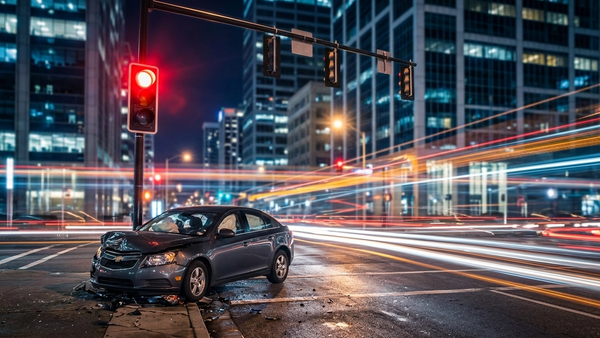
Understanding Your Rights as a Rideshare Passenger
Ridesharing has fundamentally changed the way we navigate urban environments, providing convenience at the touch of a button. However, with millions of Uber and Lyft rides occurring daily, accidents are an inevitable reality. If you are injured while riding in a vehicle operated by a Transportation Network Company (TNC), you may find yourself in a complex legal landscape. Unlike a standard car accident involving two private citizens, a rideshare crash involves a multi-billion dollar corporation, their specialized insurance carriers, the driver’s personal insurance, and potentially third-party motorists.
As a passenger, you are almost never at fault for the collision. Whether your driver ran a red light or another vehicle rear-ended your car, you have a legal right to seek compensation for your medical bills, lost wages, and pain and suffering. The primary question is not whether you can recover damages, but rather which insurance policy is responsible for paying them. This guide explores the nuances of rideshare liability to help you understand how to maximize your claim value.
Affected by a Legal Tips Issue?
Our specialized tool can help you estimate the potential worth of your case based on current laws and precedents.
The Legal Status of Rideshare Drivers
One of the most significant hurdles in suing companies like Uber or Lyft directly is the legal classification of their drivers. Most rideshare companies classify their drivers as independent contractors rather than employees. This distinction is critical because of a legal doctrine known as respondeat superior, which generally holds employers liable for the negligent acts of their employees committed within the scope of employment.
Because drivers are categorized as independent contractors, Uber and Lyft often argue they are not vicariously liable for a driver’s individual mistakes. However, this does not mean the companies are shielded from all responsibility. To address the insurance gaps created by this classification, many states have passed laws requiring TNCs to provide specific levels of insurance coverage based on the driver's activity on the app. Organizations like the National Highway Traffic Safety Administration (NHTSA) monitor safety trends in these emerging transit sectors to better understand the risks associated with the gig economy.
The Three Periods of Rideshare Insurance Coverage
Insurance coverage in a rideshare accident is not static; it depends entirely on the driver's status at the exact moment of the crash. Insurance companies divide rideshare activity into three distinct "periods."
- Period 1: The App is On, but No Request is Accepted. If the driver is active on the app and waiting for a ride request, Uber and Lyft provide contingent liability coverage. This typically includes $50,000 per person for bodily injury, $100,000 per accident for bodily injury, and $25,000 for property damage. This usually only applies if the driver's personal insurance denies the claim.
- Period 2: The Driver has Accepted a Request and is En Route. Once a driver accepts a trip and is heading toward the passenger's location, the high-limit insurance policy kicks in. In most states, this is a $1 million liability policy.
- Period 3: The Passenger is in the Vehicle. This is the period most relevant to you. From the moment you enter the vehicle until the moment the ride is ended in the app, you are covered by the TNC’s commercial insurance policy, which typically provides at least $1 million in total liability coverage.
When the Rideshare Driver is at Fault
If your Uber or Lyft driver causes the accident—perhaps by speeding, distracted driving, or failing to yield—the TNC's $1 million liability policy is the primary source of recovery. Because you were a passenger in the vehicle at fault, you would file a claim against the rideshare company's insurance provider (such as Progressive, Allstate, or Liberty Mutual, depending on the region and company).
To prove negligence, you must demonstrate that the driver owed you a duty of care (which is automatic for passengers), that they breached that duty, and that the breach caused your injuries. Common examples of driver negligence include navigating through unfamiliar areas while looking at the app, fatigue from working long hours, or aggressive driving to complete more trips in a shift. Legal definitions of negligence can be found through resources like the Cornell Law School Legal Information Institute.
When the Other Driver is at Fault
Often, the rideshare driver is an innocent party in a collision caused by another motorist. If a third-party driver hits your Uber or Lyft, your first path to recovery is that driver's personal auto insurance policy. However, many drivers carry only the state-minimum liability limits, which may be as low as $15,000 or $25,000. If your injuries are severe—such as spinal cord damage or traumatic brain injury—these limits will be woefully inadequate.
This is where the rideshare company’s policy becomes vital again. Uber and Lyft provide Uninsured/Underinsured Motorist (UM/UIM) coverage, often up to $1 million, for passengers during Period 3. If the at-fault driver has no insurance or if their policy is exhausted before your damages are fully paid, the UM/UIM portion of the Uber or Lyft policy will cover the remaining balance of your claim. To get a better idea of what your specific situation might be worth, you can use a motor vehicle accident calculator.
Can You Ever Sue Uber or Lyft Directly?
While the insurance policy is the standard route for compensation, there are rare instances where you might sue the corporation itself for direct negligence. This usually involves claims of "negligent hiring" or "negligent supervision." If a rideshare company failed to conduct a proper background check and hired a driver with a history of reckless driving or criminal violence, the company could be held directly responsible for their failure to protect passengers.
Furthermore, if a technological glitch in the app itself contributed to the accident—such as an interface that dangerously distracts drivers or provides incorrect navigation into oncoming traffic—a product liability claim might be explored. However, these cases are significantly more difficult to litigate and require extensive discovery of the company’s internal data and hiring protocols.
Identifying All Potential Defendants
In a complex accident, there may be more than two parties involved. A comprehensive legal strategy involves identifying every entity that contributed to the crash to ensure there is enough insurance coverage to pay for your damages. Potential defendants include:
- The rideshare driver (personal and commercial capacity).
- The TNC (Uber, Lyft, or a regional competitor).
- The other motorist involved in the crash.
- The manufacturer of either vehicle (if a mechanical failure like a brake malfunction occurred).
- Government entities (if a road defect or poorly timed traffic light caused the crash).
If you find yourself requiring surgery or long-term medical care due to these injuries, it is important to ensure your medical providers follow the highest standards of care to avoid further complications like anesthesia errors or surgical mistakes, which can further complicate your legal standing.
Common Injuries and Medical Documentation
Rideshare passengers often suffer unique injuries due to their position in the vehicle. Because many passengers are preoccupied with their phones or talking, they are frequently "unprepared" for an impact, meaning they do not brace themselves, which can lead to more severe musculoskeletal damage.
- Whiplash and Soft Tissue Injuries: The most common result of rear-end impacts.
- Traumatic Brain Injuries (TBI): Caused by the head striking a window, seatback, or the sudden acceleration/deceleration forces.
- Fractures: Commonly in the arms, legs, or ribs from impact with the vehicle interior.
- Facial Injuries: If the passenger is thrown forward into the front seat or if glass shatters.
Documentation is the bedrock of any successful claim. You must seek medical attention immediately, even if you feel "fine." Adrenaline can mask pain, and internal injuries may not manifest symptoms for hours or days. A gap in treatment is the most common reason insurance adjusters deny claims, as they will argue that your injuries were either not serious or were caused by a subsequent event. If your medical outcome is not what was expected, it is also useful to understand the difference between medical malpractice and a standard bad outcome, as your legal options may expand.
Evidence to Collect at the Scene
If you are physically able to do so, the moments following a rideshare accident are critical for preserving evidence. Unlike a standard crash, you have access to digital evidence that other drivers do not.
- Screenshot the App: Capture the trip details, the driver’s name, the car’s license plate, and your current location within the Uber or Lyft app.
- Take Photos and Videos: Document the damage to all vehicles, the road conditions, any visible injuries, and the surrounding area (traffic signs, skid marks).
- Collect Witness Info: If bystanders saw the accident, get their contact information. Their independent testimony is invaluable if there is a dispute about who had the right of way.
- Obtain the Police Report: Always call the police to the scene so an official report is generated. Ensure the officer notes that you were a passenger in a rideshare vehicle.
- Do Not Give a Statement: You may be contacted by insurance adjusters for the other driver or the rideshare company. Do not provide a recorded statement or sign any releases without legal counsel.
Calculating the Value of Your Rideshare Claim
The value of a rideshare accident settlement depends on several factors, primarily the severity of your injuries and the amount of insurance coverage available. Damages are generally divided into two categories: economic and non-economic.
Economic damages include quantifiable financial losses such as:
- Emergency room and hospital bills.
- Future medical expenses (physical therapy, surgery, medications).
- Lost wages from missed work.
- Loss of earning capacity if you are permanently disabled.
Non-economic damages cover intangible losses, such as:
- Pain and suffering.
- Emotional distress and PTSD.
- Loss of enjoyment of life.
- Loss of consortium (impact on your relationship with a spouse).
In some states, you may be able to use a motor vehicle accident calculator to estimate these values based on your specific jurisdiction's laws.
State-by-State Variations in Rideshare Law
While the $1 million policy is standard for Uber and Lyft across the United States, specific state laws can impact how you recover. For example, in "No-Fault" states like Florida or New York, your own Personal Injury Protection (PIP) insurance might be the first line of coverage, even if you weren't driving.
Furthermore, states like California have seen significant legal battles over the classification of drivers (such as Proposition 22). These laws can affect whether you can hold the company liable for the driver's actions. It is essential to consult with an attorney familiar with the specific statutes in your state to ensure you are meeting all filing deadlines, known as the statute of limitations. Missing these deadlines will result in the permanent loss of your right to seek compensation.
The Role of Comparative Negligence
You might wonder if a passenger can ever be held partially at fault for an accident. While rare, it is possible under the doctrine of comparative negligence. If an insurance company can prove that you contributed to the accident—for example, by grabbing the steering wheel, distracting the driver intentionally, or encouraging the driver to break traffic laws—your settlement may be reduced by your percentage of fault.
However, in the vast majority of cases, a passenger is considered a passive participant with zero liability. Even if your driver was 90% at fault and the other driver was 10% at fault, you are entitled to 100% of your damages, which would be split between the two insurance carriers according to their respective liability.
Challenges with Rideshare Insurance Adjusters
Do not be misled by the high insurance limits. Uber and Lyft's insurance carriers are highly experienced in minimizing payouts. They may use several tactics to devalue your claim, such as:
- Challenging the Medical Necessity: Arguing that your treatments (like chiropractic care or MRIs) were unnecessary.
- Pre-existing Conditions: Claiming that your back or neck pain was a result of a prior injury rather than the accident.
- Delaying the Process: Hoping that financial pressure will force you to accept a low-ball settlement offer early in the process.
Because these companies handle thousands of claims a year, they have sophisticated software to calculate the lowest possible settlement you might accept. Having an authoritative legal voice on your side ensures that these companies take your claim seriously and account for the full scope of your future needs.
Arbitration and Rideshare Terms of Service
When you signed up for Uber or Lyft, you likely clicked "Agree" on a long document of Terms and Conditions. These documents often contain arbitration clauses, which require disputes to be settled by a private arbitrator rather than a jury. While these clauses are primarily aimed at drivers, there has been ongoing litigation regarding whether they apply to passengers in personal injury cases. Most courts have ruled that personal injury claims resulting from a crash can still be pursued in civil court, but the legal landscape is always shifting. An experienced attorney can help navigate these procedural hurdles to ensure your case is heard in the most favorable forum possible.
Why Professional Legal Evaluation is Necessary
A rideshare accident is not a standard insurance claim. It involves overlapping policies, complex corporate structures, and significant amounts of money. Attempting to negotiate a $1 million policy on your own is a daunting task that often results in leaving significant compensation on the table.
At casevalue.law, we believe every victim should understand the true worth of their claim. Our experts help you break down the specifics of your accident, from the time of day the crash occurred to the long-term prognosis of your injuries. By evaluating the available insurance pools and the specific negligence involved, you can move forward with confidence.
If you or a loved one has been injured in a rideshare accident, do not wait for the insurance company to make the first move. Take control of your recovery today by getting a professional evaluation of your case value.
Evaluate your rideshare accident claim now.
Disclaimer: This blog post is for informational purposes only and does not constitute legal advice. For specific legal guidance regarding your situation, please consult with a qualified attorney.