Understanding Racial Profiling in the Context of Traffic Stops
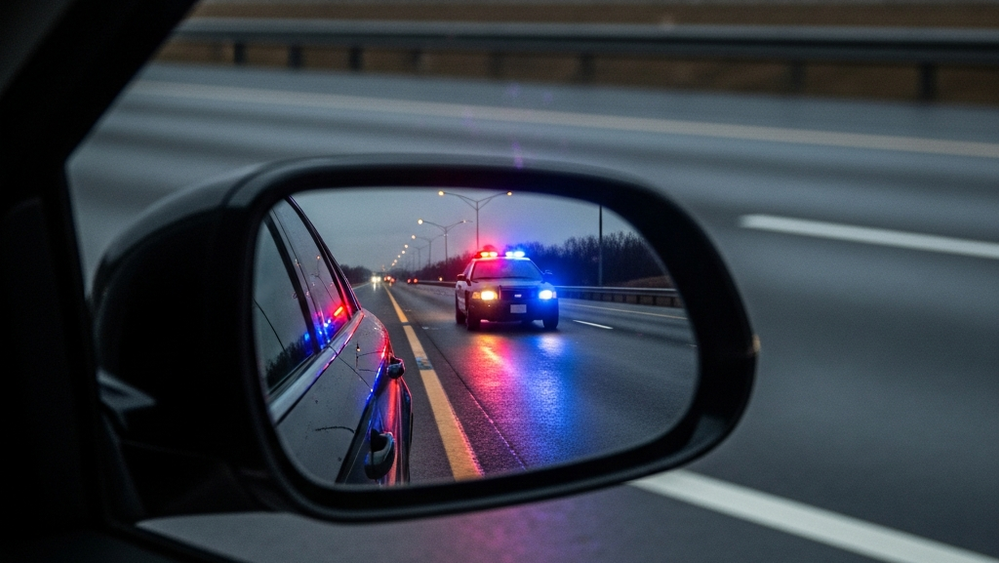
Racial profiling is the discriminatory practice by law enforcement of targeting individuals for suspicion of crime based on the individual's race, ethnicity, religion, or national origin. In the context of a traffic stop, this occurs when an officer pulls over a vehicle not because of a legitimate traffic violation, but because of the driver’s or passengers' perceived race. These encounters are not merely inconvenient; they represent a fundamental breach of the social contract and a violation of the United States Constitution.
A traffic stop is considered a "seizure" under the Fourth Amendment. Therefore, for a stop to be legal, it must be supported by reasonable suspicion that a crime has occurred or is occurring. When that suspicion is rooted in bias rather than observable facts, the stop becomes unconstitutional. For many victims, the experience of being targeted by police bias is traumatizing and can lead to significant emotional distress, physical injury, or even wrongful arrest. Understanding the intersection of police procedure and your civil rights is the first step toward seeking justice and recovering the compensation you deserve.
Affected by a Civil Rights Issue?
Our specialized tool can help you estimate the potential worth of your case based on current laws and precedents.
The Constitutional Framework: Fourth and Fourteenth Amendments
The legal battle against racial profiling is fought primarily on two constitutional fronts: the Fourth Amendment’s protection against unreasonable searches and seizures and the Fourteenth Amendment’s Equal Protection Clause. The Fourth Amendment requires that any stop be "reasonable." If a stop is motivated by race rather than a legitimate suspicion of criminal activity, it lacks the requisite reasonableness demanded by federal law.
According to the Fourth Amendment overview at Cornell Law, a seizure occurs when an officer, by means of physical force or show of authority, has in some way restrained the liberty of a citizen. Furthermore, the Fourteenth Amendment prohibits the government from denying any person the equal protection of the laws. In legal terms, this means that even if a stop is technically legal under the Fourth Amendment (due to a minor traffic infraction), it may still be unconstitutional under the Fourteenth Amendment if the decision to enforce that law was based on the driver's race. This high-level legal distinction is critical for plaintiffs looking to build a successful civil rights claim.
Section 1983 Claims: The Path to Legal Redress
When a police officer violates your constitutional rights, federal law provides a specific avenue for recovery: 42 U.S.C. § 1983. Often referred to simply as a "Section 1983 claim," this statute allows individuals to sue government officials who, while acting under the "color of law," deprive them of their constitutional rights. This is the primary vehicle used by civil rights attorneys to hold police departments and individual officers accountable for racial profiling.
A successful Section 1983 claim must demonstrate that the officer was performing their official duties and that their actions directly resulted in a violation of a protected right. Because these cases often involve complex issues like qualified immunity—a legal doctrine that can shield government officials from liability unless they violated a "clearly established" right—expert guidance is essential. To understand the strength of your potential claim, you can use a civil rights calculator to evaluate common factors that drive settlement values in these complex litigation environments.
Pretextual Stops and the Whren v. United States Precedent
One of the most difficult challenges in proving a racial profiling case is the existence of the "pretextual stop." A pretextual stop occurs when an officer uses a minor traffic violation, such as a broken taillight or failing to signal a lane change 100 feet in advance, as an excuse to pull over a vehicle they actually suspect of being involved in other criminal activity. The Supreme Court addressed this in the landmark case Whren v. United States (1996).
In Whren, the court ruled that as long as an officer has probable cause to believe a traffic violation occurred, the officer’s subjective intent for making the stop is irrelevant under the Fourth Amendment. This means that even if an officer's true motivation was the driver's race, the stop might be deemed constitutional as long as the driver actually committed a traffic infraction. This ruling makes proving Fourteenth Amendment claims even more vital, as plaintiffs must show that the officer selectively enforced traffic laws against people of a certain race while ignoring similar infractions by others. For a deep dive into these types of legal standards, the Department of Justice provides resources on how they enforce federal misconduct laws.
Common Signs of Police Bias During a Traffic Stop
Identifying bias during an encounter is often about observing the officer's behavior and the questions they ask. While officers are allowed to ask for identification and registration, certain behaviors may indicate a discriminatory motive:
- Immediate Questions Unrelated to the Stop: Asking "Where are you coming from?" or "What are you doing in this neighborhood?" before explaining the reason for the stop.
- Requests for Consent to Search: Asking to search the vehicle without any evidence of contraband or suspicious behavior.
- Extended Detention: Keeping the driver on the side of the road for an unreasonable amount of time while waiting for a K-9 unit or backup, despite the initial traffic violation investigation being complete.
- Disproportionate Aggression: Using a hostile tone or unholstering a weapon for a routine traffic infraction like speeding or an expired tag.
When a stop is prolonged without justification, it can significantly increase the value of a legal claim. Learn how the duration of civil rights violations acts as a multiplier for damages, especially when the detention causes psychological trauma or lost time.
Proving Racial Profiling: Evidence and Documentation
In a court of law, your word against the officer's is often a difficult hurdle to overcome. This is why evidence collection is the backbone of any civil rights lawsuit. Fortunately, modern technology has provided several tools for documenting these encounters. Body-worn cameras (BWCs) and dashcam footage are the most impactful forms of evidence. These recordings can reveal the officer's demeanor, the specific questions asked, and whether the driver actually committed the alleged traffic violation.
Beyond video, demographic data from the specific police department can be used to show a pattern of behavior. If a department's records show that a significantly higher percentage of Black or Latino drivers are stopped compared to their representation in the local population, this statistical evidence can bolster an individual claim. You can find more information on how to prepare these types of legal arguments via the United States Courts civil rights guide. Other vital evidence includes witness statements from passengers or bystanders and your own contemporaneous notes written immediately after the encounter.
The Impact of Physical Injury on Case Value
While the emotional trauma of racial profiling is a significant component of many claims, the presence of physical injury dramatically changes the landscape of a lawsuit. If a biased traffic stop escalates into a physical altercation where the officer uses excessive force, the potential settlement value often skyrockets. Physical injuries provide "objective" proof of damages that juries and insurance adjusters find easier to quantify than emotional distress alone.
Common injuries in these cases range from bruising and lacerations due to tight handcuffs to more severe trauma resulting from taser deployments or physical strikes. To understand how these physical components are valued, it is important to review how physical injury damages drive the final settlement numbers in Section 1983 claims. Medical bills, rehabilitation costs, and evidence of permanent scarring are all factors that should be documented carefully by a medical professional to ensure maximum recovery.
Wrongful Arrest and False Imprisonment Damages
Often, a racial profiling stop is the first step in a chain of events that leads to a wrongful arrest and false imprisonment. If the initial stop was illegal because it was based on bias, any evidence found after that stop (the "fruit of the poisonous tree") may be suppressed, and the resulting arrest can be challenged in a civil lawsuit.
Being taken into custody without probable cause is a profound violation of liberty. Damages in these cases are calculated based on the length of time spent in custody, the conditions of the confinement, and the impact the arrest has on the victim's reputation and employment. If you were handcuffed and transported to a station based on a biased stop, your claim value is significantly higher than a stop that resulted only in a citation. These claims often include "loss of liberty" damages, which compensate the victim for the minutes, hours, or days they were unlawfully deprived of their freedom.
Calculating Economic and Non-Economic Damages
When a lawyer evaluates a racial profiling case, they divide damages into two primary categories: economic and non-economic. Economic damages are those with a clear price tag, such as medical bills for injuries sustained during the stop, lost wages if the encounter caused you to miss work, and attorney fees required to defend against any wrongful charges.
Non-economic damages are more subjective but often constitute the largest portion of a civil rights settlement. These include:
- Emotional Distress: The anxiety, fear, and PTSD that often follow a traumatic encounter with police.
- Humiliation: The indignity of being searched or questioned in public based on race.
- Loss of Enjoyment of Life: The long-term fear of driving or interacting with authority figures.
- Punitive Damages: In rare cases where the officer's conduct was especially malicious or reckless, a court may award punitive damages intended to punish the officer and deter similar behavior in the future.
The Role of Expert Witnesses in Civil Rights Litigation
To succeed in a racial profiling lawsuit, your legal team will likely employ several expert witnesses. These professionals provide the technical and scientific foundation for your claims. A police practices expert is often the most critical; they can testify about whether the officer's conduct deviated from standard training and national best practices. They can analyze dashcam footage to determine if the officer had a valid reason to prolong the stop or request a search.
Other experts may include sociologists or statisticians who can analyze the department's "stop and frisk" or traffic enforcement data to prove a systemic pattern of bias. Medical and psychological experts are also vital for testifying to the extent of your physical injuries and the long-term mental health impact of the discrimination. These experts add a layer of authority to your case that makes it much harder for the city or municipality to dismiss your claims during settlement negotiations.
Qualified Immunity: The Shield for Law Enforcement
One of the most controversial aspects of civil rights law is the doctrine of qualified immunity. This legal protection was created by the Supreme Court to protect government officials from being sued for doing their jobs, provided they do not violate a "clearly established" constitutional or statutory right. In the context of racial profiling, an officer might argue that they didn't know their specific actions were illegal because there was no prior court case with the exact same set of facts.
To overcome qualified immunity, your legal team must find a previous court ruling that puts the officer on notice that their behavior was unconstitutional. This is a high bar and is often why many civil rights cases are dismissed before they ever reach a jury. However, the legal landscape is shifting. Several states have passed laws that limit or eliminate qualified immunity at the state level, allowing victims more freedom to seek justice in state courts rather than relying solely on federal Section 1983 claims.
Steps to Take Immediately Following a Biased Stop
If you believe you have been the victim of racial profiling, the actions you take during and immediately after the stop can make or break your potential legal case. While the situation is stressful, maintaining a clear head is vital for your future recovery.
- Stay Calm and Compliant: Do not resist the officer, even if the stop is unfair. Resisting can lead to additional charges that complicate your civil rights claim.
- Invoke Your Rights: You have the right to remain silent and the right to refuse a search of your vehicle. State these clearly: "I am invoking my right to remain silent" and "I do not consent to a search of my vehicle."
- Record the Encounter: If it is safe to do so, use your phone to record the interaction or ask a passenger to do so. Many apps automatically upload footage to the cloud to prevent it from being deleted.
- Identify the Officers: Note the officer's name, badge number, and patrol car number. If the officer refuses to provide this, try to remember physical descriptions or wait until a citation is issued to see the information.
- Seek Medical Attention: If you were handled roughly or injured, go to a doctor or emergency room immediately. Documenting injuries early is essential for your medical record.
- Contact a Specialist: Speak with a civil rights lawyer before making any formal complaints to the internal affairs department of the police force.
State-by-State Variations in Police Liability
While Section 1983 is a federal law that applies nationwide, state laws regarding police misconduct vary significantly. Some states offer additional protections for victims of discrimination. For example, some jurisdictions have their own versions of a Bill of Rights that allow for lawsuits in state court where qualified immunity may not be as strong of a defense.
Furthermore, the "statute of limitations"—the deadline by which you must file a lawsuit—varies by state. In some states, you may have up to three years to file a civil rights claim, while in others, you must provide a "notice of claim" to the municipality within 90 days of the incident. Missing these deadlines can permanently bar you from seeking compensation. Understanding your local laws is just as important as understanding the federal Constitution. You can research state-specific laws through FindLaw's civil rights resources to see how your local jurisdiction handles these complaints.
Settlement vs. Trial: Choosing the Best Path
The vast majority of civil rights cases end in a settlement rather than a jury trial. For many plaintiffs, a settlement is preferable because it provides guaranteed compensation and avoids the years of litigation and emotional strain associated with a trial. Municipalities also often prefer to settle to avoid the negative publicity of a public trial and the risk of a massive jury award.
However, a trial may be necessary if the police department refuses to admit fault or offers a settlement that is significantly lower than the true value of your damages. A trial allows you to present your story to a jury of your peers and seek a verdict that publicly holds the department accountable. The decision to settle or go to court is a strategic one that should be made in close consultation with your attorney, weighing the strength of your evidence against the risks of a courtroom battle.
Frequently Asked Questions About Racial Profiling Claims
Can I sue if I was only stopped for a few minutes and not arrested?
Yes. Even a short detention can be a violation of your Fourth Amendment rights if it was based on profiling. While the damages may be lower than in an arrest case, you are still entitled to compensation for the violation of your rights and any emotional distress. The duration guide mentioned earlier explains how even short bursts of unconstitutional conduct are valued.
Do I need to have been physically injured to win a case?
No. Many successful racial profiling cases are based entirely on "dignitary harms" and emotional distress. While physical injury makes a case easier to value, the psychological impact of being targeted for your race is a valid form of damage recognized by the courts.
What if I actually had a broken taillight, but I know the officer only stopped me because of my race?
This is a pretextual stop. Under Whren, it is difficult to win a Fourth Amendment claim in this scenario, but you may still have a Fourteenth Amendment Equal Protection claim if you can show the officer enforces that law selectively based on race.
Taking Action for Your Civil Rights
If you have been targeted by police bias during a traffic stop, you do not have to suffer in silence. The law provides powerful tools to hold law enforcement accountable for discrimination. By documenting the incident, gathering evidence, and understanding the legal frameworks of the Fourth and Fourteenth Amendments, you can pursue a claim that not only compensates you for your losses but also sends a clear message that racial profiling will not be tolerated.
Your journey toward justice starts with understanding what your case is truly worth. Don't let an insurer or a city attorney lowball the value of your constitutional rights. Use our specialized tools to understand the potential value of your claim and connect with the resources you need to move forward. Get a free estimate of your potential settlement by visiting our civil rights case value calculator today.
Disclaimer: This blog post is for informational purposes only and does not constitute legal advice. For specific legal guidance regarding your situation, please consult with a qualified attorney.