Understanding the Gravity: Why Trucking Accidents Demand Specialized Legal Attention
When you're involved in a collision, the type of vehicle you encounter can drastically change the trajectory of your legal claim. While any car accident can be devastating, incidents involving commercial trucks – big rigs, 18-wheelers, semi-trucks, tractor-trailers, or any large commercial vehicle – introduce a layer of complexity and potential severity that is simply not present in standard passenger vehicle collisions. At CaseValue.law, we understand that victims of these powerful machines often face not only catastrophic injuries but also a daunting legal battle against well-resourced trucking companies and their insurers.
This comprehensive guide will explain why trucking accident lawsuits are fundamentally different from typical car accident claims and, crucially, why these differences often mean your claim holds a significantly higher value. We’ll delve into the unique aspects of liability, the stringent regulations governing the industry, the types of damages you can pursue, and the critical steps you need to take to protect your rights and secure the compensation you deserve.
Affected by a Motor Vehicle Issue?
Our specialized tool can help you estimate the potential worth of your case based on current laws and precedents.
The Devastating Impact: Why Truck Accidents Are So Catastrophic
The Physics of Impact
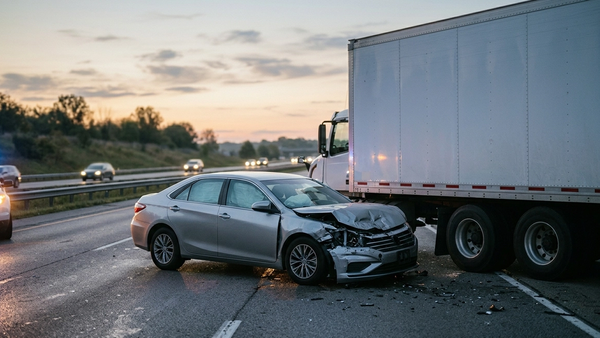
It’s a simple matter of physics: mass times acceleration equals force. A fully loaded commercial truck can weigh up to 80,000 pounds, or 40 tons, dwarfing the average passenger vehicle, which weighs around 3,000-5,000 pounds. When these two collide, the passenger vehicle and its occupants bear the brunt of the force. The sheer size and weight differential result in impacts that are often far more destructive than car-on-car accidents. This often leads to more severe injuries, extensive property damage, and a higher likelihood of fatalities.
Common Catastrophic Injuries
The types of injuries sustained in truck accidents are frequently life-altering. Victims often suffer from:
- Traumatic Brain Injuries (TBIs): Ranging from concussions to severe brain damage, TBIs can result in permanent cognitive, emotional, and physical impairments.
- Spinal Cord Injuries: These can lead to partial or complete paralysis, requiring lifelong medical care and significantly impacting quality of life.
- Amputations: Crushing injuries are common, sometimes necessitating the amputation of limbs.
- Severe Fractures: Multiple bone fractures, often compound or comminuted, requiring extensive surgeries and long recovery periods.
- Internal Organ Damage: Ruptured organs, internal bleeding, and other systemic injuries that can be immediately life-threatening.
- Burn Injuries: Especially in accidents involving fuel tanks or hazardous materials, severe burns can occur, leading to disfigurement and prolonged treatment.
- **Wrongful Death**: Tragically, many truck accidents result in fatalities, leading to wrongful death claims for the victim's family.
These severe injuries translate into massive medical bills, lost wages, and profound pain and suffering, forming the foundation for higher compensation demands.
Key Differentiators: What Makes Trucking Claims Unique?
Trucking accidents are not just bigger car accidents; they are distinct legal entities governed by a different set of rules and involving a broader cast of characters. Understanding these differences is crucial for anyone seeking justice after such an incident.
Multiple Potentially Liable Parties
Unlike a typical car accident where liability usually rests with one or two drivers, a commercial truck accident can involve numerous entities, each with their own insurance policies and legal teams. Identifying all responsible parties is a critical first step in building a strong case.
Extensive Regulatory Framework
The trucking industry is heavily regulated by both federal and state governments. These regulations are designed to prevent accidents and ensure safety. Violations of these rules can be key evidence of negligence.
Higher Insurance Coverage
Due to the increased risk and potential for severe damages, commercial trucking companies are required to carry significantly higher insurance policies than individual drivers. This "deep pockets" factor often means more available funds to cover substantial settlements and verdicts.
Immediate Response by Trucking Companies
Following an accident, trucking companies often deploy their own rapid response teams to the scene. These teams, consisting of investigators, adjusters, and attorneys, are there to protect the company's interests, often before injured victims even have a chance to consult with legal counsel.
Complex Evidence Collection
The types of evidence available and required in a truck accident claim are far more extensive and technical. This includes electronic logging device (ELD) data, maintenance records, driver qualification files, and more.
These unique characteristics make truck accident litigation inherently more complex and require the specialized knowledge of attorneys well-versed in federal trucking regulations and commercial vehicle liability.
Complex Liability: Identifying All Responsible Parties in a Truck Accident
One of the most significant differences in trucking accident lawsuits is the potential for multiple defendants. Pinpointing all at-fault parties is essential for maximizing your compensation. While a comprehensive guide to determining fault in traffic collisions outlines general principles, truck accidents layer on additional complexities.
The Truck Driver
The most obvious party is typically the truck driver. Driver negligence can stem from:
- Fatigue: Violating Hours of Service (HOS) regulations.
- Distracted Driving: Texting, using a phone, or other distractions.
- Impairment: Driving under the influence of drugs or alcohol.
- Speeding or Reckless Driving: Operating the vehicle unsafely.
- Lack of Training or Experience: Not adequately prepared for the specific route or cargo.
The Trucking Company (Motor Carrier)
Under the legal doctrine of respondeat superior (Latin for "let the master answer"), the trucking company can be held liable for the actions of its employees, including the driver, if the driver was acting within the scope of their employment. Beyond that, the company can be directly liable for its own negligence, such as:
- Negligent Hiring: Hiring drivers with poor records, insufficient training, or known substance abuse issues.
- Negligent Retention: Keeping drivers employed who have a history of accidents or violations.
- Negligent Supervision: Failing to adequately monitor driver behavior or HOS compliance.
- Negligent Maintenance: Failing to properly inspect and maintain their fleet, leading to mechanical failures.
- Improper Dispatch or Scheduling: Pressuring drivers to meet unrealistic deadlines, leading to fatigue or speeding.
The Broker or Shipper
The entity that loaded the cargo onto the truck can be held liable if the accident was caused by improper loading, overloading, or unsecured cargo. An uneven or excessively heavy load can shift during transit, causing the truck to lose stability or making it difficult to control.
The Manufacturer of the Truck or Parts
If a mechanical defect contributed to the accident (e.g., brake failure, tire blowout, steering malfunction), the manufacturer of the truck or a specific component could be held liable under product liability laws. This requires demonstrating that the defect existed at the time of manufacture and made the product unreasonably dangerous.
Third-Party Maintenance Companies
If the trucking company contracts out its maintenance, the third-party company responsible for inspecting or repairing the truck could be liable if their negligence led to a mechanical failure.
Identifying all potential defendants requires a thorough investigation and a deep understanding of the complex relationships within the commercial trucking industry.
Federal and State Regulations Governing Trucking: A Web of Rules
Commercial trucking is one of the most heavily regulated industries in the United States. These regulations, primarily enforced by the Federal Motor Carrier Safety Administration (FMCSA), exist specifically to prevent accidents and protect the public. Violations of these rules can provide powerful evidence of negligence in a lawsuit.
Federal Motor Carrier Safety Administration (FMCSA) Regulations
Established under the U.S. Department of Transportation, the FMCSA sets forth a comprehensive set of rules that all interstate commercial motor vehicles (CMVs) and many intrastate CMVs must adhere to. Key areas of regulation include:
- Hours of Service (HOS): These rules dictate how long a truck driver can continuously drive and work, and how much rest they must take. For example, a driver may only drive 11 hours within a 14-hour workday and must have at least 10 consecutive hours off duty before driving again. Violations of HOS rules are a common cause of driver fatigue, a major factor in many truck accidents.
- Driver Qualifications: Regulations specify requirements for commercial driver's licenses (CDLs), physical qualifications (including medical exams), drug and alcohol testing protocols, and driving record reviews.
- Vehicle Maintenance and Inspection: Trucks must undergo regular inspections and maintenance to ensure they are safe to operate. This includes pre-trip, en-route, and post-trip inspections, as well as annual inspections.
- Cargo Securement: Rules govern how cargo must be loaded and secured to prevent shifting, falling, or spilling, which can lead to accidents.
- Hazardous Materials (HAZMAT): Strict regulations apply to the transportation of hazardous materials, including specific placards, routes, and driver training.
- Insurance Requirements: The FMCSA mandates minimum liability insurance coverage for commercial vehicles, often significantly higher than state minimums for passenger cars.
State-Specific Regulations
While federal regulations cover most interstate commerce, individual states also have their own intrastate trucking regulations. These can include variations in weight limits, size restrictions, and specific licensing requirements for drivers operating exclusively within state lines. An experienced truck accident attorney will be familiar with both federal and state regulations pertinent to your case.
The Importance of Electronic Logging Devices (ELDs)
Modern trucks are equipped with ELDs, which automatically record a driver's HOS. This data is invaluable evidence, as it provides an objective record of how long a driver was on duty, driving, and resting. Tampering with ELD data is a serious offense, and its integrity is vital for proving HOS violations.
Violations of these intricate rules can often demonstrate a trucking company's or driver's negligence, strengthening a victim's claim for compensation.
The "Deep Pockets" Factor: Higher Insurance Coverage and Damages
One of the most significant reasons why trucking accident claims are often worth more than standard car accident claims is the sheer amount of insurance coverage involved. Commercial trucking companies are required to carry substantial liability policies to cover the immense potential damages associated with these catastrophic accidents. Understanding how auto insurance claims work generally is helpful, but commercial policies operate on a different scale.
Substantially Higher Minimum Coverage
While a typical passenger vehicle might only carry $25,000-$100,000 in liability coverage per person (depending on state law), federal regulations mandate much higher minimums for commercial vehicles:
- General Freight: $750,000 to $1,000,000 minimum liability.
- Hazardous Materials: $1,000,000 to $5,000,000 minimum liability, depending on the class of hazardous material.
- Passenger Carriers: $1,500,000 to $5,000,000 minimum liability.
Many larger trucking companies carry policies far exceeding these minimums, often into the tens of millions of dollars. This means that if you suffer severe injuries, there is typically adequate insurance available to cover extensive medical bills, lost wages, and pain and suffering, whereas a car accident victim might quickly exhaust a standard personal policy.
Types of Damages in a Truck Accident Lawsuit
When calculating the value of a truck accident claim, several categories of damages are considered. As detailed in a guide to car accident settlements, these typically fall into two main categories:
#### 1. Economic Damages (Special Damages)
These are quantifiable monetary losses directly resulting from the accident:
- Medical Expenses: Past and future costs of emergency care, hospital stays, surgeries, rehabilitation, prescription medications, medical equipment, and long-term care.
- Lost Wages: Income lost due to time off work for recovery, as well as future lost earning capacity if injuries prevent a return to the same job or any work at all.
- Property Damage: The cost to repair or replace your vehicle and any other damaged personal property.
- Out-of-Pocket Expenses: Transportation to medical appointments, home modifications for accessibility, childcare costs during recovery, etc.
#### 2. Non-Economic Damages (General Damages)
These are subjective, non-monetary losses that are harder to quantify but significantly impact a victim's life:
- Pain and Suffering: Physical pain, emotional distress, and mental anguish endured as a result of the injuries.
- Loss of Enjoyment of Life: Inability to participate in hobbies, recreational activities, or daily functions that were once possible.
- Loss of Consortium: Damages awarded to a spouse for the loss of companionship, affection, and support from their injured partner.
- Disfigurement or Scarring: Compensation for physical alterations and the emotional impact they cause.
#### 3. Punitive Damages (Rare but Possible)
In cases where the defendant's conduct was egregious, reckless, or malicious (e.g., a trucking company knowingly operating unsafe vehicles or forcing drivers to violate HOS rules), punitive damages may be awarded. These are not meant to compensate the victim but rather to punish the at-fault party and deter similar conduct in the future. For example, a recent case highlighted how a fatal accident involving an Amazon truck running a red light in Houston could unpack complex liability leading to significant damages, potentially including punitive elements if gross negligence is proven. Similarly, when discussing extreme corporate negligence leading to fatalities, even outside of trucking, a case like the OSHA fines against a NJ facility after a worker fatality demonstrates the severe financial penalties companies face for failing to ensure safety.
The presence of high insurance limits means that trucking accident victims have a greater chance of being fully compensated for all their damages, both economic and non-economic, which contributes to the higher overall value of these claims.
Crucial Evidence in Trucking Accident Cases: The Key to Proving Negligence
Gathering and preserving evidence is paramount in any personal injury claim, but in trucking accidents, the scope and technical nature of the evidence are vastly different. An experienced attorney knows exactly what to look for and how to secure it before it can be lost or destroyed.
Types of Evidence Unique to Trucking Cases
- Electronic Logging Device (ELD) Data: This is perhaps the most critical piece of evidence. ELDs record a truck driver's Hours of Service (HOS), speed, mileage, engine performance, and even hard braking events. It provides an objective record of compliance (or non-compliance) with federal regulations.
- Black Box Data (Event Data Recorder - EDR): Similar to those found in airplanes, truck EDRs record pre-collision data such as speed, braking, steering input, and acceleration in the moments leading up to an accident. This data can be crucial for reconstructing the crash.
- Driver Qualification Files: These files contain the driver's employment application, driving history (Motor Vehicle Record - MVR), medical examination reports, drug and alcohol test results, training records, and certifications. They can reveal patterns of negligence or a history of violations.
- Trucking Company Records: This includes maintenance and inspection logs for the truck and trailer, repair records, dispatch records, billing statements, and proof of insurance.
- Cargo Loading Manifests: These documents detail the weight and distribution of cargo, which can be critical if improper loading contributed to the accident.
- Dashcam Footage: Many commercial trucks are equipped with forward-facing or cabin-facing dash cameras, which can provide a visual record of the accident and the driver's actions.
- Weigh Station Records: If the truck was overloaded, weigh station records can prove a violation of weight limits.
- Post-Accident Drug and Alcohol Testing Results: Federal regulations require commercial drivers involved in certain accidents to undergo drug and alcohol testing. The results are crucial evidence.
The Importance of a Rapid Response Team
Because trucking companies often dispatch their own investigators immediately, it's vital for accident victims to have legal representation that can act just as quickly. An attorney can send a spoliation letter (a legal notice) demanding that all relevant evidence be preserved. Failure to do so can result in legal sanctions against the trucking company.
Expert Witnesses
Due to the technical nature of truck accidents, expert witnesses are often necessary. Accident reconstructionists can analyze physical evidence and EDR data to determine how the crash occurred. Trucking industry experts can testify about safety standards and regulatory compliance. Medical experts are crucial for detailing the extent of injuries and prognosis.
Thorough evidence collection and analysis are what truly build a strong trucking accident claim and distinguish it from a simpler car accident case.
The Trucking Company's Immediate Response: A Formidable Opponent
One of the starkest differences between a car accident and a truck accident is the institutional response from the opposing side. Trucking companies are major businesses, and they treat accidents as a significant threat to their bottom line. They are prepared, and they react swiftly.
The "Go Team" Phenomenon
Many large trucking companies have what are informally known as "go teams" or rapid response teams. These teams are dispatched to the scene of an accident almost immediately, often within hours. They typically consist of:
- Accident Reconstructionists: To begin gathering evidence and formulating theories favorable to the trucking company.
- Insurance Adjusters: To assess damage, speak with witnesses, and potentially obtain statements from the injured parties before they have legal counsel.
- Attorneys: To ensure legal compliance and protect the company's interests from the outset, including advising their driver and preventing evidence from falling into the wrong hands.
Their Goals are Not Your Goals
It is crucial to understand that the primary objective of the trucking company's team is to mitigate their liability and minimize the financial impact on their client. This often means:
- Controlling the Narrative: They will attempt to shape the understanding of how the accident occurred, often shifting blame away from their driver or company.
- Securing Favorable Evidence: They will collect evidence that supports their position and may downplay or ignore evidence that implicates them.
- Limiting Your Recovery: Their adjusters may try to get you to accept a lowball settlement offer before you fully understand the extent of your injuries or your legal rights.
- Obtaining Statements: They may attempt to get you to give a recorded statement without your attorney present, which can later be used against you.
Why You Need Immediate Legal Representation
Against such a well-oiled and highly motivated defense, an injured victim is at a severe disadvantage without experienced legal counsel. Your attorney can immediately:
- Send a Spoliation Letter: Legally demand that all relevant evidence (ELD data, black box data, maintenance records, drug tests, etc.) be preserved and not destroyed or altered.
- Launch an Independent Investigation: Dispatch their own investigators and accident reconstructionists to the scene to collect evidence and interview witnesses independently.
- Protect Your Rights: Advise you on what to say (and what not to say) to insurance adjusters and prevent you from inadvertently harming your claim.
- Level the Playing Field: Demonstrate that you are serious about pursuing justice and will not be intimidated by their tactics.
Delaying legal consultation can seriously jeopardize your ability to collect critical evidence and build a strong case. Time is of the essence in truck accident litigation.
Common Causes of Trucking Accidents: Understanding the Risks
While many factors can contribute to a truck accident, certain causes are disproportionately represented in commercial vehicle collisions. Understanding these common causes helps in identifying negligence and building a strong legal claim.
1. Driver Fatigue
Despite stringent Hours of Service (HOS) regulations, driver fatigue remains a leading cause of truck accidents. Drivers may violate HOS rules, be pressured by their companies to meet tight deadlines, or simply be exhausted from the demanding nature of the job. Fatigued driving impairs judgment, reaction time, and attentiveness, mirroring the effects of drunk driving.
2. Distracted Driving
Like passenger vehicle drivers, truck drivers can be distracted by cell phones, in-cab technology, eating, or other activities. Given the size and speed of commercial trucks, even a few seconds of inattention can have catastrophic consequences. The incident where an Amazon truck ran a red light in Houston tragically exemplifies how driver negligence, potentially from distraction or fatigue, can lead to fatal outcomes.
3. Speeding and Reckless Driving
Driving too fast for conditions, aggressive lane changes, or following too closely are dangerous behaviors for any driver, but they are exponentially more dangerous when behind the wheel of an 80,000-pound vehicle. The longer stopping distances required for trucks make speeding particularly perilous.
4. Impaired Driving
While federal regulations mandate drug and alcohol testing for CDL holders, some drivers still operate under the influence. This dramatically increases the risk of an accident and typically leads to severe penalties and significant liability.
5. Improper Loading or Overloading of Cargo
If cargo is not properly secured or if the truck is overloaded, the weight distribution can shift, making the vehicle unstable and difficult to control, especially on curves or during sudden braking. This can be the responsibility of the trucking company, the shipper, or the loading crew.
6. Poor Vehicle Maintenance and Mechanical Failure
Negligence in maintaining a truck can lead to critical mechanical failures such as:
- Brake Failure: Worn-out brakes are a common problem.
- Tire Blowouts: Defective or poorly maintained tires can cause a loss of control.
- Steering or Suspension System Malfunctions: Can severely impact a driver's ability to steer or stabilize the truck.
These failures often point to the negligence of the trucking company or a third-party maintenance provider.
7. Inadequate Driver Training or Experience
Some accidents occur because the driver lacks sufficient training for specific types of cargo, routes, or adverse weather conditions. Trucking companies have a responsibility to ensure their drivers are competent and properly qualified.
8. Road Conditions and Weather
While drivers are expected to adjust to adverse conditions, accidents can still occur due to poor road design, unexpected obstacles, or extreme weather when combined with other forms of negligence. However, the driver and company still hold responsibility for safe operation in all conditions.
Each of these causes points to potential negligence by one or more parties, making the investigation into the root cause a critical step in a trucking accident lawsuit.
The Litigation Process: Navigating Your Truck Accident Lawsuit
\The legal journey following a truck accident can be lengthy and complex, but understanding the general stages can help manage expectations. While a guide to car accident settlements covers the general flow, commercial truck accidents often involve more intense investigation and negotiation.
1. Initial Consultation and Investigation
- Free Case Evaluation: Most personal injury law firms offer a free initial consultation to discuss the details of your accident, your injuries, and potential legal avenues.
- Evidence Gathering: Your attorney will immediately begin collecting evidence, including police reports, witness statements, medical records, photos/videos, and critically, requesting all relevant trucking company records (ELD data, black box, maintenance logs, driver files, etc.). This often involves sending a spoliation letter to prevent destruction of evidence.
- Accident Reconstruction: If necessary, accident reconstruction specialists will be retained to analyze the scene and data to determine fault.
2. Demand Letter and Negotiation
- Calculation of Damages: Once your medical treatment is substantially complete or you reach Maximum Medical Improvement (MMI), your attorney will calculate the full extent of your economic and non-economic damages.
- Demand Package: A comprehensive demand letter detailing the accident, liability, injuries, and all damages will be sent to the trucking company's insurance carrier.
- Settlement Negotiations: The insurance company will typically respond with a counter-offer. Your attorney will engage in negotiations to try and reach a fair settlement. This stage can involve multiple rounds of offers and counter-offers.
3. Filing a Lawsuit (If Settlement Fails)
- Complaint: If negotiations fail to produce an acceptable offer, your attorney will file a formal complaint with the court, initiating the lawsuit. This document outlines your claims against the defendants.
- Discovery Phase: This is a crucial and often lengthy stage where both sides exchange information. It includes:
- Interrogatories: Written questions sent to the opposing party.
- Requests for Production: Demands for documents and other physical evidence.
- Depositions: Out-of-court, sworn testimony taken from witnesses, the driver, company representatives, and medical professionals.
- Expert Witness Designation: Both sides will identify and prepare their expert witnesses.
4. Mediation or Arbitration
Often, before a case goes to trial, a neutral third-party mediator or arbitrator will attempt to facilitate a settlement. Mediation is a non-binding process where the mediator helps parties explore settlement options. Arbitration can be binding or non-binding, where an arbitrator hears evidence and makes a decision.
5. Trial
If all attempts at settlement fail, the case will proceed to trial. This involves:
- Jury Selection: Choosing impartial jurors.
- Opening Statements: Attorneys present an overview of their case.
- Presentation of Evidence: Witnesses testify, and documents/exhibits are introduced.
- Closing Arguments: Attorneys summarize their case.
- Jury Deliberation and Verdict: The jury decides on liability and damages.
6. Appeals
If either party is dissatisfied with the trial's outcome, they may have the option to appeal the decision to a higher court.
The entire process can take anywhere from months to several years, depending on the complexity of the case, the severity of injuries, and the willingness of the parties to settle.
Understanding Comparative Negligence in Trucking Accidents
Even in cases where a truck driver or trucking company is clearly at fault, the defense will often attempt to shift some, or all, of the blame onto the injured party. This legal concept is known as comparative negligence, and how it's applied varies significantly by state.
What is Comparative Negligence?
Comparative negligence is a legal principle that reduces the amount of damages a plaintiff can recover if they are found to be partially at fault for the accident. There are two main types:
- Pure Comparative Negligence: In states following this rule, a plaintiff can recover damages even if they are 99% at fault, though their compensation will be reduced by their percentage of fault. For example, if you are awarded $100,000 but are found 20% at fault, you would receive $80,000.
- Modified Comparative Negligence: Most states use a modified version, which includes a threshold:
- 50% Bar Rule: If you are 50% or more at fault, you cannot recover any damages. If you are 49% or less at fault, your damages are reduced by your percentage of fault.
- 51% Bar Rule: If you are 51% or more at fault, you cannot recover any damages. If you are 50% or less at fault, your damages are reduced by your percentage of fault.
How Comparative Negligence Applies to Truck Accidents
In a trucking accident, the trucking company and their insurance adjusters will vigorously try to assign fault to you. They might argue that you were:
- Speeding: Exceeding the speed limit or driving too fast for conditions.
- Distracted: Using a cell phone or not paying attention.
- Improper Lane Change: Cutting off the truck or changing lanes unsafely.
- Driving Under the Influence: Impaired by drugs or alcohol.
- Failure to Yield: Not giving the truck the right-of-way.
The Impact on Your Claim Value
If you are found to be partially at fault, your potential settlement or verdict will be reduced accordingly. This is why having an experienced truck accident attorney is so vital. They can:
- Counter Defense Arguments: Present evidence and legal arguments to minimize your assigned fault.
- Protect Your Rights: Ensure that blame is accurately assigned based on the facts, not on the insurance company's manipulative tactics.
- Maximize Your Recovery: By fighting against unfair allocations of fault, your attorney helps preserve the full value of your claim.
Understanding your state's comparative negligence laws and having a skilled advocate on your side are crucial steps in navigating the complexities of a trucking accident lawsuit.
Maximizing Your Truck Accident Settlement: Practical Steps and Expert Guidance
Recovering full and fair compensation after a devastating truck accident requires strategic action and expert legal guidance. While a general guide to car accident settlements covers many common steps, the unique complexities of trucking claims demand a more robust approach.
1. Seek Immediate Medical Attention
Your health is paramount. Even if you don't feel severely injured immediately after the accident, internal injuries may not be apparent. Prompt medical evaluation creates an official record of your injuries, which is critical evidence for your claim. Follow all medical advice and continue with all prescribed treatments.
2. Document Everything at the Scene
If physically able, gather as much information as possible:
- Photos and Videos: Capture the accident scene from various angles, damage to all vehicles, skid marks, road conditions, traffic signs, and any visible injuries.
- Witness Information: Get names and contact details for anyone who saw the accident.
- Police Report: Obtain the incident number and a copy of the official police report.
- Trucking Company Information: Note the company name, truck number, DOT number, and driver's license details.
3. Do NOT Communicate with the Trucking Company or Their Insurers Alone
As discussed, trucking companies have "go teams" and adjusters whose primary goal is to minimize their liability. Do not give recorded statements, sign any documents, or accept any settlement offers without first consulting an attorney. Anything you say can be used against you.
4. Preserve All Evidence
Keep detailed records of all medical appointments, bills, prescriptions, and any out-of-pocket expenses. Maintain a journal of your pain levels, emotional distress, and how your injuries affect your daily life. Do not repair your vehicle until it has been inspected by your attorney's experts.
5. Hire an Experienced Truck Accident Attorney IMMEDIATELY
This is perhaps the most critical step. A lawyer specializing in trucking accidents understands:
- Federal and State Regulations: They know the FMCSA rules inside and out and can identify violations that prove negligence.
- Complex Liability: They can identify all potentially liable parties, not just the driver.
- Evidence Collection: They know how to secure critical evidence like ELD data, black box recordings, and driver qualification files before they are lost or altered.
- Dealing with Aggressive Defense: They can counter the tactics of well-funded trucking company legal teams.
- Calculating Damages: They can accurately assess the full value of your economic and non-economic damages, including future medical costs and lost earning capacity.
6. Be Patient and Follow Legal Advice
Trucking accident cases are rarely quick. They often involve extensive investigation, negotiation, and potentially litigation. Trust your attorney's guidance, and allow them to navigate the complexities while you focus on your recovery.
By taking these steps and enlisting specialized legal expertise, you significantly increase your chances of recovering the full and fair compensation you deserve for your injuries and losses.
Navigating the Statute of Limitations: Don't Miss Your Window
A critical legal concept in any personal injury claim, especially trucking accidents, is the statute of limitations. This is a strict legal deadline for filing a lawsuit after an accident. If you miss this deadline, you will almost certainly lose your right to pursue compensation, regardless of how strong your case may be.
What is a Statute of Limitations?
Each state sets its own statute of limitations for personal injury claims, including those arising from truck accidents. These deadlines typically range from one to three years from the date of the accident, though some states may have longer periods. For specific claims, such as wrongful death, the statute of limitations might differ. Furthermore, claims against government entities (if a public employee or vehicle was involved) often have much shorter deadlines, sometimes as little as 30 to 180 days, requiring specific notices to be filed.
Why the Deadline Matters So Much in Trucking Cases
The complex nature of trucking accident claims makes adhering to the statute of limitations particularly challenging and crucial:
- Extensive Investigation: Gathering the necessary evidence in a truck accident case (ELD data, black box, driver logs, maintenance records, etc.) is a time-consuming process. Starting this investigation too late can push you against the deadline.
- Multiple Parties: Identifying all liable parties (driver, trucking company, broker, manufacturer, etc.) can take time. If you miss the deadline for one party, you might lose your claim against them.
- Witness Testimony: Memories fade, and witnesses can become difficult to locate over time. Timely action helps secure crucial testimony.
- Evidence Preservation: The longer you wait, the higher the risk that critical physical or electronic evidence may be lost, destroyed, or altered.
Exceptions to the Rule (Rare)
While the statute of limitations is generally strict, there are rare exceptions, such as:
- Discovery Rule: In some cases, the clock might not start until the injury or its cause is "discovered" or reasonably should have been discovered. This is more common in cases involving latent injuries or product defects.
- Minority Tolling: If the injured party is a minor at the time of the accident, the statute of limitations may be "tolled" (paused) until they reach legal adulthood (usually 18).
- Mental Incapacity: If the injured party is rendered mentally incapacitated by the accident, the deadline might be extended.
However, relying on exceptions is risky. The safest approach is always to act promptly.
The Urgency of Consulting an Attorney
Given the strict deadlines and the intricate investigation required, it is imperative to contact an experienced truck accident attorney as soon as possible after the incident. Your attorney can immediately determine the applicable statute of limitations for your specific case and take the necessary steps to protect your right to file a lawsuit, ensuring you don't miss your window for justice.
Get the Justice You Deserve: Secure Your Future After a Trucking Accident
Trucking accidents are a different breed of personal injury claim, demanding a unique blend of legal expertise, investigative rigor, and an unwavering commitment to justice. The sheer scale of damage, the labyrinth of federal regulations, the array of potentially liable parties, and the formidable defense mounted by powerful trucking corporations all underscore why these claims are far more complex—and often far more valuable—than typical car accidents.
At CaseValue.law, we believe that victims of commercial vehicle negligence deserve comprehensive support and robust representation. You shouldn't have to face well-funded legal teams alone while simultaneously battling life-altering injuries and financial strain. Our mission is to demystify the legal process, diligently gather every piece of evidence, and relentlessly advocate for your maximum possible compensation.
If you or a loved one has been involved in a truck accident, the time to act is now. Delay can jeopardize crucial evidence and your legal rights. Don't let the complexities of the system overwhelm you. Let our experienced team provide the clarity and strength your case demands. Contact us today for a free, no-obligation case evaluation. We'll assess the specifics of your accident, explain your legal options, and help you understand the true value of your claim. Your journey to recovery and justice starts here.
Disclaimer: This blog post is for informational purposes only and does not constitute legal advice. For specific legal guidance regarding your situation, please consult with a qualified attorney.