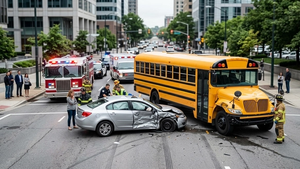
Introduction: The Critical Role of Fault in Traffic Collisions
Traffic collisions are an unfortunate reality on our roads, and while the immediate aftermath can be chaotic and frightening, one of the most crucial aspects that follows is determining who was at fault. This determination isn't just about assigning blame; it's the bedrock upon which all subsequent legal and insurance actions are built. Understanding fault is essential for anyone involved in an accident, as it directly impacts your ability to recover damages for medical expenses, lost wages, vehicle repairs, and pain and suffering. Without a clear understanding of liability laws, you risk jeopardizing your potential settlement and failing to secure the justice you deserve.
At CaseValue.Law, we believe that informed individuals are empowered individuals. This comprehensive guide will demystify the complex world of traffic collision liability, providing you with the knowledge needed to navigate the challenges ahead. From the fundamental principles of negligence to state-specific laws and the nuances of evidence collection, we’ll equip you with a definitive understanding of how fault is determined and what it means for your legal claim. Your journey to understanding the value of your legal claim starts here.
Affected by a Legal Tips Issue?
Our specialized tool can help you estimate the potential worth of your case based on current laws and precedents.
Understanding "Fault" in Legal Terms: More Than Just an Accident
Legally, "fault" in a traffic collision refers to the party or parties whose negligence or wrongful actions directly caused the accident and the resulting injuries or damages. It's not merely about who "caused" the crash in a casual sense, but rather who breached a legal duty of care, leading to foreseeable harm. In most civil claims arising from car accidents, the concept of fault is tied to the legal doctrine of negligence.
When we talk about fault, we're essentially asking: Who had a responsibility to drive safely, and who failed in that responsibility, leading to the collision? This often involves examining adherence to traffic laws, exercising reasonable care, and anticipating potential hazards. The legal system seeks to identify the responsible party so that they, or more commonly, their insurance company, can be held financially accountable for the damages incurred by the innocent party. This process requires a meticulous examination of all circumstances surrounding the accident, moving beyond superficial observations to establish a clear chain of causation and responsibility.
The Foundation: Negligence and Duty of Care
Negligence is the cornerstone of nearly all personal injury claims, including those stemming from traffic collisions. To establish negligence, four key elements must be proven:
Duty of Care
Every driver on the road owes a fundamental "duty of care" to other drivers, passengers, pedestrians, and property owners. This duty requires operating a vehicle in a reasonably safe manner, obeying traffic laws, and exercising the caution that a prudent person would under similar circumstances. For example, a driver has a duty to stop at a red light, yield to pedestrians, and maintain a safe following distance.
Breach of Duty
A "breach of duty" occurs when a driver fails to uphold their duty of care. This can manifest in numerous ways: speeding, distracted driving (e.g., texting while driving), drunk driving, running a stop sign, failing to signal, or even simply driving carelessly. The breach doesn't have to be intentional; it only needs to demonstrate a failure to act with reasonable prudence. Proving a breach often involves witness testimony, police reports, and accident reconstruction.
Causation
This element links the defendant's breach of duty directly to the plaintiff's injuries and damages. There must be both "actual cause" (the accident wouldn't have happened but for the defendant's actions) and "proximate cause" (the injuries were a foreseeable result of the defendant's negligent actions). For instance, if a driver runs a red light (breach of duty) and hits another car, causing injuries, their actions are the actual and proximate cause of the collision and injuries.
Damages
Finally, the plaintiff must have suffered actual damages as a result of the accident. These can include physical injuries, medical bills, lost wages, property damage, and pain and suffering. Without demonstrable damages, there is no basis for a personal injury claim, even if negligence occurred. Accurately documenting these damages is crucial for a successful claim.
Key Factors in Determining Fault
Determining fault is rarely straightforward and often involves a meticulous investigation of various factors. Insurance companies, law enforcement, and legal professionals rely on a collection of evidence to piece together the events leading to a collision. Understanding these factors is vital for anyone involved in an accident.
Police Reports and Citations
Often the first official documentation of an accident, police reports contain critical information. They typically include details like the date, time, and location of the crash, statements from drivers and witnesses, diagrams of the accident scene, and descriptions of vehicle damage. Crucially, the report may also indicate if any drivers were cited for traffic violations, which can be strong evidence of fault. However, remember that police reports are not always definitive legal proof of fault and can sometimes contain errors or incomplete information.
Eyewitness Testimony
Independent eyewitnesses can provide invaluable perspectives. Their unbiased accounts of how the accident unfolded can corroborate or contradict driver statements, helping to clarify conflicting narratives. Obtaining contact information for witnesses at the scene is paramount, as their recollections can fade over time. An attorney can help gather and preserve these crucial statements.
Dashcam and Surveillance Footage
In an increasingly digital world, dashcam footage from involved vehicles or surrounding businesses' surveillance cameras can provide irrefutable evidence. Video recordings offer an objective, real-time account of the collision, showing vehicle movements, traffic signals, and driver behavior leading up to the impact. This type of evidence can often be the deciding factor in fault disputes.
Vehicle Damage and Accident Reconstruction
The nature, location, and extent of damage to the vehicles involved can tell a compelling story about how the collision occurred. Accident reconstruction specialists, often hired by insurance companies or attorneys, can analyze skid marks, debris fields, vehicle deformation, and other physical evidence to create a scientific model of the accident. Their expertise can help determine impact angles, speeds, and points of rest, providing objective insights into fault.
Traffic Laws and Violations
Violations of traffic laws are frequently direct indicators of negligence. Whether it's speeding, running a red light, failing to yield, or illegal lane changes, breaking a traffic law often points directly to the at-fault driver. Law enforcement citations for these violations can significantly strengthen a liability claim. Conversely, adhering to traffic laws can help demonstrate your own due diligence.
Types of Liability Systems: How States Determine Financial Responsibility
The way fault impacts your ability to recover damages varies significantly depending on the state where the accident occurred. The U.S. employs different liability systems, primarily categorized as at-fault (tort) or no-fault. Understanding your state's system is critical to knowing your rights and options post-collision.
At-Fault (Tort) States
Most states in the U.S. operate under an "at-fault" system, also known as a "tort" system. In these states, the driver who is determined to be at fault for the accident is financially responsible for the damages suffered by others. This means that the injured party must prove the other driver's negligence to recover compensation. They typically file a claim against the at-fault driver's insurance company or pursue a personal injury lawsuit. Damages can include medical expenses, lost wages, vehicle repair, and pain and suffering. This system emphasizes holding negligent drivers accountable.
No-Fault States
A minority of states have adopted a "no-fault" system. In these states, after an accident, each driver typically files a claim with their own insurance company, regardless of who caused the accident, to cover their medical expenses and lost wages up to a certain limit (known as Personal Injury Protection, or PIP). The idea is to streamline the process for minor injuries and reduce litigation. However, in no-fault states, you generally cannot sue the at-fault driver for pain and suffering unless your injuries meet a specific "serious injury threshold" defined by state law. These thresholds can be monetary (e.g., medical bills exceed $5,000) or verbal (e.g., permanent disfigurement, significant impairment of a body function).
Modified No-Fault States
Some states combine elements of both at-fault and no-fault systems. These "modified no-fault" states require drivers to carry PIP coverage, similar to pure no-fault states, and typically limit the ability to sue the at-fault driver for minor injuries. However, once the serious injury threshold is met, the injured party can then step outside the no-fault system and pursue a traditional personal injury claim against the at-fault driver, much like in an at-fault state. This allows for recovery of pain and suffering and other non-economic damages when injuries are severe.
Comparative vs. Contributory Negligence: Sharing the Blame
Even when one party is primarily at fault, it's not uncommon for both drivers to share some degree of responsibility for an accident. How this shared fault impacts your ability to recover damages depends entirely on your state's specific laws regarding comparative or contributory negligence. These doctrines dictate whether and how a plaintiff's own negligence affects their compensation.
Contributory Negligence (Few States)
Only a handful of states still adhere to the strict doctrine of contributory negligence. In these states, if a plaintiff is found to be even 1% at fault for an accident, they are completely barred from recovering any damages from the other party. This is an extremely harsh rule, as it places all the burden on the plaintiff if they contributed to the accident in any way, no matter how minor. Because of its severity, most states have moved away from this system.
Pure Comparative Negligence
In contrast to contributory negligence, pure comparative negligence allows an injured party to recover damages even if they are largely at fault for the accident. Under this system, the plaintiff's damages are simply reduced by their percentage of fault. For example, if you are deemed 70% at fault for an accident but suffered $100,000 in damages, you could still recover $30,000 (30% of $100,000) from the other driver. This system is considered fairer by many as it allows for some recovery, even for those with significant shared fault.
Modified Comparative Negligence (50% Bar Rule)
Many states utilize a modified comparative negligence system, often with a "50% bar rule." Under this rule, a plaintiff can recover damages as long as their percentage of fault is 50% or less. If their fault is determined to be 51% or more, they are completely barred from recovering compensation. If they are 50% at fault, their damages are reduced by 50%. This system seeks a middle ground between the strictness of contributory negligence and the leniency of pure comparative negligence.
Modified Comparative Negligence (51% Bar Rule)
Another common variation of modified comparative negligence is the "51% bar rule." This rule is similar to the 50% rule, but it allows a plaintiff to recover damages as long as their percentage of fault is not greater than the defendant's. In other words, if you are 50% at fault, you can still recover (with your damages reduced by 50%). If you are 51% at fault, you are barred from recovery. This distinction can be crucial in cases where fault is nearly evenly split. Understanding which rule applies in your state is paramount when evaluating your potential claim value.
Common Scenarios and Presumptions of Fault
While every accident is unique, certain common collision scenarios often come with general presumptions of fault based on traffic laws and typical driving behavior. However, it's crucial to remember that these are merely starting points for investigation, and specific circumstances can always alter the fault determination.
[Rear-End Collisions](https://casevalue.law/blog/rear-end-collision-settlements-at-fault-driver-liability)
In the vast majority of rear-end collisions, the driver of the trailing vehicle is presumed to be at fault. This is based on the legal principle that drivers have a duty to maintain a safe following distance and be able to stop in time to avoid hitting the vehicle in front of them. Exceptions might include the lead vehicle suddenly backing up, making an illegal stop, or having non-functional brake lights.
Left-Turn Accidents
Accidents involving a vehicle making a left turn and colliding with an oncoming vehicle are frequently the fault of the left-turning driver. Generally, a driver making a left turn has a duty to yield the right-of-way to oncoming traffic. If they fail to do so and cause a collision, they are typically deemed negligent. However, exceptions exist if the oncoming vehicle was speeding excessively, ran a red light, or entered the intersection illegally.
Lane Change Accidents
When an accident occurs during a lane change, the driver attempting the lane change is usually found at fault. Drivers changing lanes have a responsibility to ensure the lane is clear, signal their intention, and execute the maneuver safely without impeding other traffic. Failure to check blind spots or signal properly often leads to liability.
Red Light/Stop Sign Violations
If a driver runs a red light or fails to stop at a stop sign and causes an accident, they are almost always considered at fault. These are clear violations of traffic law and direct evidence of negligence. Dashcam footage or eyewitness accounts are particularly valuable in proving these types of violations.
Distracted Driving
Texting, talking on a phone, eating, or engaging in any activity that diverts a driver's attention from the road constitutes distracted driving. If a distracted driver causes an accident, their distraction serves as strong evidence of a breach of duty of care. Proving distraction can be challenging but may involve cell phone records, witness statements, or the driver's own admission.
Drunk Driving
Driving under the influence (DUI) or driving while intoxicated (DWI) is a severe form of negligence. A driver convicted of DUI/DWI in connection with an accident is almost universally held at fault for the collision. The legal standard for intoxication (e.g., blood alcohol content over 0.08%) provides objective proof of impaired judgment and reckless behavior, making fault determination relatively straightforward.
The Role of Insurance Companies in Fault Determination
After an accident, insurance companies play a central role in determining fault and assigning liability. While they aim for an objective assessment, it's crucial to remember that their primary interest lies in protecting their financial bottom line. This can sometimes lead to disputes or efforts to minimize payouts.
Adjuster Investigations
Immediately following a claim, insurance adjusters will launch their own investigation. This typically involves reviewing the police report, speaking with their policyholder, contacting the other drivers involved, interviewing witnesses, examining vehicle damage, and sometimes reviewing medical records or accident reconstruction reports. Their goal is to gather enough information to determine whose policy should cover the damages, often by assigning percentages of fault to each party.
Claim Denials and Disputes
It's not uncommon for insurance companies to dispute fault or deny claims, especially if liability is unclear or if they believe their policyholder is less at fault than claimed. They might argue that you contributed to the accident, even in states with comparative negligence, to reduce their payout. This is where robust evidence and legal representation become invaluable. If your claim is denied or a lowball offer is made, understanding your options for challenging their determination is essential.
Subrogation
Subrogation is the legal right held by most insurance carriers to pursue a third party that caused an insurance loss to the insured. If your insurance company pays for your damages (e.g., through your collision coverage), and they believe another driver was at fault, they will typically pursue that driver's insurance company to recoup their costs. This process hinges entirely on their determination of fault and can sometimes involve a lengthy back-and-forth between insurers. Understanding the details of understanding auto insurance claims can help you navigate these complexities.
Evidence Collection: Building a Strong Case for Liability
Building a strong case for liability is paramount to securing fair compensation. The strength of your claim rests heavily on the quality and quantity of evidence you collect. This process begins immediately after the accident and continues as your case develops.
At the Scene
Your actions immediately following a collision are critical for evidence collection:
- Prioritize Safety & Seek Medical Attention: Ensure everyone's safety first. If you or anyone is injured, call 911. Even if injuries seem minor, get checked out. Delaying treatment can create a "gap in treatment" that insurance adjusters use to devalue your claim.
- Call the Police: Always call law enforcement, even for minor accidents, especially in at-fault states. A police report provides an official, third-party account.
- Exchange Information: Get names, contact details, insurance information, and license plate numbers from all drivers involved. Do not admit fault or apologize.
- Document the Scene: Take numerous photos and videos. Capture: vehicle damage from multiple angles, the accident scene (skid marks, debris, road conditions, traffic signs/signals), license plates, driver's licenses, and insurance cards. Note the weather and time of day.
- Identify Witnesses: Ask if anyone saw the accident and get their contact information. Their statements can be invaluable.
After the Scene
Evidence collection continues long after you leave the accident site:
- Medical Records: Thoroughly document all medical treatment, from emergency room visits to follow-up appointments, physical therapy, and prescriptions. These records directly link your injuries to the accident and quantify your damages.
- Lost Wage Documentation: Keep meticulous records of any missed work, including pay stubs, employment verification, and a letter from your employer detailing lost income. Learn more about documenting lost wages.
- Vehicle Repair Estimates: Obtain detailed estimates for vehicle repairs or a total loss valuation.
- Communication Records: Keep a log of all communications with insurance companies, adjusters, and medical providers.
- Journal Your Experience: Document your physical symptoms, pain levels, and how the injuries impact your daily life. This can be crucial for pain and suffering claims.
Importance of Medical Documentation
Perhaps the most crucial evidence, especially in personal injury claims, is comprehensive medical documentation. This includes: ambulance reports, ER records, diagnostic imaging (X-rays, MRIs), physician's notes, physical therapy records, and medication lists. These documents not only prove the existence and severity of your injuries but also establish a direct link between the collision and your need for treatment. They are fundamental to establishing the full extent of your damages and preventing insurance adjusters from claiming your injuries are pre-existing or unrelated.
When Multiple Parties Are at Fault: Joint and Several Liability
In complex traffic collisions, it's not always a clear-cut case of one driver being 100% at fault. Sometimes, multiple drivers, or even non-drivers, contribute to an accident. When this occurs, the legal principle of "joint and several liability" may come into play, depending on your state's laws.
Joint and several liability means that when two or more defendants are found negligent and their combined negligence causes injury to a plaintiff, each defendant can be held individually responsible for the entire amount of damages. This is particularly significant for the plaintiff because if one at-fault party has limited insurance coverage or insufficient assets to pay their share of the damages, the plaintiff can seek full compensation from the other at-fault parties, even if those parties were only partially responsible for the accident.
For example, if Driver A is found 60% at fault and Driver B is 40% at fault, and the total damages are $100,000, a plaintiff in a pure joint and several liability state could potentially recover the entire $100,000 from Driver A, Driver B, or a combination of both. It would then be up to Driver A and Driver B to sort out their respective contributions to the payment.
However, many states have modified or abolished pure joint and several liability, especially concerning non-economic damages (like pain and suffering). Some states might only apply it if a defendant's fault exceeds a certain percentage (e.g., 50%). Other states have moved towards "proportionate liability" or "several liability," where each defendant is only responsible for their own percentage of fault. This is another area where understanding your state's specific statutes is critical, as it can significantly impact the enforceability and value of your claim, especially in large-value cases where multiple parties and their insurance policies are involved.
Special Considerations: Commercial Vehicles and Unique Situations
While the basic principles of negligence apply to all traffic collisions, certain situations introduce layers of complexity that require specialized legal understanding. Accidents involving commercial vehicles or unique circumstances often have different liability rules and significantly higher stakes.
Commercial Trucks
Collisions with commercial trucks, such as tractor-trailers, 18-wheelers, or even large delivery vans, are fundamentally different from typical car accidents. The sheer size and weight disparity often lead to catastrophic injuries. Determining fault becomes more intricate because multiple parties beyond the driver may be held liable, including:
- The Truck Driver: For direct negligence (e.g., speeding, distracted driving, violating Hours of Service regulations).
- The Trucking Company: For negligent hiring, inadequate training, poor maintenance, or pressuring drivers to violate safety rules. The Amazon truck running a red light in Houston case, for example, highlights the complex liability involved when commercial vehicles cause fatal accidents.
- The Truck Owner: If different from the trucking company.
- The Cargo Loader: If improper loading contributed to the accident (e.g., shifting cargo).
- The Maintenance Company: If faulty maintenance led to mechanical failure.
These cases often involve federal regulations (from the FMCSA) that add another layer to proving negligence and liability, often requiring extensive discovery and expert testimony.
Government Vehicles
If an accident involves a government-owned vehicle (police car, ambulance, fire truck, public transit bus, postal vehicle), the process for determining fault and filing a claim is often governed by different rules. Government entities typically have sovereign immunity, meaning they cannot be sued unless they waive this immunity, usually through specific statutes. There are often strict notice requirements and shorter deadlines for filing claims against governmental bodies, making prompt legal action essential.
[Pedestrians/Cyclists](https://casevalue.law/blog/pedestrian-hit-by-car-crosswalk-vs-jaywalking-fault)
Accidents involving pedestrians or cyclists also present unique challenges. While drivers always owe a high duty of care to these vulnerable road users, pedestrians and cyclists also have a responsibility to follow traffic laws (e.g., using crosswalks, obeying signals). Fault can sometimes be shared, but drivers are generally expected to exercise extreme caution to avoid hitting non-motorists. Evidence like witness statements, traffic camera footage, and the location of impact are crucial.
The Impact of Fault on Your Claim: Damages and Settlements
The determination of fault directly dictates the types and amounts of damages you can recover, fundamentally shaping your settlement or jury award. Understanding this link is crucial for maximizing the value of your legal claim.
Economic vs. Non-Economic Damages
When fault is established, you can typically seek compensation for two main categories of damages:
- Economic Damages: These are quantifiable financial losses. They include medical expenses (past and future), lost wages (past and future), property damage, and out-of-pocket expenses related to the accident.
- Non-Economic Damages: These are subjective, non-monetary losses, such as pain and suffering, emotional distress, loss of enjoyment of life, and disfigurement. Their value is more difficult to calculate and often requires skilled negotiation or a jury's assessment.
Negotiation and Car Accident Settlements
Once fault is determined, negotiations with the at-fault party's insurance company begin. Your percentage of fault, as discussed under comparative/contributory negligence, will directly influence the amount of economic and non-economic damages you can expect to recover. A clear finding of 100% fault against the other driver strengthens your bargaining position significantly. For a comprehensive overview, explore our guide on car accident settlements.
Maximum Medical Improvement (MMI)
Insurance adjusters often wait until you reach Maximum Medical Improvement (MMI) before offering a settlement. MMI signifies the point where your medical condition has stabilized, and further improvement is not expected. This allows them to assess the full extent of your medical bills and prognosis for future care. Delaying settlement until MMI is a common tactic, and understanding this timeframe is important for your claim strategy.
Lost Wages and Treatment Gaps
Your ability to document lost wages due to injury is critical for economic damage recovery. Similarly, any significant "gap in treatment" between the accident and seeking medical care can be used by insurance companies to argue that your injuries were not caused by the accident, thereby lowering your case value. Consistent, well-documented medical treatment directly supports the causation element of negligence.
Challenging a Fault Determination: What to Do If You Disagree
It's not uncommon to disagree with an initial fault determination, whether it's by a police officer, an insurance adjuster, or the other driver. If you believe you've been unfairly assigned fault, or that another party's fault has been understated, you have options to challenge that determination. This process requires diligence and often legal guidance.
Steps to take if you disagree with a fault determination:
- Review the Police Report Meticulously: Obtain a copy of the official police report. Look for factual inaccuracies, missing information, or inconsistencies in witness statements. Police reports are not infallible, and errors can be corrected. If you find errors, contact the investigating officer to discuss them.
- Gather More Evidence: If the initial report or insurance assessment seems incomplete, proactively gather additional evidence. This might include:
- Witness follow-up: Re-interview witnesses or find new ones.
- Dashcam/Surveillance footage: Actively seek out any available video evidence from nearby businesses or residential cameras. This is often the most powerful evidence.
- Accident Reconstruction: For serious accidents, an independent accident reconstruction expert can provide a scientific analysis that challenges an initial finding.
- Traffic Light Camera Footage: If applicable, footage from traffic cameras can prove who had the right of way.
- Provide Your Insurance Company with All Evidence: Do not rely solely on your insurance company to do all the work. Present them with all the evidence you've collected that supports your version of events. Clearly articulate why you believe the fault determination is incorrect.
- Consult with a Personal Injury Attorney: This is perhaps the most crucial step. An experienced personal injury attorney understands liability laws, can identify weaknesses in the opposing party's fault assessment, and knows how to build a strong counter-argument. They can:
- Interpret Legal Standards: Explain how negligence and comparative/contributory fault rules apply to your specific situation.
- Negotiate with Insurers: Challenge the insurance company's findings with compelling evidence and legal arguments.
- Hire Experts: Engage accident reconstructionists or medical experts to support your case.
- Represent You in Court: If negotiations fail, they can file a lawsuit and argue your case before a judge or jury.
Challenging a fault determination can be a complex and uphill battle, especially when going against large insurance companies. Having a knowledgeable legal advocate on your side significantly increases your chances of a favorable outcome and securing fair compensation for your injuries and losses.
Why Legal Expertise is Crucial: Navigating Complex Liability Laws
The landscape of traffic collision liability is fraught with legal complexities that can overwhelm even the most diligent individual. From varying state laws on fault to intricate evidence requirements and aggressive insurance company tactics, navigating the aftermath of an accident successfully often requires professional legal expertise. Here's why retaining an attorney is not just beneficial, but often crucial:
- Understanding State-Specific Laws: As we've discussed, whether your state follows at-fault or no-fault rules, and whether it uses contributory or comparative negligence, profoundly impacts your claim. An attorney specializing in personal injury law can correctly interpret these nuances and apply them to your specific case, ensuring you don't miss critical deadlines or misinterpret your rights.
- Expert Evidence Collection and Preservation: Lawyers know exactly what evidence is needed to prove fault and damages. They can swiftly investigate the scene, secure critical evidence like surveillance footage before it's deleted, interview witnesses, and access police reports, vehicle data recorders, and other crucial documentation that might be difficult for an individual to obtain.
- Accurate Valuation of Damages: Calculating the full extent of your damages, including future medical costs, lost earning capacity, and subjective non-economic damages like pain and suffering, is a complex task. Attorneys work with medical and financial experts to ensure every aspect of your loss is accounted for, maximizing your potential settlement.
- Dealing with Insurance Companies: Insurance adjusters are trained negotiators whose goal is to minimize payouts. They may use various tactics, such as questioning the severity of your injuries, blaming you for the accident, or offering lowball settlements. An attorney acts as your advocate, handling all communications, countering these tactics, and negotiating aggressively on your behalf to secure fair compensation.
- Navigating Legal Procedures: If a fair settlement cannot be reached, filing a lawsuit may be necessary. Personal injury litigation involves strict procedural rules, deadlines, and court appearances. An experienced lawyer will handle all legal filings, discovery processes, depositions, and court proceedings, allowing you to focus on your recovery.
- Peace of Mind: Dealing with injuries, vehicle repairs, lost income, and the stress of a legal claim can be emotionally and physically draining. Handing over the legal complexities to a professional allows you to concentrate on healing, knowing that your case is in capable hands. They'll ensure crucial factors like California's new insurance minimums or how a gap in treatment affects your claim are expertly addressed.
In essence, a personal injury attorney provides an invaluable shield against the intricate legal system and a sword to fight for your rightful compensation. Their expertise can mean the difference between a denied claim and a significant settlement that truly reflects the impact of your injuries.
Conclusion: Secure Your Claim's Value with Expert Guidance
Determining fault in a traffic collision is far more than just pointing fingers; it's a foundational legal process that dictates your ability to seek justice and compensation for your losses. The intricate web of negligence laws, state-specific liability systems, and the relentless pursuit of evidence all contribute to a landscape that can be overwhelming for individuals already coping with the aftermath of an accident.
Understanding your rights, knowing what evidence to collect, and recognizing the tactics employed by insurance companies are crucial steps. However, the definitive truth is that navigating these complexities effectively, and ultimately securing the full value of your legal claim, often requires the seasoned expertise of a personal injury attorney.
Don't let the confusion of liability laws or the pressure from insurance adjusters diminish your rightful recovery. At CaseValue.Law, we empower individuals by providing clarity and expert legal analysis. If you've been involved in a traffic collision, take the decisive step towards protecting your future.
Get a free case evaluation today. Let our team assess the unique details of your accident, help you understand the true value of your claim, and guide you through the process of holding the at-fault parties accountable. Your financial recovery and peace of mind are too important to leave to chance. Contact us now to discuss your case and learn how we can help you navigate the complexities of fault determination and achieve the best possible outcome.
Disclaimer: This blog post is for informational purposes only and does not constitute legal advice. For specific legal guidance regarding your situation, please consult with a qualified attorney.