Understanding the Pennsylvania Hills and Ridges Doctrine
Pennsylvania winters are notorious for their unpredictability, bringing a mix of heavy snow, freezing rain, and rapid temperature fluctuations. For residents and visitors, this often leads to treacherous walking conditions. However, when a slip-and-fall accident occurs on ice or snow, the legal path to recovery is not always straightforward. This is due to a long-standing legal principle known as the "Hills and Ridges" doctrine.
In most premises liability cases, a property owner is responsible for injuries caused by a dangerous condition they knew—or should have known—about. But in Pennsylvania, the Hills and Ridges doctrine provides a specific shield for landowners during and immediately after a storm. It acknowledges that it is nearly impossible for a property owner to keep every inch of their property perfectly clear of snow and ice while a storm is still active or while the ground is generally covered in a natural layer of frozen precipitation. For victims, understanding this doctrine is the difference between a successful claim and a dismissed case.
Affected by a Premises Liability Issue?
Our specialized tool can help you estimate the potential worth of your case based on current laws and precedents.
The Three Pillars of Proof for Snow and Ice Claims
To overcome the protections afforded to property owners by the Hills and Ridges doctrine, an injured party must prove three specific elements. If even one of these is missing, the court may determine that the owner had no legal duty to prevent the fall at that specific moment. These pillars are designed to distinguish between unavoidable natural conditions and negligent property maintenance.
1. Dangerous Accumulations
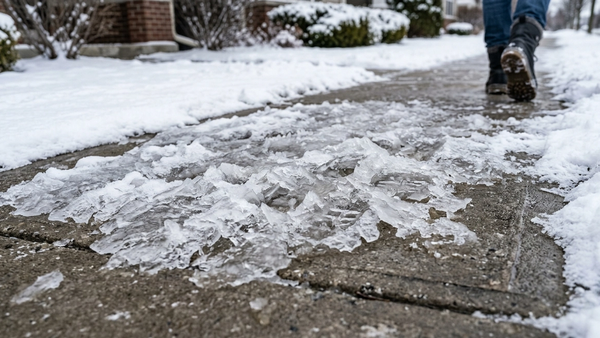
First, you must demonstrate that snow and ice had accumulated on the sidewalk or parking lot in elevations or ridges that were of such a size and character that they constituted an unreasonable obstruction to safe travel. A thin, smooth layer of ice—often called "black ice"—might not qualify under this specific doctrine because it does not form the physical "hills and ridges" the law describes. The obstruction must be a noticeable, physical barrier rather than just a slippery surface.
2. Actual or Constructive Notice
Second, the plaintiff must show that the property owner had actual notice of the condition or that the condition had existed for a sufficient length of time that the owner should have known about it (constructive notice). If a ridge of ice formed ten minutes before you fell, a court likely won't find the owner liable. However, if the ice had been present for three days following a storm, the owner’s failure to act becomes a central point of negligence.
3. The Source of the Danger
Finally, the plaintiff must prove that it was these specific hills and ridges that caused them to fall. This sounds simple, but in a legal setting, it requires precise evidence. If you slipped on a flat, clear patch of pavement but claimed it was a ridge five feet away that was the problem, your case may struggle. The causation must be direct and tied specifically to the unnatural accumulation.
Generally Slippery Conditions vs. Specific Hazards
One of the most important nuances of Pennsylvania law is the distinction between "generally slippery conditions" and "specific hazards." The Hills and Ridges doctrine only applies when the entire region is experiencing a weather event that makes surfaces generally slippery. This is a common defense used by insurance companies to avoid paying out on winter injury claims.
If the entire town is covered in a layer of sleet and the temperatures are below freezing, a property owner is generally protected until a reasonable time has passed after the storm ends. The law does not require owners to be out with shovels and salt in the middle of a blizzard to prevent every possible slip. However, if the weather has been clear for days and there is a single, massive mound of ice in front of a store entrance caused by a faulty rain gutter, the Hills and Ridges doctrine may not apply at all. In that scenario, the ice is a specific hazard rather than a general environmental condition.
When the Doctrine Does Not Apply: Key Exceptions
There are several critical exceptions where a property owner can still be held liable even if there is snow on the ground. These exceptions are the primary way legal teams build successful cases for slip-and-fall victims in the Commonwealth.
Localized Patches of Ice
If the sidewalks are generally clear but there is one localized patch of ice that causes a fall, the doctrine usually does not apply. This is common in "freeze-thaw" cycles where snow melts during the day and refreezes into a puddle at night. Because the slippery condition is not "general" across the area, the owner may be held to a standard of property owner notice of hazards.
Artificial Conditions and Negligence
If the ice was caused by an artificial condition rather than natural precipitation, the doctrine is discarded. Common examples include:
- Water leaking from a defective downspout.
- A parking lot designed with poor drainage that allows water to pool and freeze.
- A broken sprinkler system that creates an ice rink on a walkway.
- Snow that was moved by a plow into a pile that then melted and refroze across a pedestrian path.
In these cases, the ice is considered man-made or at least exacerbated by human negligence. According to the Cornell Law School Legal Information Institute, negligence involves a failure to behave with the level of care that someone of ordinary prudence would have exercised under the same circumstances. In Pennsylvania, an owner cannot hide behind the weather if their own broken pipe created the danger.
The Duty of Care for Pennsylvania Invitees
Your legal status on the property also dictates the duty of care owed to you. Pennsylvania follows traditional classifications for visitors. An "invitee" is someone on the property for the owner's benefit, such as a customer in a grocery store or a guest in a hotel. Property owners owe the highest duty of care to invitees. They must inspect the property for hidden dangers and proactively clear ice and snow within a reasonable timeframe.
If you are a "licensee" (a social guest), the owner must warn you of known dangers but generally has a slightly lower burden of proactive inspection. Understanding your status as a visitor is essential, as it sets the baseline for what the property owner should have done to protect you from winter weather hazards.
Proving "Reasonable Time" for Snow Removal
How long does a landlord or business owner have to clear their walkways? Pennsylvania law does not provide a specific number of minutes or hours. Instead, it uses the "reasonableness" standard. Generally, a property owner is permitted a "reasonable time" to remove snow and ice after the precipitation has stopped.
If a storm ends at 3:00 AM, a business is expected to have their entrances safe by the time they open for customers in the morning. If you slip at 6:00 AM while it is still pitch black and snowing, the owner has a much stronger defense. However, if the snow stopped on Tuesday and you fell on Thursday, the window of "reasonableness" has clearly closed. The National Safety Council emphasizes that proactive maintenance is the key to preventing these incidents, and a two-day delay is rarely considered reasonable in a commercial setting.
Comparative Negligence in PA Snow and Ice Cases
Pennsylvania follows a modified comparative negligence rule. This means that if you are partially at fault for your own fall, your compensation will be reduced by your percentage of fault. If you are found to be more than 50% at fault, you cannot recover any damages at all. This is often referred to as the Pennsylvania 51% rule.
In snow and ice cases, the defense will often argue that the danger was "open and obvious." They may ask:
- Were you wearing appropriate footwear for the weather?
- Were you distracted by your phone?
- Did you choose to walk through a visible snowdrift instead of a cleared path?
- Were you running or walking too fast for the conditions?
If a jury decides you were 20% at fault because you were wearing high heels in a blizzard, and your total damages are $100,000, you would only receive $80,000. It is vital to prepare for these arguments early in the case.
How Weather Experts Influence Your Case Value
Because the Hills and Ridges doctrine relies heavily on the timing and nature of the weather, forensic meteorologists often play a massive role in these lawsuits. A forensic meteorologist can provide certified weather data that proves:
- Exactly when the precipitation started and stopped.
- Whether there was a "general" condition in the area.
- Whether the ice patch that caused your fall was the result of a storm that ended days prior or a storm that was currently in progress.
This scientific data can debunk a property owner's claim that it was "still snowing" when you fell. If the weather records show the storm ended six hours before your accident, the Hills and Ridges defense begins to crumble. For a sense of how these factors impact your potential recovery, you can use a Pennsylvania premises liability calculator to see how various elements affect settlement ranges.
Documenting a Winter Slip and Fall Scene
Evidence is at its most fragile in winter injury cases. Snow melts, plows come by, and salt is spread shortly after an accident. To protect your rights, you must document the scene as quickly as possible. If you are physically unable, try to have a friend or family member do the following:
- Take Photos and Video: Capture the exact spot where you fell. Take close-up shots of the ice and wide-angle shots of the surrounding area to show if other parts of the sidewalk were cleared.
- Identify the Hazard: Look for the "hills and ridges." Is the ice lumpy, frozen in footprints, or smooth?
- Check for Sources: Is there a nearby pipe dripping water? Is the ice only under a specific roof line?
- Save Your Footwear: Do not throw away or continue wearing the shoes you had on during the fall. They are evidence of your own due diligence.
- Get Witness Contact Info: If anyone saw you fall or helped you up, their testimony regarding the conditions at that exact moment is invaluable.
Municipal Liability: Suing a City or Borough
In Pennsylvania, slip-and-fall cases involving government-owned property (like public sidewalks or city hall steps) are subject to the Sovereign Immunity Act or the Political Subdivision Tort Claims Act. These laws generally make it harder to sue the government than a private business.
For a claim against a municipality to succeed, you must usually prove that the dangerous condition of the sidewalk created a reasonably foreseeable risk of the kind of injury that occurred. Furthermore, the notice requirements and statutes of limitations are often much shorter when a government entity is involved. You may only have six months to file a formal notice of intent to sue, compared to the standard two-year personal injury statute of limitations. For more on how other states handle these barriers, you might find it useful to compare this with the Illinois natural accumulation rule.
The Impact of Medical Records on Case Evaluation
In the aftermath of a fall, seeking immediate medical attention is not just about your health—it is about the integrity of your legal claim. Insurance adjusters look for "gaps in treatment" to argue that your injuries weren't actually caused by the fall.
Winter falls often lead to serious injuries such as:
- Traumatic brain injuries (TBI) from hitting the back of the head on ice.
- Herniated discs from the jarring impact of a fall.
- Fractured wrists and ankles (common "reach out" injuries).
- Hip fractures, which can be catastrophic for older adults.
Your medical records serve as the primary evidence of your "damages." Without a clear link between the icy hill or ridge and your specific medical diagnosis, a property owner may successfully argue that your pain is pre-existing. The Occupational Safety and Health Administration (OSHA) notes that falls are among the leading causes of workplace and public injuries during winter months, and medical documentation is the first step in proving the severity of these events.
Calculating the Financial Value of a Snow and Ice Injury
If you have overcome the Hills and Ridges doctrine and proven the property owner was negligent, the next step is determining what your case is worth. Compensation in Pennsylvania falls into two main categories: economic and non-economic damages.
Economic Damages
These are objective financial losses, such as:
- Past and future medical expenses.
- Lost wages for time taken off work.
- Loss of future earning capacity if you can no longer perform your job.
- Out-of-pocket costs for help with household chores or transportation.
Non-Economic Damages
These are more subjective and include:
- Pain and suffering.
- Emotional distress and anxiety.
- Loss of enjoyment of life (e.g., no longer being able to enjoy hobbies).
- Disfigurement or permanent scarring.
Because Pennsylvania does not have a hard cap on non-economic damages in most private premises liability cases, the value can vary wildly based on the quality of your legal representation and the impact the injury has had on your daily life.
Frequently Asked Questions About the Hills and Ridges Doctrine
Does the doctrine apply to black ice?
Generally, no. Because black ice is usually a thin, smooth, and invisible layer, it does not meet the physical description of "hills and ridges." However, cases involving black ice are still difficult because you must prove the owner had notice of an invisible hazard.
What if the property owner salted the ice, but I still fell?
If an owner salts but does a poor job, or if the salt melts the snow which then refreezes into a ridge, the doctrine may not apply. Once an owner starts maintenance, they must do so in a way that doesn't make the situation more dangerous.
Can I sue my landlord for snow on my apartment stairs?
Yes, if the landlord is responsible for common area maintenance in your lease. Landlords are held to the same "reasonableness" standard as business owners when it comes to clearing paths for tenants.
Does the doctrine apply to private homes?
Yes, it applies to residential homeowners as well. However, juries are often more sympathetic to a single homeowner than a large retail corporation like a supermarket.
Taking the Next Steps After a Winter Injury
Navigating the Pennsylvania Hills and Ridges doctrine requires a deep understanding of local case law and a meticulous approach to evidence. This doctrine was created to protect property owners from the impossible task of fighting Mother Nature, but it was not meant to excuse genuine negligence. If you have been injured, don't assume that the presence of snow means you have no case.
At CaseValue, we help victims understand the true strength of their claims. Whether you were injured at a commercial shopping center, an apartment complex, or on a public walkway, the specifics of the weather on that day will dictate your path forward. Use our specialized tools to get a clearer picture of your legal options.
If you are ready to see what your claim might be worth under Pennsylvania law, visit our Pennsylvania premises liability calculator for a free, instant case evaluation. Our team is here to help you move past the ice and toward the compensation you deserve.
Disclaimer: This blog post is for informational purposes only and does not constitute legal advice. For specific legal guidance regarding your situation, please consult with a qualified attorney.