Understanding Texas Premises Liability: The Three-Tier System
When you are injured on someone else’s property in the Lone Star State, your right to recover compensation is not automatic. Unlike some states that apply a general reasonableness standard to all property owners, Texas adheres to a traditional three-tier classification system. This system categorizes every person who enters a property into one of three groups: invitees, licensees, or trespassers. Each category carries a vastly different "duty of care," which is the legal obligation the owner owes to the visitor to ensure their safety.
This classification is the single most important factor in a Texas premises liability case. If the court determines you were a trespasser when you thought you were an invitee, your case could be dismissed before it even reaches a jury. This guide explores the nuances of these categories, how they impact your potential Texas premises liability settlement, and what you must prove to secure justice.
Affected by a Premises Liability Issue?
Our specialized tool can help you estimate the potential worth of your case based on current laws and precedents.
The Invitee: The Highest Level of Protection
In Texas, an invitee is a person who enters a premises with the owner’s knowledge and for the mutual benefit of both parties. This is the highest status a visitor can hold, and it commands the most rigorous duty of care from the property owner. Broadly speaking, there are two types of invitees in Texas: public invitees and business invitees.
Business Invitees
A business invitee is someone invited onto the property for a purpose connected with business dealings. The most common examples include customers in a retail store, patrons at a restaurant, or guests at a hotel. Even if you haven't purchased anything yet—such as a "window shopper" in a mall—Texas law generally considers you a business invitee because your presence is for the potential benefit of the owner.
Public Invitees
A public invitee is a person who is invited to enter or remain on land as a member of the public for a purpose for which the land is held open to the public. Examples include visitors to a public park, a library, or a government building. The legal premises liability standards for public invitees are identical to those for business invitees.
The Owner's Duty to Invitees
Under Texas law, a property owner owes an invitee the duty to exercise reasonable care to protect them from property conditions that create an unreasonable risk of harm that the owner actually knew about, or through the exercise of reasonable care, should have known about. This duty includes three specific requirements:
- The duty to inspect the premises regularly to discover hidden dangers.
- The duty to warn the invitee of any dangerous conditions that are not open and obvious.
- The duty to make the premises safe by repairing or cordoning off the hazard.
The Licensee: The Intermediate Tier
A licensee is someone who enters the property for their own purposes but with the owner’s express or implied permission. Unlike the invitee, there is no "mutual benefit" here; the visitor is there for their own convenience or pleasure. The most common example of a licensee is a social guest at a private residence.
Common Examples of Licensees
Beyond social guests, other examples of licensees include:
- Door-to-door salespeople who have not been explicitly turned away.
- Off-duty employees who return to the workplace for personal reasons.
- Neighbors stopping by to borrow a tool.
The Owner's Duty to Licensees
The duty of care owed to a licensee is significantly lower than that owed to an invitee. In Texas, a property owner is liable for a licensee’s injuries only if:
- The owner had actual knowledge of a condition that created an unreasonable risk of harm.
- The licensee did not have actual knowledge of that same condition.
- The owner failed to exercise reasonable care to make the condition safe or warn the licensee.
Crucially, unlike the duty owed to an invitee, the owner has no duty to inspect the property for the benefit of a licensee. If a hazard existed that the owner should have known about but didn't actually see, a licensee generally cannot recover damages. This distinction often leads to intense litigation over what the owner actually knew at the time of the accident.
The Trespasser: Limited Rights and Strict Rules
A trespasser is someone who enters a property without any lawful right, permission, or invitation. In Texas, the general rule is that a property owner owes a trespasser only one duty: not to injure them willfully, wantonly, or through gross negligence. This means an owner cannot set "booby traps" or intentionally cause harm, but they are not required to keep the premises safe for someone who isn't supposed to be there.
Exceptions to the Trespasser Rule
While the duty to trespassers is minimal, there are critical exceptions that can change the outcome of a case. One of the most significant is the "Attractive Nuisance Doctrine." This applies specifically to children. If a property owner has a feature that is likely to attract children—such as a swimming pool, a trampoline, or heavy machinery—and the owner fails to secure it, they may be held liable if a trespassing child is injured.
Another exception involves "discovered trespassers." If an owner becomes aware that a trespasser is on the property and in a position of peril, the owner may then have a duty to exercise ordinary care to avoid injuring them. However, proving an owner's awareness is a high hurdle for plaintiffs to clear.
Proving Actual vs. Constructive Notice
In Texas premises liability law, "notice" refers to the property owner's awareness of a dangerous condition. This is often the "make-or-break" element of a slip-and-fall case. There are two types of notice:
Actual Notice
Actual notice means the owner or their employees were directly aware of the hazard. For example, if a grocery store clerk saw a bottle of oil shatter on the floor and walked away without cleaning it, the store has actual notice. Evidence of actual notice can include store logs, surveillance footage showing the spill occurring in front of staff, or witness testimony.
Constructive Notice
Constructive notice is more complex. It means the hazard existed for such a length of time that the owner should have discovered it through reasonable inspection. Texas courts often use the "time-notice rule." If a banana peel on a floor is black and flattened, it suggests it has been there a long time, supporting constructive notice. If it is fresh and yellow, a court may find it hasn't been there long enough for the owner to be held responsible for not finding it.
Because businesses have a duty to inspect, constructive notice is a vital tool for invitees. However, it is entirely unavailable to licensees, who must prove actual knowledge. If you are pursuing a claim, documenting the appearance of the hazard immediately is essential for establishing this timeline.
The "Open and Obvious" Defense in Texas
A frequent defense used by Texas property owners is the "Open and Obvious" doctrine. Texas law generally holds that an owner has no duty to warn an invitee of a danger that is so apparent that a reasonable person would see it and avoid it.
For example, if there is a massive, bright yellow "Caution: Wet Floor" sign next to a puddle, or if a giant hole in the ground is clearly visible in broad daylight, the owner may argue the hazard was open and obvious. If the court agrees, the owner's duty to warn is essentially negated. However, there are exceptions, such as when the hazard is "unavoidable" (e.g., the only exit from a building is through a dangerous area). Understanding how these defenses interact with Texas tort reform limits is crucial for managing expectations regarding case value.
Comparative Negligence: Can You Still Recover if at Fault?
Texas follows a "modified comparative negligence" rule, specifically the 51% bar. This means that if you are partially responsible for your own injury—perhaps you were looking at your phone when you tripped—you can still recover damages as long as your fault is not 51% or greater.
If you are found to be 20% at fault, your total settlement will be reduced by 20%. For instance, a $100,000 award would be reduced to $80,000. Insurance companies will aggressively try to shift the blame onto the victim to reduce their payout or bar recovery entirely. This is why gathering evidence like OSHA safety reports for commercial properties or incident reports is so important.
Specialized Scenarios: Workplace and Construction Injuries
Premises liability often overlaps with other areas of law, particularly regarding workplace injuries. In Texas, the situation is unique because employers are not required to carry workers' compensation insurance. If you are injured on a job site where the employer is a "non-subscriber," you may be able to sue them directly for negligence.
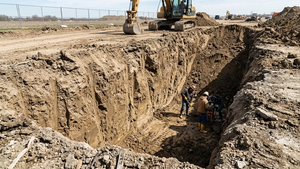
In these cases, the classification system still applies. A contractor working on a site is typically an invitee of the property owner. If a wall collapses or a trench fails due to known hazards, the victim may have a strong claim. For more information on these specific Texas rules, see our guide on workplace negligence in Texas.
Calculating Damages: What is Your Texas Case Worth?
If you can establish the owner’s duty and their breach of that duty, the next step is determining the value of your damages. In Texas, damages are divided into economic and non-economic categories.
Economic Damages
These are objective financial losses that can be calculated using receipts and invoices. They include:
- Past and future medical expenses (hospital stays, surgery, physical therapy).
- Lost wages from missed work.
- Loss of earning capacity if you can no longer perform your job.
- Property damage.
Non-Economic Damages
These are subjective losses that are harder to quantify but often represent the largest portion of a settlement. They include:
- Pain and suffering.
- Mental anguish and emotional distress.
- Disfigurement or physical impairment.
- Loss of consortium (impact on your relationship with your spouse).
While Texas has caps on non-economic damages in medical malpractice cases, most general premises liability cases do not have a hard cap on these damages, though they must be supported by evidence. You can get an estimate of your potential recovery by using a legal case value calculator.
The Role of Evidence in Your Premises Liability Claim
Because premises liability cases often boil down to "he-said, she-said" regarding notice and classification, evidence is the foundation of a successful claim. To protect your rights, you should attempt to gather the following immediately after an accident:
- Photographs: Take clear pictures of the hazard from multiple angles. Do this before the owner has a chance to fix it or clean it up.
- Video: Look for security cameras in the area. Most businesses overwrite their footage every few days, so your attorney needs to send a "spoliation letter" immediately to preserve that evidence.
- Witness Information: Get the names and phone numbers of anyone who saw the fall or the condition of the floor.
- Incident Reports: If you are in a business, ask to fill out an incident report. Request a copy for your records before you leave.
- Medical Records: See a doctor immediately. A "gap in treatment" is a common tactic used by insurers to argue that your injuries aren't serious or weren't caused by the accident.
Statutes of Limitations: The Clock is Ticking
In Texas, the statute of limitations for most personal injury and premises liability claims is two years from the date of the injury. If you fail to file a lawsuit within this window, you lose your right to recover compensation forever. While two years may seem like a long time, building a case—especially one involving complex constructive notice arguments—takes significant time. Waiting until the last minute often results in lost evidence and faded witness memories.
Why Classification Matters for Social Guests
Many people are surprised to learn that they have fewer rights in their best friend's house than in a Walmart. Because social guests are licensees, the homeowner is only liable if they had actual knowledge of the danger. This creates a "hear no evil, see no evil" defense for some homeowners. If a loose floorboard in a hallway causes a guest to fall, the guest must prove the homeowner actually knew the board was loose and dangerous. In a store, the guest would only need to prove the store should have known. This highlights the importance of working with an experienced investigator who can find proof of prior complaints or previous repairs that demonstrate actual knowledge.
Seeking Justice Against Government Entities
If your injury occurred on government property—such as a slippery floor in a post office or a broken sidewalk owned by the city of Houston—special rules apply. The Texas Tort Claims Act governs these cases. Filing a claim against the government requires navigating sovereign immunity and strict notice requirements that are often as short as six months. In these cases, the visitor is typically treated as a licensee unless they paid for the use of the premises (like a public swimming pool entry fee), in which case they may be elevated to invitee status.
Conclusion: Evaluating Your Texas Premises Case
The Texas three-tier system is designed to provide clear boundaries for property owner liability, but it often creates hurdles for victims seeking fair compensation. Whether you were at a grocery store, a friend's house, or a construction site, your classification as an invitee, licensee, or trespasser will dictate the legal path forward.
Don't leave your recovery to chance. Understanding the nuances of actual knowledge, constructive notice, and comparative fault is the first step toward a successful settlement. If you’ve been injured due to a dangerous property condition, take the next step in protecting your future. Use our Texas premises liability calculator today to understand what your claim may be worth and receive a free evaluation of your case.
Disclaimer: This blog post is for informational purposes only and does not constitute legal advice. For specific legal guidance regarding your situation, please consult with a qualified attorney.