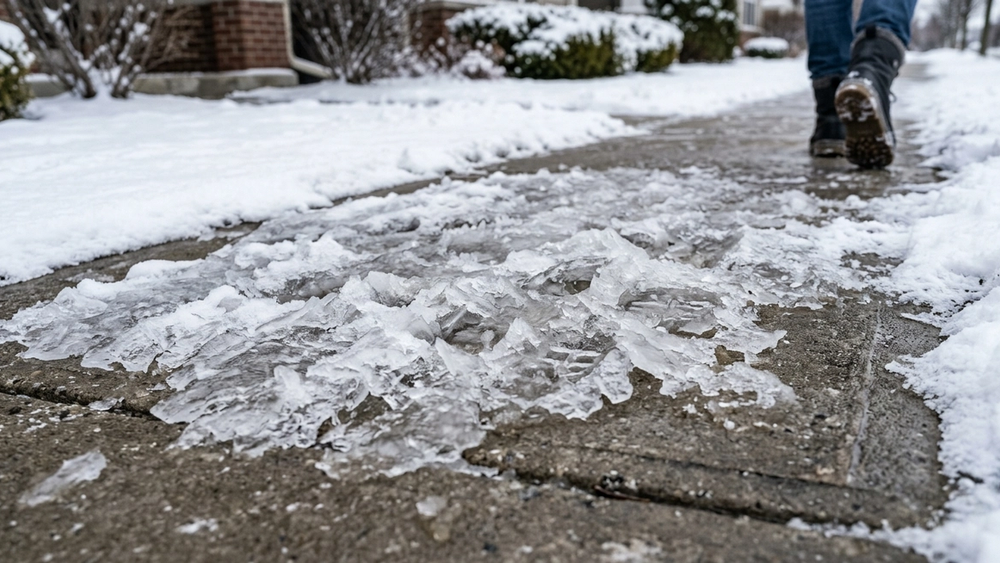
Understanding Winter Liability in Illinois
Winter in Illinois is more than just a season; it is a significant period of legal risk for property owners and a dangerous time for pedestrians. From the icy winds of Chicago to the frozen plains of central Illinois, snow and ice are unavoidable. However, when an individual slips, falls, and suffers a traumatic injury, the question of who is responsible becomes a complex legal battle. Unlike many other states that require property owners to keep their premises clear of snow and ice within a reasonable timeframe, Illinois operates under a unique doctrine known as the Natural Accumulation Rule.
This rule fundamentally alters the landscape of winter slip and fall liability. It serves as a shield for property owners in many circumstances, yet it contains critical exceptions that, if understood correctly, allow victims to secure justice. For an injured party, the difference between a successful settlement and a dismissed claim often hinges on proving that the ice they slipped on was not just "there," but was created or aggravated by the property owner's negligence. Understanding these nuances is the first step toward determining if your injury warrants a legal claim. To get a baseline estimate of what your potential claim could be worth under state law, you can utilize our Illinois premises liability calculator to see how various factors influence case value.
Affected by a Premises Liability Issue?
Our specialized tool can help you estimate the potential worth of your case based on current laws and precedents.
The Core of the Natural Accumulation Rule
At its most basic level, the Natural Accumulation Rule states that a property owner in Illinois generally does not have a legal duty to remove snow or ice that has accumulated naturally on their property. The rationale behind this long-standing doctrine is that it is considered unreasonable and overly burdensome to expect property owners to battle the elements in a state where winter weather is persistent and predictable. Under this rule, if it snows six inches and you slip on a public sidewalk or a store’s parking lot before the owner has a chance to clear it, the law typically finds that the owner is not liable.
According to the Legal Information Institute, premises liability traditionally hinges on the owner's knowledge of a hazard and their failure to fix it. However, the Natural Accumulation Rule creates a specific carve-out for the "acts of God" that occur during an Illinois winter. The courts have historically held that pedestrians should be aware of the dangers of winter and take their own precautions. This means that a mere presence of ice or snow is not enough to prove negligence; there must be something more—something that turns a natural occurrence into a man-made hazard.
Natural vs. Unnatural Accumulation
The pivot point of any Illinois snow and ice case is the distinction between natural and unnatural accumulation. This is where most legal battles are won or lost. While property owners are shielded from natural accumulation, they are strictly liable for injuries resulting from an unnatural accumulation. An unnatural accumulation is one where the snow or ice was caused, aggravated, or placed by the property owner or an agent of the property owner.
Common examples of unnatural accumulation include:
- Faulty Drainage Systems: If a building has a clogged gutter that causes water to drip onto a sidewalk and freeze into a patch of "black ice," that is an unnatural accumulation.
- Improper Snow Piling: When a snowplow operator creates a large mound of snow in a parking lot, and that mound later melts and refreezes across a walking path, the resulting ice is considered unnatural.
- Sump Pump Discharge: If a property owner directs their sump pump to drain onto a public walkway where it subsequently freezes, they have created an unnatural hazard.
- Structural Defects: Sloping pavement that allows water to pool in a specific area, or uneven concrete that catches runoff, can turn a simple winter day into a liability trap.
Proving that the accumulation was unnatural requires a deep dive into the specifics of the property's design and maintenance history. It is not enough to say the ice was slippery; you must show that the owner’s actions—or their failure to maintain their building—directly caused the specific patch of ice that led to your fall.
The Illinois Snow and Ice Removal Act
In 1979, the Illinois legislature passed the Snow and Ice Removal Act (745 ILCS 75/) to encourage residential property owners to clear their sidewalks without fear of being sued for doing a poor job. Before this act, many homeowners were afraid that if they shoveled their walk but left a thin layer of ice, they would be creating an "unnatural accumulation" and thus increasing their liability. This paradox led many people to simply leave the snow untouched.
The Act provides that any person who is a lessor, occupant, or owner of a residential property and who removes or attempts to remove snow or ice from sidewalks abutting the property is not liable for personal injuries caused by their efforts. However, there is a major caveat: this protection only applies if the owner's conduct was not "willful or wanton." This means that while a homeowner isn't liable for simple mistakes (like missing a spot or using the wrong salt), they can still be held responsible if they intentionally create a dangerous situation or act with a complete disregard for the safety of others. It is important to note that this specific statutory protection is primarily geared toward residential owners; commercial property owners often face a higher and different standard of scrutiny.
Duty of Care for Commercial Property Owners
While residential owners enjoy some protections under the Snow and Ice Removal Act, commercial entities—such as grocery stores, shopping malls, and office complexes—are held to a standard of "reasonable care" regarding their invitees. While the Natural Accumulation Rule still applies to commercial owners, they cannot simply ignore the safety of their customers. If a business owner chooses to remove snow and ice, they must do so in a manner that does not create a new, unnatural danger.
Furthermore, many commercial properties have contractual obligations that can supersede the general rule. For example, if a retail store’s lease explicitly states that they are responsible for maintaining a dry and safe entryway at all times, a victim may be able to argue that the store breached its contractual duty of care, regardless of whether the accumulation was natural. In these cases, calculating the value of a premises claim requires looking at lease agreements, maintenance logs, and surveillance footage to determine if the business followed its own internal safety protocols.
The "Assumed Duty" and Voluntarily Undertaken Tasks
One of the most complex areas of Illinois law involves the concept of "voluntary undertaking." If a property owner has no initial duty to remove natural snow but chooses to do so anyway, they must perform that task with reasonable care. If they perform the task negligently and that negligence leads to an injury, they may be held liable.
For instance, if a property owner hires a snow removal company, and that company plows the lot in a way that blocks handicap access or creates a blind spot of ice, the owner (and the contractor) may have assumed a duty that they then breached. This often comes into play in apartment complexes where the landlord provides snow removal as part of the amenities. If the landlord promises to keep the parking lot clear and fails to do so after a storm, or clears it in a way that leaves hidden hazards, the Natural Accumulation Rule may no longer protect them. This shift from no-duty to assumed-duty is a frequent point of litigation in Illinois courts.
Proving Actual and Constructive Notice
Even if a plaintiff can prove that an accumulation was unnatural, they must also demonstrate that the property owner had "notice" of the condition. In the world of personal injury, notice comes in two forms: actual and constructive. Actual notice means the owner or their employees specifically knew the ice patch existed. This could be proven through an email, a previous complaint from another customer, or testimony that an employee saw the hazard and did nothing.
Constructive notice is more common and often harder to prove. It means the hazard existed for a long enough period that the owner should have known about it through the exercise of reasonable care. To establish constructive notice in a snow and ice case, legal teams often look at weather patterns and the physical appearance of the ice. If a patch of ice is thick, dirty, and covered in footprints, it suggests it has been there for hours or even days, giving the owner ample time to discover and salt the area. The Occupational Safety and Health Administration emphasizes that proactive monitoring is essential for safety, and a failure to monitor often serves as the basis for proving constructive notice in commercial settings.
The Open and Obvious Doctrine in Snow Cases
In many premises liability cases, defendants will argue that the hazard was "open and obvious." This doctrine suggests that if a danger is so clear that a reasonable person would see it and avoid it, the property owner no longer has a duty to warn or protect the visitor. In Illinois, snow and ice are often considered open and obvious hazards. After all, if it is 20 degrees outside and there is white powder on the ground, most people realize it might be slippery.
However, there is an "extreme necessity" or "forgetfulness" exception to this doctrine. If a customer must cross a patch of ice to enter the only entrance of a pharmacy to get life-saving medication, the court may find that the owner still had a duty to clear the path, despite the danger being obvious. The law understands that sometimes pedestrians have no choice but to encounter a hazard. Successfully navigating the open and obvious defense requires proving that the victim was acting reasonably under the circumstances and that the owner's failure to provide a safe alternative was the primary cause of the accident.
Comparative Negligence: The 51% Rule
Illinois follows a modified comparative negligence system. This means that if you are partially at fault for your own fall, your compensation will be reduced by your percentage of fault. Crucially, if you are found to be more than 50% at fault, you are barred from recovering any damages whatsoever. In snow and ice cases, insurance companies almost always try to shift the blame onto the victim.
Common arguments used to increase a victim's fault percentage include:
- Inappropriate Footwear: Claiming the victim was wearing high heels or smooth-soled shoes in a blizzard.
- Distracted Walking: Arguing the victim was looking at their phone and not the ground.
- Speed: Suggesting the victim was running or walking too fast for the conditions.
- Ignoring Warnings: Claiming the victim walked past a "Wet Floor" sign or through a taped-off area.
Because the bar for recovery is strict, it is vital to document the scene immediately to counter these defenses. Evidence that you were walking cautiously and wearing appropriate winter gear can be the difference between a full recovery and a zero-dollar verdict.
Critical Evidence to Collect After a Fall
Because snow melts and ice evaporates, the evidence in an Illinois premises case is highly perishable. If you wait even a few hours to document the scene, the condition of the ground may have changed entirely due to temperature shifts or the application of salt by the owner after your fall. To protect your rights, you should aim to collect the following:
- Photographs and Video: Take wide-angle shots of the entire area and close-up shots of the specific patch of ice. Look for signs of unnatural accumulation, such as water dripping from a nearby gutter or a pile of snow that is melting into a puddle.
- Weather Reports: Certified data from the National Oceanic and Atmospheric Administration (NOAA) can prove what the temperature and precipitation levels were in the hours leading up to the fall.
- Witness Contact Information: Bystanders who saw you fall or who can testify that they also slipped in that same spot earlier in the day are invaluable.
- Surveillance Footage: Many businesses have cameras that may have captured the fall and, more importantly, may show how long the hazard was present before the accident.
- The Footwear: Keep the shoes you were wearing in a safe place; they are evidence of your own reasonable care.
Common Injuries and Long-Term Value
Slips on ice often result in "impact" injuries that can have life-altering consequences. Unlike a typical trip, a slip on ice often causes the feet to fly forward, leading to a hard landing on the tailbone, back, or back of the head. The Centers for Disease Control and Prevention notes that falls are a leading cause of traumatic brain injury (TBI) and hip fractures in older adults. In Illinois, if these injuries occur in a workplace setting, they may be subject to specific body-part award calculations under the workers' compensation system.
Typical injuries from snow and ice falls include:
- Wrist and Arm Fractures: Often caused when a victim tries to break their fall (FOOSH - Fall On Outstretched Hand).
- Hip and Pelvic Fractures: Serious injuries that often require surgery and long-term rehabilitation.
- Traumatic Brain Injuries (TBI): Concussions or more severe brain bleeds from the head striking the pavement.
- Spinal Cord Injuries: Herniated discs or vertebral fractures from the blunt force of the impact.
When valuing these cases, it is essential to look beyond the initial medical bills. Future physical therapy, lost earning capacity, and the chronic pain associated with joint fractures must be accounted for to ensure the settlement covers the true cost of the injury.
The Statute of Limitations in Illinois
Time is not on your side in a premises liability case. In Illinois, the statute of limitations for personal injury claims is generally two years from the date of the accident. However, this deadline is significantly shorter if the injury occurred on government-owned property, such as a city sidewalk or a public park. Claims against local governmental entities often require a formal notice of claim within one year.
Missing these deadlines is a permanent bar to recovery. Furthermore, the "Discovery Rule" rarely applies to slip and fall cases because the injury and the cause are immediately apparent. Because of the complexities of the Natural Accumulation Rule and the need for immediate evidence preservation, most legal experts recommend starting the process within days, not months, of the incident.
How Case Value is Calculated
Determining the financial value of a snow and ice injury claim involves more than just adding up bills. Insurance adjusters and attorneys use a variety of factors to reach a settlement number. These are generally divided into economic and non-economic damages.
- Economic Damages: These are quantifiable losses, including past and future medical expenses, lost wages, and out-of-pocket costs for household help or transportation during recovery.
- Non-Economic Damages: These cover intangible losses such as pain and suffering, emotional distress, loss of enjoyment of life, and disfigurement (scarring from surgeries).
- Aggravating Factors: If a property owner was aware of a dangerous drainage issue for years and repeatedly ignored it, this can push a settlement higher. Conversely, if there is strong evidence of comparative negligence, the value will drop.
Navigating the Legal Process
If you choose to pursue a claim, the process typically begins with an investigation and a demand letter to the property owner's insurance company. In many cases, the insurance company will initially deny the claim based on the Natural Accumulation Rule. Overcoming this denial requires a sophisticated presentation of evidence showing an unnatural accumulation or a breach of an assumed duty.
If a settlement cannot be reached, a lawsuit is filed, and the case enters the discovery phase. This is where your attorney can subpoena maintenance records, deposition snowplow contractors, and hire engineering experts to testify about drainage defects. Many cases settle just before trial once the evidence of an unnatural accumulation becomes undeniable.
Conclusion: Seeking Justice After a Fall
The Natural Accumulation Rule makes Illinois one of the more challenging states for slip and fall victims. However, it is not an absolute barrier. Many injuries are caused by man-made problems—clogged gutters, poorly designed parking lots, and negligent snow removal—that the law does not protect. If you or a loved one has suffered a serious injury on a snowy or icy surface, you deserve to know if the property owner failed in their duty to keep you safe.
Understanding your rights is the first step toward recovery. You don't have to guess what your claim might be worth. By analyzing the specifics of your accident, from the location of the fall to the extent of your medical treatment, you can gain a clearer picture of your legal standing. For a free, no-obligation estimate of your potential settlement based on Illinois law and your specific injuries, use our Illinois premises liability calculator today.
Disclaimer: This blog post is for informational purposes only and does not constitute legal advice. For specific legal guidance regarding your situation, please consult with a qualified attorney.