Understanding the Foundation of Notice in Premises Liability
In the realm of personal injury law, specifically premises liability, the concept of "notice" is the pivot upon which most cases turn. If you are injured on someone else's property, whether it is a retail store, a private residence, or a public park, the legal burden rests on you (the plaintiff) to prove that the property owner was negligent. Negligence in these cases is almost always tied to what the owner knew—or should have known—about the dangerous condition that caused your injury.
Without establishing notice, even a severe injury may not result in a successful claim. Property owners are not "guarantors" of safety; they are not automatically liable for every accident that happens on their land. Instead, they are required to maintain a reasonably safe environment. If a hazard appears suddenly—such as a shopper dropping a jar of pickles seconds before you walk by—the law generally holds that the owner did not have a reasonable opportunity to fix the issue. However, when an owner is aware of a risk and fails to act, they become liable for the damages that follow. This guide explores the complexities of notice, how to prove it, and why it is the most critical factor in understanding the potential value of a slip and fall claim.
Affected by a Premises Liability Issue?
Our specialized tool can help you estimate the potential worth of your case based on current laws and precedents.
Actual Notice: The "Smoking Gun" of Knowledge
Actual notice is exactly what it sounds like: the property owner or their agents (employees, managers, or contractors) had direct, literal knowledge that a specific hazard existed. This is often considered the "smoking gun" of a premises liability case because it eliminates the argument that the owner was unaware of the danger.
How Actual Notice is Established
Actual notice can be proven through several avenues of evidence:
- Employee Observations: If an employee walked past a spill and did not clean it up, they had actual notice.
- Prior Complaints: If another customer reported a loose handrail to the manager twenty minutes before you fell, the business had actual notice.
- Internal Maintenance Requests: Work orders or emails between staff members discussing a broken light fixture or a leaking roof prove the entity was aware of the defect.
- Admissions Against Interest: If a store clerk says, "I told them to fix that leak an hour ago," while helping you up, they have admitted to actual notice.
The Legal Impact of Actual Notice
When actual notice is proven, the defense's ability to minimize the claim significantly weakens. It demonstrates a conscious disregard for safety. In cases where the hazard was ignored for a long duration despite actual knowledge, the settlement value often increases because the negligence appears more egregious to a jury or an insurance adjuster.
Constructive Notice: The "Should Have Known" Standard
Most premises liability cases do not involve actual notice. Instead, they rely on "constructive notice." This legal fiction assumes that a property owner knows about a hazard if it has existed for such a length of time that a reasonable person, exercising ordinary care in the inspection and maintenance of the property, would have discovered and corrected it.
The Time-Duration Test
The core of constructive notice is time. How long was the hazard there? In many jurisdictions, this is known as the "Time-Duration Test." For example, if a liquid spill in a grocery store has footprints through it, is starting to dry at the edges, or has shopping cart tracks through the middle, a lawyer can argue that the spill was there for a significant amount of time. Conversely, a clear, pristine puddle of water might suggest the hazard was recent, making constructive notice harder to prove.
Patterns and Foreseeability
Constructive notice can also be established through the "recurring condition" theory. If a store has a refrigerator that leaks every Friday, or a parking lot that floods every time it rains, the owner is deemed to have constructive notice of these specific incidents because they are part of a foreseeable pattern. According to the Legal Information Institute at Cornell Law School, a land possessor's duty to invitees includes a duty to inspect the premises to discover dangerous latent conditions.
The "Mode of Operation" Rule: An Exception to Traditional Notice
In some states, the "Mode of Operation" rule provides a pathway to liability without needing to prove specific notice of a specific spill. This rule applies to businesses whose method of doing business creates a foreseeable risk of certain types of hazards.
Self-Service Environments
The most common example is a self-service salad bar or a produce section in a grocery store. If a business allows customers to handle loose items (like grapes or lettuce) or fill their own containers with liquids, it is highly foreseeable that items will fall to the floor. Under the mode of operation rule, the plaintiff does not have to prove how long a specific grape was on the floor; they only need to prove that the business's choice to operate a self-service station created a continuous risk of such hazards.
Shifting the Burden
When this rule applies, the burden of proof often shifts to the defendant. The business must then prove that they took extra precautions—such as more frequent sweeping or installing non-slip mats—to mitigate the heightened risk they created. This rule is a powerful tool for plaintiffs, as it bypasses the difficult task of proving exactly when a hazard appeared.
Visitor Classifications and the Duty of Care
The level of notice required often depends on your legal status on the property. Historically, the law divides visitors into three categories, each with a different level of protection:
- Visitor Category: Invitee, Definition: Someone on the property for business purposes (shoppers, hotel guests)., Duty of Care: Highest duty: Must inspect for, discover, and repair hazards.
- Visitor Category: Licensee, Definition: A social guest or someone there for their own benefit., Duty of Care: Moderate duty: Must warn of known, hidden dangers.
- Visitor Category: Trespasser, Definition: Someone on the property without permission., Duty of Care: Lowest duty: Generally, only to avoid intentional harm (except for children).
The Importance of Invitee Status
For most people seeking a case evaluation, they were "invitees." In these instances, the property owner's duty of care isn't just to fix what they know about, but to proactively look for dangers. If you are injured in a commercial setting, such as a shopping mall or a garage, the law expects the owner to have an active inspection schedule. Failure to have such a schedule is a primary way to establish constructive notice. For instance, in cases involving negligent security and criminal acts, the owner must be aware of local crime rates and previous incidents on the property to be held liable for a failure to provide security.
Proving Notice Through Maintenance Logs and Video Surveillance
In the modern legal landscape, technology plays a vital role in establishing notice. When a lawsuit is filed, one of the first steps a lawyer takes is a "preservation of evidence" letter, demanding that the property owner save all video footage and maintenance records.
Video Footage as a Timeline
Digital surveillance can definitively prove notice. If a camera shows a spill occurring at 2:00 PM and the plaintiff falling at 2:45 PM, the 45-minute window is usually more than enough to establish constructive notice. It can also show employees walking past the hazard without acknowledging it, which moves the case into actual notice territory.
Maintenance and "Sweep Logs"
Most large retailers use "sweep logs" or digital checklists to track when an aisle was last inspected. If these logs show that an aisle wasn't checked for three hours, the plaintiff has a strong argument for constructive notice. However, be wary—sometimes these logs are "ghosted" (filled out in advance or after the fact). Forensic analysis of digital logs can sometimes reveal that a manager signed off on an inspection that never actually took place.
Comparative Negligence: The "Open and Obvious" Defense
Property owners frequently fight notice claims by using the "Open and Obvious" defense. They argue that if a hazard was so large and visible that a reasonable person should have seen it and avoided it, the owner had no duty to warn of it.
How Comparative Negligence Works
If a jury finds that you were 20% responsible for your fall because you were looking at your phone rather than the floor, your total settlement will be reduced by 20%. In some "contributory negligence" states, being even 1% at fault can bar you from recovery entirely. However, most states follow a "comparative fault" model. The existence of notice doesn't automatically mean the owner is 100% liable; the visibility of the hazard matters.
Distractions and Human Factors
Lawyers often counter the "open and obvious" defense by pointing to distractions created by the store itself. If a retailer places bright, flashing advertisements at eye level, they cannot fairly complain when a customer fails to look at a clear puddle on the floor. The store successfully distracted the customer, which mitigates the customer's comparative fault.
The Role of Expert Witnesses in Proving Knowledge
To bridge the gap between an accident and a property owner’s knowledge, expert witnesses are often required. These professionals provide the technical context needed to convince a jury or an insurance company that the owner failed in their duty.
Floor Safety Experts
Tribometrists (scientists who measure floor friction) can testify about the "slip resistance" of a surface. They can also explain how long certain liquids take to seep into specific floor types, providing a scientific basis for how long a hazard has been present.
Retail and Property Management Experts
These experts testify about "industry standards." For example, they might testify that standard practice in the grocery industry is to inspect high-traffic areas every 15 to 30 minutes. If the defendant only inspected every two hours, the expert helps establish that the owner's "notice" protocol was deficient compared to their peers. This is crucial for calculating the impact of medical expenses on your total settlement, as proving clear liability makes insurers more likely to pay out for extensive treatments.
Typical Hazards Where Notice is Heavily Litigated
Not all hazards are created equal. Some are much easier to prove notice for than others. Understanding these categories helps in building a narrative of negligence.
- Liquid Spills: The classic case. Notice depends on the color, size, and signs of "aging" of the spill (like footprints).
- Weather-Related Hazards: Ice and snow cases are unique. Most states give owners a "grace period" to clear snow after a storm ends. Proving they knew ice had formed and failed to salt is a high bar.
- Structural Defects: A cracked sidewalk or a rotted stair usually has "long-term" notice because these issues don't happen overnight. The owner is presumed to know about the condition of their physical building.
- Inadequate Lighting: Burned-out bulbs in a stairwell suggest a lack of maintenance over time, establishing constructive notice.
- Falling Objects: In big-box stores, improperly stacked pallets are a major risk. If the pallet was leaning for hours before it fell, notice is established.
How Insurance Companies Fight the Notice Requirement
Insurance adjusters are trained to deny claims based on lack of notice. Their first response is often, "We had no idea that spill was there, and you can't prove how long it was there."
The "I Didn't See It" Trap
During a recorded statement, an adjuster might ask, "Did you see the spill before you fell?" If you say no, they might argue it was so small it was invisible (no constructive notice). If you say yes, they might argue it was "open and obvious" (no liability). Navigating these questions requires legal guidance. The goal of the insurer is to create a timeline where the hazard appeared only seconds before your accident, thereby shielding the property owner from liability.
Challenging the Quality of Notice
Insurers may also argue that while they knew a hazard existed, they didn't know this hazard existed. For example, if they knew a roof leaked in Aisle 4, but you slipped in Aisle 5, they may argue the notice didn't apply to the specific location of your fall. This is why thorough evidence collection—including photos of the surrounding area—is vital.
The Financial Impact: How Notice Affects Case Value
The strength of your evidence regarding notice is directly proportional to the settlement offer you receive. Cases with clear actual notice (like a recorded complaint or a surveillance video of a manager walking past a spill) have much higher "settlement floors" than cases based on thin constructive notice.
Liability Strength vs. Damages
A case with $100,000 in medical bills but weak notice evidence might only settle for $30,000 because of the risk of losing at trial. Conversely, a case with $50,000 in bills but undeniable proof that the owner ignored a danger for hours might settle for the full $100,000 or more. Proving notice reduces the "litigation risk" for the insurance company, making them more willing to pay the full value of the claim. To maximize this value, many victims find success by delaying a settlement until you reach maximum medical improvement, ensuring all future care needs are known before the notice argument is even finalized.
Frequently Asked Questions About Premises Notice
What if I don't know what caused me to fall?
If you cannot identify the hazard, you cannot prove the owner had notice of it. This is a common pitfall. You must be able to point to a specific condition (water, oil, a loose tile, etc.) to establish that notice was possible.
Does the owner need to know about the exact puddle?
Not always. Under the "recurring condition" theory, if the owner knows that a particular area always becomes slippery when it rains, they have notice of the general danger, even if they didn't know about the specific puddle that caused your fall.
Can a "Wet Floor" sign protect the owner?
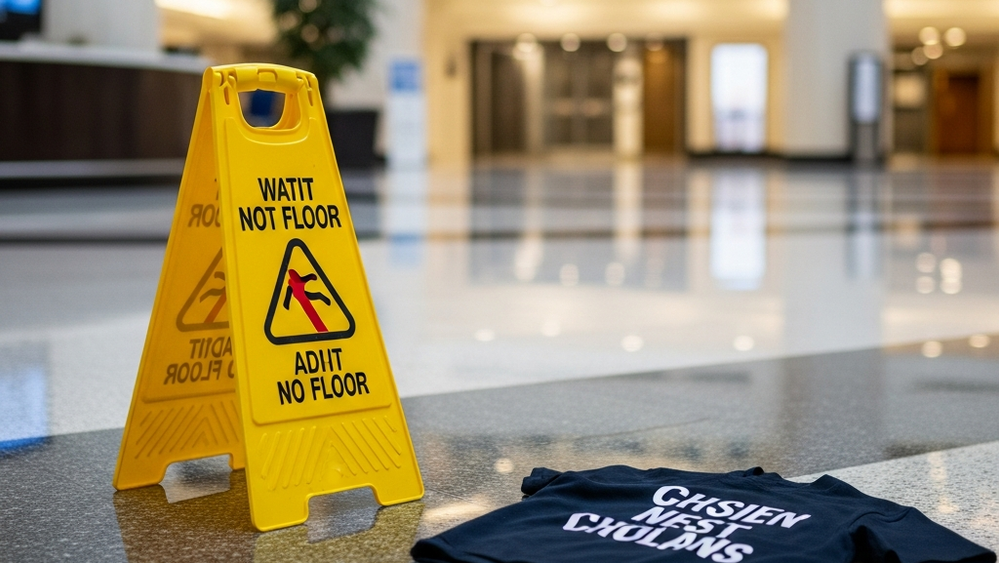
A yellow sign is evidence that the owner had notice and took steps to warn you. If the sign was placed properly, it usually defeats the claim. However, if the sign was hidden behind a pillar or placed 50 feet away from the actual spill, it may not be enough to satisfy their duty of care.
How long is a "reasonable" amount of time for a spill to be there?
There is no set number of minutes. In a busy fast-food restaurant, 15 minutes might be enough for constructive notice. In a quiet furniture store with few employees, the "reasonable" window might be longer. It is a fact-specific determination based on the nature of the business. The Occupational Safety and Health Administration (OSHA) provides guidelines for workplace safety that can sometimes be used to establish what a reasonable response time looks like in industrial settings.
Steps to Take Immediately After an Injury
To prove notice, you must act quickly. Property owners will clean up spills and fix broken stairs as soon as an accident is reported. If you are physically able, take the following steps:
- Take Photos and Video: Capture the hazard from multiple angles. Look for signs of how long it has been there (e.g., are there footprints or tracks?).
- Identify Witnesses: Get the names and phone numbers of anyone who saw the fall or the hazard. They may have noticed the spill long before you did.
- Report the Incident: Ensure a formal incident report is filed. Ask for a copy. Note the names of any employees who made comments about knowing the danger existed.
- Seek Medical Attention: Documentation of your injury is the other half of your case. Ensure the medical records reflect that your injury was caused by a fall.
- Contact a Lawyer Early: Evidence like surveillance video is often deleted after 7 to 30 days. A lawyer can send a legal hold to preserve this critical proof of notice.
Conclusion: Secure Your Claim with Expert Evaluation
Proving that a property owner knew about a hazard is the most challenging—and most important—part of a premises liability case. It requires a deep understanding of state laws, the ability to uncover hidden evidence, and the strategic use of experts. Without proof of notice, a property owner can simply claim the accident was an "unavoidable misfortune."
Do not let a negligent property owner escape responsibility by claiming ignorance. If you or a loved one has been injured due to a dangerous condition, your next step is to determine the true value of your claim based on the evidence of notice available.
Get a free case evaluation today to see how notice affects your legal rights and your potential settlement.
Disclaimer: This blog post is for informational purposes only and does not constitute legal advice. For specific legal guidance regarding your situation, please consult with a qualified attorney.