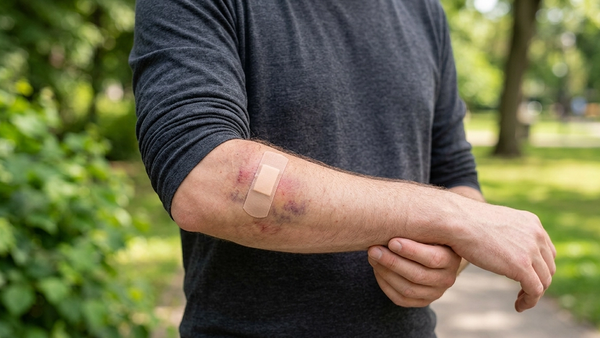
Introduction to Florida’s Strict Liability Dog Bite Laws
In many states, a dog owner might escape liability for a first-time attack if they had no reason to believe their pet was dangerous. This is often referred to as the "one-bite rule." However, Florida law is far more stringent. Under Florida Statute 767.04, the state operates under a strict liability standard. This means that if a dog bites someone, the owner is liable for the damages, regardless of the dog's prior behavior or the owner's knowledge of any vicious tendencies.
This legal framework is designed to prioritize the safety of the public and ensure that victims of animal attacks are compensated for their medical bills, lost wages, and emotional trauma. Because Florida is a high-population state with millions of pet owners, understanding the nuances of these laws is critical for both victims and dog owners alike. When you are bitten by a dog in the Sunshine State, you do not have to prove that the owner was negligent; you only need to prove that the bite occurred while you were in a public place or lawfully on private property.
Affected by a Dog Bites Issue?
Our specialized tool can help you estimate the potential worth of your case based on current laws and precedents.
The Legal Foundation of Florida Statute 767.04
The cornerstone of Florida’s dog bite jurisprudence is Florida Statute 767.04. This statute explicitly states that the owner of any dog that bites any person while such person is in or on a public place, or lawfully in or on a private place, including the property of the owner of the dog, is liable for damages suffered by persons bitten, regardless of the former viciousness of the dog or the owners' knowledge of such viciousness.
This legislative approach shifts the risk of owning a dog entirely onto the owner. Unlike a standard negligence claim—where a victim must prove the defendant failed to exercise reasonable care—a strict liability claim only requires proof of the act itself. This simplifies the legal path for victims, as they do not need to hunt for evidence of a dog’s "bad history" or interview neighbors about previous growling incidents. To understand how this compares to other jurisdictions, you might find our guide on the strict liability vs. one-bite rule helpful for broader context.
Defining Strict Liability in the Context of Personal Injury
Strict liability is a legal doctrine that holds a party responsible for their actions or products without the need to prove fault or intent. In the realm of personal injury, it is most commonly applied to defective products and animal attacks. The rationale is that certain activities—like keeping a domesticated predator—carry inherent risks. If those risks manifest in an injury, the party who chose to engage in that activity should bear the financial burden.
According to the Legal Information Institute at Cornell Law School, strict liability focuses on the nature of the act rather than the degree of care exercised by the actor. For a Florida dog bite victim, this means that even if the owner had the dog on a leash, behind a fence, and had invested in professional training, they are still legally responsible if the dog managed to bite someone. The law views the bite as an event that triggers liability automatically, provided the victim was not trespassing or behaving illegally.
The Death of the "One-Bite Rule" in Florida
Historically, many states followed common law principles that allowed a dog a "free bite." The idea was that an owner couldn't be held liable for an animal's behavior until the animal demonstrated a propensity for violence. Florida has effectively abolished this for bites. It is important to note, however, that Florida Statute 767.01 still applies to other types of injuries caused by dogs, such as a dog knocking a person over or chasing a cyclist, which may still involve negligence standards or different liability triggers.
By moving away from the one-bite rule, Florida legislators acknowledged that a dog bite is a serious medical event that can result in permanent disfigurement, infection, and psychological scarring. Statistics from the National Safety Council indicate that hundreds of thousands of people require medical attention for dog bites annually. Florida’s strict approach ensures that the burden of these injuries does not fall on the innocent victim who was simply walking down a public sidewalk or visiting a friend.
Key Elements: Who is an "Owner" under Florida Law?
While the statute seems straightforward, the definition of an "owner" can sometimes become a point of contention in litigation. In Florida, an owner is generally the person who has legal title to the dog. However, legal responsibility can sometimes extend to those who "harbor" or "keep" the dog. This distinction is vital in cases where a dog is living with a relative or a long-term pet sitter.
In most strict liability cases, the person who holds the ultimate control over the dog is the one who pays. If a dog is owned by a minor, the parents or legal guardians are typically held responsible for the damages. Identifying the correct defendant is the first step in using a Florida Dog Bite Calculator to determine the potential value of your claim. Without a clear owner or a responsible party with insurance coverage, recovering damages can become significantly more difficult.
Location Matters: Lawful Presence on Private Property
Florida's strict liability applies only if the victim was in a public place or "lawfully" on private property. A person is considered lawfully on private property when they are there in the performance of a duty imposed by law (such as a mail carrier or utility worker) or upon the express or implied invitation of the owner.
If a person is trespassing on private property with the intent to commit a crime or without any permission, the dog owner may not be held strictly liable. However, the line between an invited guest and a trespasser can be thin. For example, if a delivery driver walks onto a porch to leave a package, they are generally considered to be there with implied permission. Florida courts tend to protect victims who are on property for legitimate social or business purposes. Understanding these boundaries is a core part of any premises liability analysis associated with an animal attack.
The "Bad Dog" Sign Exception: A Unique Florida Defense
One of the most unique aspects of Florida dog bite law is the "Bad Dog" sign exception. Under Statute 767.04, a dog owner is not liable (except for victims under the age of 6) if at the time of the injury the owner had displayed in a prominent place on their premises a readable sign including the words "Bad Dog."
This sign serves as a legal shield for owners. It essentially puts the visitor on notice that a dangerous animal is present, and by entering the property, the visitor assumes the risk of an attack. However, the sign must be easily readable and placed in a location where a person entering the property would see it. Many owners use "Beware of Dog" signs, but legal experts often debate whether this specific phrasing satisfies the strict requirement of the "Bad Dog" language mentioned in the statute. This defense does not apply if the owner’s negligence proximately caused the injury, but it can effectively block a strict liability claim.
Florida’s 2023 Tort Reform and Comparative Negligence
In early 2023, Florida underwent significant tort reform that changed the state from a "pure" comparative negligence system to a "modified" comparative negligence system with a 50% bar. This has a direct impact on dog bite cases. Under the current rules, if a victim is found to be more than 50% at fault for the incident (for example, by severely provoking the dog), they are barred from recovering any damages from the owner.
Before this reform, a victim who was 90% at fault could still recover 10% of their damages. Now, the stakes are much higher. If an owner can prove the victim was the primary cause of the attack through provocation or illegal behavior, the entire claim could be dismissed. You can read more about these updates in our article on Florida Negligence Reform: The New 50% Bar Rule Explained. This shift makes it even more important to document the circumstances of the attack precisely.
Quantifying Damages: Economic vs. Non-Economic Losses
When a dog bite occurs, the "value" of the case is split into two main categories: economic and non-economic damages. Economic damages are objectively verifiable monetary losses. These include emergency room visits, plastic surgery to reduce scarring, physical therapy, and any income lost because the victim could not work during recovery. In severe cases, future medical expenses must also be calculated.
Non-Economic damages are more subjective. They cover pain and suffering, mental anguish, and the loss of enjoyment of life. Because dog bites often result in visible scars, the "humiliation" or "embarrassment" caused by disfigurement is a major component of non-economic damages. Florida does not currently have a cap on these damages for dog bite cases, meaning juries have the discretion to award significant amounts based on the severity of the trauma. To see how these factors compare across different types of injuries, consider reviewing our California Strict Liability Dog Bite Statute Guide for a look at how other high-value states handle these claims.
The Devastating Impact of Facial Injuries and Permanent Scarring
Dog bites are uniquely damaging because they often involve "crush and tear" injuries. Unlike a clean cut from a knife, a dog's teeth can cause irregular tissue damage that is difficult to repair without significant scarring. When these injuries occur on the face, the legal and financial value of the claim increases dramatically. Facial scarring can require multiple rounds of laser treatment or skin grafting.
Courts and insurance adjusters recognize that a permanent change to a person's appearance carries a lifelong emotional burden. This is why settlements for facial injuries are frequently much higher than bites to the legs or arms. Victims are encouraged to take high-resolution photographs of the injury immediately after the attack and throughout the healing process to provide clear evidence of the disfigurement. For more details on this, see our guide on facial injuries from dog attacks and settlement values.
Psychological Trauma: PTSD and the Invisible Wounds
Beyond the physical pain, many dog bite victims suffer from post-traumatic stress disorder (PTSD), cynophobia (the fear of dogs), and sleep disturbances. This is especially true if the attack was unprovoked and violent. Children, in particular, may suffer from night terrors and a lifelong aversion to animals following an attack.
Documenting these psychological wounds is essential. A victim should seek help from a licensed therapist or psychiatrist, as their records will serve as the primary evidence for mental anguish claims. The Centers for Disease Control and Prevention (CDC) emphasizes that the impact of a dog bite can last far beyond the physical healing of the skin. Including these "invisible wounds" in your case evaluation ensures that the settlement reflects the true cost of the attack.
Child Victims: Special Protections and Higher Settlement Values
Children are the most frequent victims of dog bites, often because they are smaller and more likely to interact with dogs at eye level. Florida law provides specific protections for child victims. As mentioned previously, the "Bad Dog" sign defense does not apply to children under the age of 6. This creates a nearly absolute liability for owners when a young child is injured on their property.
Furthermore, settlements for children often include a "restricted account" or a transition into an annuity, ensuring the funds are available for the child's future medical needs or education once they reach adulthood. Because children’s skin is more sensitive and their bodies are still growing, scarring can become more pronounced over time, requiring future surgeries. This long-term outlook is explained in depth in our post about child dog bite injuries and why settlements are higher.
The Role of Homeowners’ Insurance and Coverage Limits
In the vast majority of Florida dog bite cases, the defendant is not actually the dog owner, but the owner's insurance company. Homeowners’ insurance and renters’ insurance typically provide liability coverage for dog bites. Standard policies often have limits of $100,000 or $300,000. If the damages exceed these limits, the victim may need to look for additional assets or umbrella policies.
However, some insurance companies have started excluding certain "dangerous breeds" from coverage. If an owner has a breed like a Pit Bull, Rottweiler, or Doberman, their policy might explicitly state that bites from these dogs are not covered. In these instances, the owner is personally liable, which can make recovery difficult if they do not have significant assets. Always check for breed-specific exclusions when investigating a claim, as discussed in our article on dangerous breed restrictions.
Common Defenses: Provocation and Trespassing
Even with strict liability, an owner is not without defenses. The two most common are provocation and trespassing. Provocation involves a victim hitting, kicking, or otherwise taunting a dog until it reacts. Under Florida’s comparative negligence rules, if the owner can prove the victim provoked the animal, the victim's compensation will be reduced by their percentage of fault.
Trespassing is another powerful defense. If a person enters a fenced yard with a "No Trespassing" sign to steal property or simply without any right to be there, the strict liability statute may not protect them. The owner’s duty of care to a trespasser is significantly lower than their duty to an invited guest. To win a case where these defenses are raised, a victim needs strong witness testimony and photographic evidence of the scene to prove they were acting lawfully and peacefully.
Statute of Limitations: Timelines for Filing Your Florida Claim
Florida recently shortened its statute of limitations for negligence and personal injury claims. For most dog bite incidents occurring after the March 2023 reform, victims generally have two years from the date of the attack to file a lawsuit. Failing to meet this deadline means you permanently lose your right to seek compensation in court.
While two years may seem like a long time, building a robust case requires time. You must gather medical records, secure expert testimony regarding scarring or psychological impact, and negotiate with insurance adjusters who may be looking for reasons to deny the claim. Early action is almost always better for the victim's outcome. If you are unsure of your deadline, the U.S. Courts website provides resources on general civil procedure and the importance of timely filings.
Conclusion: Why a Case Evaluation is Essential
Navigating Florida's strict liability dog bite laws requires more than just knowing a bite occurred. You must account for comparative fault, insurance exclusions, and the potential impact of the "Bad Dog" sign defense. Because the damages in these cases—ranging from medical debt to permanent disfigurement—can be life-altering, you cannot afford to guess at your claim's worth.
If you or a loved one has been injured in an animal attack, the best way to protect your future is to get a professional assessment of your legal rights. Use our Florida Dog Bite Calculator today to start the process of understanding your case value and securing the justice you deserve.
Disclaimer: This blog post is for informational purposes only and does not constitute legal advice. For specific legal guidance regarding your situation, please consult with a qualified attorney.