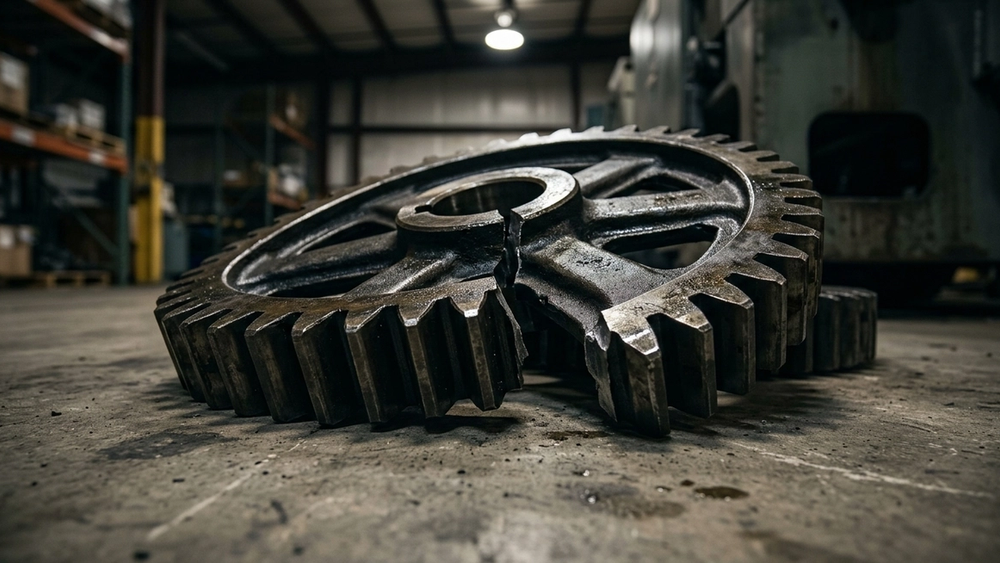
Introduction: The Silent Deadline in Indiana Product Liability
When a consumer is injured by a defective product in Indiana, their first thought is often the statute of limitations. In most personal injury cases, this is a two-year window from the date of the injury to file a lawsuit. However, product liability law in the Hoosier State carries a much more formidable and often invisible barrier: the Statute of Repose. Unlike a statute of limitations, which begins ticking when an injury occurs, a statute of repose starts when the product is first delivered to its initial user.
In Indiana, this period is ten years. This means that if a product was first sold and delivered to a consumer in 2012, and it malfunctions and causes a catastrophic injury in 2024, the victim may be legally barred from seeking any compensation from the manufacturer, even though they are well within the two-year statute of limitations for the injury itself. This rule can quietly end a case before it even reaches a courtroom. Understanding this deadline is critical for anyone dealing with injuries from industrial machinery, home appliances, or vehicles. If you are unsure where your case stands, you can use an Indiana product liability calculator to better understand the variables that impact your potential recovery.
Affected by a Product Liability Issue?
Our specialized tool can help you estimate the potential worth of your case based on current laws and precedents.
The Fundamental Difference: Statute of Limitations vs. Statute of Repose
It is common for victims to confuse these two legal concepts, but the difference is the difference between having a case and having nothing. The statute of limitations is focused on the plaintiff’s injury. It is designed to ensure that victims do not wait too long to pursue a claim after they realize they have been harmed. In Indiana, Indiana Code § 34-20-3-1 sets this at two years from the date the cause of action accrues.
In contrast, the statute of repose is focused on the manufacturer’s window of liability. It is a grant of immunity that arises after a certain period of time has passed since a specific event—usually the delivery of the product. While many states have similar structures, such as the Texas 15-year statute of repose, Indiana’s ten-year rule is among the stricter variations in the United States.
- Statute of Limitations: Begins at the time of injury or discovery.
- Statute of Repose: Begins at the time of delivery to the first user.
- Relationship: Both must be satisfied. If you miss either, the court will likely dismiss the case.
The 10-Year Clock: When Does the Trigger Event Occur?
According to Indiana Code Title 34, Article 20, the statute of repose begins when the product is delivered to its "initial user or consumer." This is a vital distinction. The clock does not start when the product is manufactured, nor does it start when it is sitting in a warehouse or on a dealer's showroom floor.
For example, if a tractor was manufactured in 2010 but sat at a dealership until it was finally purchased by a farmer in 2013, the ten-year clock started in 2013. The "initial user" is the first person who acquired the product for use, rather than for resale. This often requires deep investigation into purchase records, dealership logs, and original bills of sale. If a second-hand buyer is injured, they are still bound by the original delivery date to the first owner. If the first owner bought it twelve years ago, the second-hand buyer has no legal recourse against the manufacturer in Indiana, regardless of how recently they bought it used.
Why Indiana Implements a Statute of Repose
The rationale behind these laws is often debated. Lawmakers and insurance lobbyists argue that manufacturers should not be held liable for products that have been in the stream of commerce for decades. They argue that as products age, they are subject to wear and tear, lack of maintenance, and unauthorized modifications that the original manufacturer cannot control.
By placing a hard cap of ten years on liability, the state provides a level of predictability for businesses. This predictability allows insurance companies to set more accurate premiums for product liability coverage, which theoretically keeps consumer prices lower. However, for a victim who is paralyzed by a defective 11-year-old tool, this policy provides no comfort. It places the entire burden of a product's failure on the injured party once the decade-long "safe harbor" for the manufacturer has been reached.
Strict Liability and Negligence in Indiana Product Claims
To understand the impact of the statute of repose, one must understand the theories of recovery available in Indiana. Product liability claims typically fall under two umbrellas: strict liability and negligence.
Strict Liability
In Indiana, strict liability is primarily applied to cases involving a manufacturing defect or a product that is "unreasonably dangerous." Under this theory, the plaintiff does not have to prove that the manufacturer was "careless." They only need to prove that the product was defective and that the defect caused the injury. This is a powerful tool for plaintiffs, similar to the concepts outlined in the New Jersey Product Liability Act.
Negligence
Negligence claims focus on the conduct of the manufacturer. Did they fail to use reasonable care in the design or testing of the product? Did they fail to provide adequate warnings? In Indiana, the ten-year statute of repose applies to both strict liability and negligence claims if the harm is caused by a product. You cannot circumvent the ten-year rule by simply re-characterizing your claim as a "negligence" case rather than a "strict liability" case.
The "Initial Delivery" Rule: Identifying the Specific Date
Pinpointing the exact day the clock started is the most common point of contention in these lawsuits. Defense attorneys will scour every record to prove the product was delivered just one day over the ten-year mark.
- Direct Sales: For many industrial machines, the manufacturer sells directly to the user, making the delivery date easy to track via shipping manifests.
- Retail Consumer Goods: For appliances or electronics, the date of the retail transaction is usually the trigger.
- Leased Products: If a product is leased, the start date is generally when it was first delivered to the first lessee.
If the product is an component of a larger system, the rules can get even more complex. If a defective valve was replaced in a machine eight years ago, but the machine itself is fifteen years old, the valve may be considered a "new" product with its own ten-year clock. This is often where expert testimony becomes essential to determine which specific part failed and when that specific part entered the consumer's hands.
Exceptions to the 10-Year Rule: Asbestos and Latent Diseases
Indiana courts recognize that some injuries do not appear for decades. The most notable exception to the statute of repose involves asbestos exposure. Because diseases like mesothelioma have long latency periods—often 20 to 50 years—the ten-year statute of repose would effectively ban all asbestos claims before the victims even knew they were sick.
Under Indiana Code § 34-20-3-2, if the cause of action is based on a product liability claim against a person who mined or sold commercial asbestos, the statute of repose does not apply in the traditional sense. Instead, the claim must be filed within two years after the cause of action accrues (when the disease is discovered). This exception is narrow. It generally does not apply to other types of chemical exposure or latent injuries unless they meet very specific statutory criteria. For victims of other types of long-term exposure, the ten-year wall remains a significant obstacle.
The Impact of Product Modifications and Alterations
Even if a product is under ten years old, a manufacturer may try to use the "alteration or modification" defense to escape liability. Indiana law provides that if a user significantly changes a product, and that change is the cause of the injury, the manufacturer is not responsible.
However, there is a flip side to this regarding the statute of repose. If a manufacturer takes an old product (say, 15 years old) and performs a major overhaul or "re-manufactures" it, does the ten-year clock reset? In some cases, yes. If the modification is so extensive that it essentially creates a "new" product, the statute of repose may begin anew from the date of the re-delivery. This is a highly technical area of law that requires analyzing whether the modification was "substantial" enough to be considered a new introduction into the stream of commerce.
Reconditioned or Remanufactured Products: Resetting the Clock?
There is a difference between a simple repair and reconditioning. If a manufacturer replaces a single worn-out belt on a machine, the clock does not reset. However, if the machine is sent back to the factory, stripped down to its frame, and rebuilt with modern safety controls and a new motor, the resulting product is often legally treated as a new entity.
In these instances, the plaintiff’s attorney must argue that the "useful life" of the product was extended or renewed by the manufacturer's own actions. If the court agrees that the product was remanufactured, the ten-year statute of repose starts over. This is critical for victims of old industrial equipment that has been "modernized" by the original equipment manufacturer (OEM). Without this rule, manufacturers could profit from selling old, rebuilt equipment while remaining immune from the consequences of any defects in those rebuilds.
Component Parts vs. Finished Goods: Who is Liable?
When a car’s brakes fail, is the victim suing the car manufacturer (the assembler) or the company that made the brake pads (the component manufacturer)? In Indiana, the statute of repose applies to both. However, the clock may start at different times for different parties.
If the brake pads were original to the car, the car's delivery date triggers the repose for both companies. If the brake pads were replaced three years ago on a twelve-year-old car, the car manufacturer is likely protected by the statute of repose, but the brake pad manufacturer is not.
Identifying the "defective unit" is a core strategy in bypassing a repose defense. If an attorney can prove that a newer component part was the actual cause of the failure, they can often keep the case alive even if the overall machine is "expired" under Indiana law. This mirrors the complexity found in landmark cases like those discussed in California's Greenman Doctrine, where the focus is on the specific defect that created the hazard.
Comparative Fault in Indiana Product Liability Cases
Even if you clear the ten-year hurdle, Indiana’s comparative fault system will play a major role in your recovery. Indiana follows a "modified comparative fault" rule with a 51% bar. This means that as long as you are 50% or less at fault for the accident, you can recover damages. However, your total award will be reduced by your percentage of fault.
In a product liability context, the defense will often argue that the user's "misuse" of the product or "assumption of risk" contributed to the injury. For instance, if you were using a ladder on an uneven surface, the jury might find you 30% at fault. If your total damages were $100,000, you would receive $70,000. If the jury finds you 51% at fault, you receive nothing. This is why documenting the incident immediately is vital. You can explore how these factors influence case outcomes by looking at a general product liability calculator to see how fault impacts final numbers.
Real-World Scenarios: How the Repose Period Ends Cases
To visualize how the statute of repose functions, consider these two scenarios in an Indiana court:
- Scenario A: A homeowner buys a new brand-name dishwasher in 2012. In 2021 (9 years later), a defective heating element catches fire, destroying the kitchen. Because the incident happened within 10 years of delivery, the homeowner can sue the manufacturer for property damage and any injuries.
- Scenario B: The same homeowner has the same defective heating element catch fire in 2023 (11 years later). Even if the homeowner was never warned about a known defect, and even though they filed the lawsuit the day after the fire (meeting the statute of limitations), the judge must dismiss the case because of the 10-year statute of repose.
The second scenario happens more often than most realize, especially with "durable" goods like furnaces, water heaters, and heavy construction equipment. Manufacturers often track the age of their products in the field specifically to know when their liability exposure drops to zero in states like Indiana.
Steps to Take if You Suspect a Defective Product Injury
If you or a loved one has been injured by a product, the clock is ticking in more ways than one. Because of the statute of repose, every day spent investigating is a day closer to a potentially permanent bar on your recovery. Follow these steps immediately:
- Preserve the Product: Do not throw it away, repair it, or return it to the manufacturer. It is the most important piece of evidence in your case. If the manufacturer asks for it back for "testing," do not comply without a legal agreement that your experts can be present.
- Locate Records: Find the original receipt, the owner's manual, and any maintenance records. These will help establish the "initial delivery" date.
- Document the Scene: Take photos of the product, the environment where it failed, and your injuries.
- Report the Defect: Check with the Consumer Product Safety Commission (CPSC) or the NHTSA to see if the product has been recalled. A recall does not necessarily stop the statute of repose, but it provides strong evidence of a defect.
- Consult a Specialist: Product liability cases are significantly more expensive and complex than standard car accident claims. They require engineers, accident reconstructionists, and forensic investigators.
Documenting Your Claim for Maximum Value
To overcome the defenses usually raised in these cases, documentation must be impeccable. The manufacturer will attempt to argue that the product was misused or that it reached the end of its "useful life." You must counter this by showing that the product was used as intended and that the defect was inherent, not a result of age.
According to the American Bar Association, maintaining clear evidence of the chain of custody for the defective item is paramount. If the product is lost or destroyed, the manufacturer may move for a "spoliation of evidence" instruction, which tells the jury to assume the missing evidence would have helped the manufacturer's case.
- Expert Witness Reports: These are the backbone of your case. An engineer must explain why the design was flawed.
- Medical Records: Detailed logs of treatment, surgery, and rehabilitation costs.
- Life Care Plans: If the injury is permanent, you will need a projection of future medical needs.
Conclusion: Protecting Your Rights Before the Clock Runs Out
Indiana’s 10-year statute of repose is one of the most powerful shields available to corporations. It can feel deeply unfair to realize that your right to seek justice has expired before your injury even occurred. However, there are nuances—remitment, re-manufacturing, and component part theories—that can sometimes provide a path forward even in difficult circumstances.
Because the law is so strict, speed is your greatest ally. Determining the delivery date and filing your claim before that ten-year anniversary is the only way to guarantee your day in court. If you are struggling to understand the value of your claim or the impact of these deadlines, we encourage you to take the first step today. Understanding your situation is the key to making informed decisions for your future.
If you or a loved one has been injured by a defective product in Indiana, don't let the 10-year clock quietly end your chance at justice. Get a free case evaluation now to see what your claim may be worth and ensure your rights are protected.
Disclaimer: This blog post is for informational purposes only and does not constitute legal advice. For specific legal guidance regarding your situation, please consult with a qualified attorney.