The Legislative Shift: Florida’s Tort Reform of 2023
In March 2023, Florida underwent one of the most significant overhauls of its civil justice system in nearly half a century. With the signing of House Bill (HB) 837, the state transitioned from a "pure" comparative negligence system to a "modified" comparative negligence system. This change was not a minor adjustment but a fundamental restructuring of how liability and compensation are determined in personal injury cases. For decades, Florida was known for its plaintiff-friendly stance, allowing victims to recover damages even if they were significantly more responsible for an accident than the defendant. Under the new law, that door has effectively been slammed shut for many.
This shift is part of a broader trend toward tort reform, aimed at reducing insurance premiums and limiting what proponents call "frivolous" litigation. However, for victims of motor vehicle accidents, slip and falls, and other personal injuries, the new rules create a much steeper hill to climb. Understanding these changes is critical for anyone seeking to understand the potential value of their legal claim. The new system creates a "hard stop" at the 50% fault mark, a threshold that did not exist previously in the Sunshine State.
Affected by a Motor Vehicle Issue?
Our specialized tool can help you estimate the potential worth of your case based on current laws and precedents.
Historical Context: The Era of Pure Comparative Negligence
To understand why the 2023 reform is so impactful, one must look at the system it replaced. From 1973 until early 2023, Florida followed the doctrine of pure comparative negligence. This was established by the Florida Supreme Court in the landmark case of Hoffman v. Jones. Under that standard, a plaintiff could recover damages regardless of their level of fault, provided the defendant was at least 1% responsible. For example, if a jury found a plaintiff 90% at fault for an accident and the defendant 10% at fault, the plaintiff could still recover 10% of their total damages.
This system was rooted in the idea of fairness—that a party should be held accountable for the portion of the harm they caused, no matter how small. It allowed victims with severe injuries to obtain some level of financial relief even in complex situations where fault was shared. You can learn more about these fundamental negligence principles and how they historically influenced state laws. This era made Florida a unique jurisdiction where the focus was on the exact apportionment of blame rather than a disqualifying threshold.
Understanding the 50% Bar Rule
Florida now operates under a "Greater Than 50%" bar rule. According to Florida Statute 768.81, any party found to be more than 50% at fault for their own injuries is legally barred from recovering any damages from other negligent parties. This is a "winner-take-all" threshold for the defense. If a jury determines that you are 50.1% responsible for a collision, your recovery drops from whatever the jury awarded to exactly zero.
This makes the "middle ground" of liability a battleground for litigation. In the past, the difference between 45% fault and 55% fault was merely a 10% reduction in the final check. Today, that same 10% difference is the difference between a significant settlement and losing the case entirely. This change applies to nearly all negligence actions, including those involving vehicles, property hazards, and general negligence. It has fundamentally altered the way attorneys evaluate cases before filing, as the risk of a complete loss is now significantly higher.
Why the Greater-Than-50% Rule Matters for Your Recovery
The impact of this rule on case valuation cannot be overstated. When an attorney calculates the potential value of a case, they must now factor in the risk that a jury might push the plaintiff over that 50% line. This leads to more conservative settlement offers from insurance companies, who know they can potentially escape all liability if they can prove the plaintiff was slightly more at fault than their insured driver. If you are worried about how shared responsibility might impact your specific situation, you can read our comparative negligence guide to understand the mechanics of fault apportionment.
In practical terms, this rule requires plaintiffs to be much more proactive in gathering evidence that proves the defendant's majority fault. It is no longer enough to show that the defendant was "somewhat" responsible. You must now prove that the defendant was at least 50% responsible to keep your claim alive. This has led to an increased reliance on expert witnesses, such as accident reconstructionists, who can provide technical data to sway the jury’s percentage calculation by even a single point.
Impact on Car Accident Liability
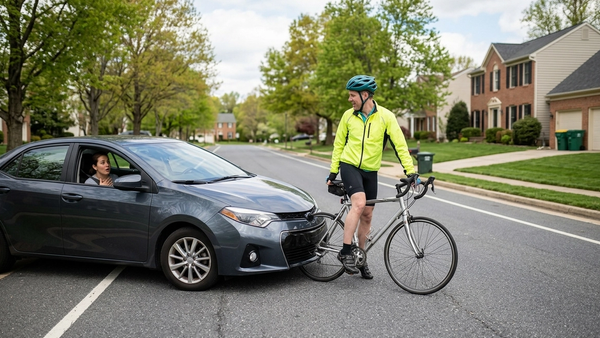
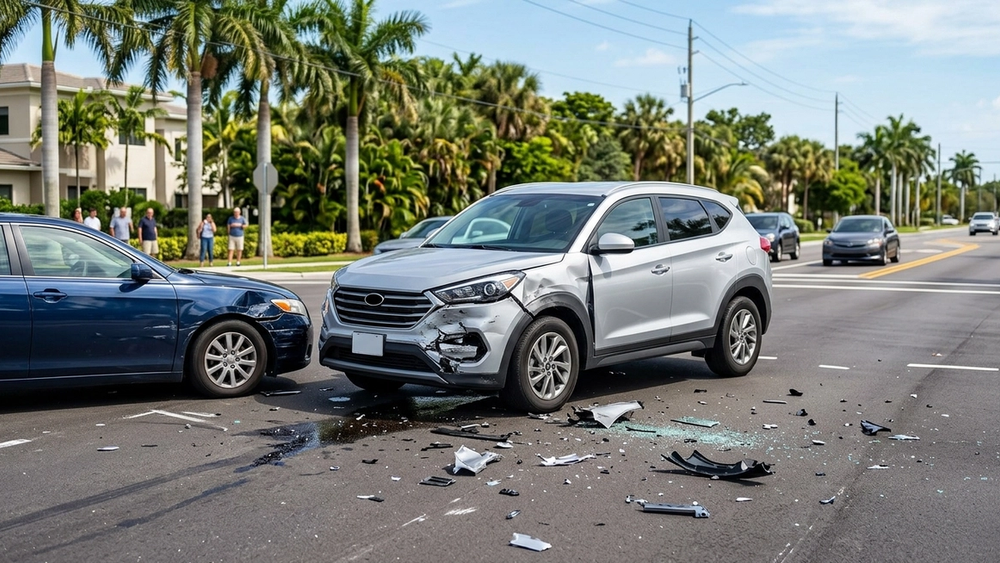
Motor vehicle accidents are the most common type of personal injury claim in Florida. Under the new law, every aspect of a crash is scrutinized for plaintiff fault. Did the plaintiff speed by 5 mph? Were they wearing a seatbelt? Did they signal a fraction of a second too late? In the old system, these minor infractions might have reduced a settlement by 5-10%. Now, defense attorneys use these points to build a cumulative case that the plaintiff was "mostly" at fault.
Furthermore, Florida’s unique insurance environment includes the "no-fault" system. Regardless of the negligence reform, victims must still adhere to specific procedural rules to access their own benefits. For instance, failing to seek treatment quickly can jeopardize your initial coverage. To protect your rights immediately after a crash, you must follow the Florida's 14-day PIP rule to ensure your $10,000 in personal injury protection remains available. Beyond PIP, the 50% bar rule governs your ability to sue the other driver for pain, suffering, and excess medical bills.
Premises Liability and the New Standard
Premises liability cases—often referred to as "slip and fall" cases—are notoriously difficult in Florida. The 2023 reform makes them even more challenging. In these scenarios, the defense often argues that the hazard was "open and obvious" and that the plaintiff should have seen it. Under pure comparative negligence, if you were 60% at fault for not looking where you were going, you could still recover 40% of your damages from a store owner who left a spill on the floor for three hours.
Today, that same 60% fault finding results in a total defense verdict. Store owners and their insurers are now incentivized to fight these cases all the way to trial, banking on the likelihood that a jury will find a distracted walker at least 51% responsible for their own tumble. This makes the documentation of the hazard (photos of the spill, surveillance footage, witness statements) more vital than ever. If you cannot prove the property owner was the primary cause of the accident, you risk walking away empty-handed.
The Medical Negligence Exception
It is important to note that the 2023 negligence reform included a specific carve-out for medical malpractice. While the 50% bar applies to car accidents and slip and falls, it does not apply to "actions for damages for personal injury or wrongful death arising out of medical negligence." For these cases, Florida continues to follow the pure comparative negligence standard. This means that if a patient is found 60% at fault for failing to follow post-operative instructions, but a surgeon was 40% at fault for a mistake, the patient can still recover 40% of their damages.
This exception exists because the legislature recognized the inherent complexity of medical treatment and the vast power imbalance between a professional provider and a patient. However, defining what constitutes "medical negligence" versus "general negligence" in a hospital setting can sometimes be a point of legal contention. If you believe your injury occurred in a medical setting, you should consult the Florida medical malpractice calculator to see how these specific rules might apply to your potential recovery.
Statute of Limitations: The 4-to-2 Shift
While the 50% bar rule gained the most headlines, HB 837 also contained a second "poison pill" for plaintiffs: the shortening of the statute of limitations. For decades, Florida allowed four years from the date of an accident to file a negligence lawsuit. The 2023 reform slashed this in half. Now, victims generally have only two years to file a lawsuit for negligence.
This compressed timeline places immense pressure on victims and their attorneys. Two years sounds like a long time, but when you consider months of medical treatment, surgical recovery, and long-term prognosis evaluations, the window closes rapidly. If you miss this deadline, your right to sue is permanently barred, regardless of how negligent the other party was. This makes it essential to start the legal process as soon as possible after an injury to ensure evidence is preserved and the filing deadline is met.
Apportioning Fault Among Multiple Parties
Florida law also deals with "Fabre defendants"—non-parties who may have contributed to the accident. Even if a person or company isn't sued, their names can be placed on the jury verdict form. The jury then allocates a percentage of fault to everyone involved, including the plaintiff. The 50% bar is calculated based on the plaintiff's fault relative to the total (100%).
If a jury finds the plaintiff 51% at fault, Defendant A 24% at fault, and Non-Party B 25% at fault, the plaintiff gets nothing. If the plaintiff is 49% at fault, they can recover 51% of their damages from the named defendants. This multi-party math can become incredibly complex in construction site accidents or multi-vehicle pileups. Determining where the blame lies requires a deep dive into NHTSA crash data and other safety standards to establish the expected behavior of each party involved.
Strategies for Dealing with Insurance Adjusters
Insurance adjusters are well-trained on the 2023 reforms. Their primary goal is now to move your "fault dial" above the 50% mark. During initial phone calls, they may ask leading questions designed to get you to admit to even minor distractions or errors. They know that if they can successfully argue you were 51% responsible, they can deny the claim entirely without ever going to court.
To combat this, victims should avoid giving recorded statements without legal counsel. Every word you say will be parsed for admissions of comparative negligence. Instead, focus on the facts: the time, the location, and the actions of the defendant. The goal is to establish a clear narrative where the defendant’s breach of duty was the primary, overwhelming cause of the incident. In a state that now penalizes shared fault so harshly, your silence—or at least your caution—is your best protection during the early stages of a claim.
Essential Evidence in the Reform Era
Because the margin for error is now so thin, the quality of your evidence is the determining factor in your case value. In the past, "he-said, she-said" cases often settled for a middle-of-the-road amount because both sides feared the jury's apportionment. Now, the defense will take those cases to trial, hoping for the 51% bar to save them. You must counteract this with objective evidence.
Valuable evidence includes:
- Dashcam and surveillance footage: This is the most "objective" witness available.
- Cell phone records: To prove you were not distracted at the time of the accident.
- Black box data: Modern vehicles record speed, braking, and steering inputs in the seconds leading up to a crash.
- Witness statements: Independent bystanders who have no stake in the outcome are highly persuasive to juries.
- Expert reports: Professional engineers or medical experts who can explain why the defendant’s actions were the primary cause of harm.
Comparing Florida to Other Reform States
With this change, Florida joins the majority of U.S. states that use a modified comparative negligence system. However, there are two versions of this system: the 50% rule and the 51% rule. Florida chose the 50% rule (you can recover if you are 50% or less at fault). Some states, like Ohio, use the 51% rule (you can recover if you are not more than 50% at fault). While the phrasing is similar, the outcome at exactly 50/50 fault varies.
Florida’s move was explicitly designed to mirror other large states like Texas, which have long had more restrictive tort environments. This shift has made the state less of an outlier and more aligned with the "tort reform" movement nationally. For victims, it means that the legal strategies used in other modified comparative states are now the blueprint for Florida litigation. You can compare this to how other states handle these issues by looking at the Ohio 51% rule for context on how thresholds function across the country.
Insurance Bad Faith and Transparency
HB 837 also addressed insurance bad faith. It introduced new standards that make it harder for plaintiffs to sue insurance companies for failing to settle claims fairly. The law now states that mere negligence by an insurer is not enough to constitute bad faith. Furthermore, if an insurer offers the policy limits or the amount demanded within 90 days of receiving a claim with sufficient evidence, they are generally shielded from bad faith liability.
This provision works in tandem with the negligence reform to give insurance companies more leverage. By reducing the threat of bad faith lawsuits, insurers feel less pressure to settle questionable liability cases. They are more likely to "lowball" offers or refuse to settle if they believe they can win on the 50% bar. This makes it even more important for plaintiffs to present a "bulletproof" demand package that clearly demonstrates the defendant’s majority liability and the extent of the damages.
The Financial Realities of Case Valuation
How do you calculate your case value in this new environment? It starts with your total economic and non-economic damages. Economic damages include medical bills, lost wages, and property damage. Non-economic damages cover pain and suffering, loss of enjoyment of life, and emotional distress. Once you have a total number, you must apply a "discount" for your own potential fault—and a "risk factor" for the 50% bar.
If your case is worth $100,000 and you are 20% at fault, your value is $80,000. But if there is a 30% chance a jury finds you 51% at fault, the "settlement value" drops even further to account for the risk of a zero-dollar verdict. This mathematical reality is why many cases that once would have settled for substantial amounts are now settling for significantly less, or not at all. To get a realistic estimate of how these factors influence your potential recovery, use the Florida motor vehicle accident calculator to see the numbers for yourself.
Navigating Your Recovery Journey
Florida’s 2023 negligence reform has undoubtedly made the path to justice more difficult for injury victims. The transition from pure comparative negligence to the 50% bar rule, combined with a shortened statute of limitations and new insurance protections, has created a complex legal minefield. However, it is not impossible to recover. Victims who are diligent, act quickly, and gather strong evidence can still secure the compensation they need to rebuild their lives.
The most important takeaway is that you cannot afford to wait. In the new Florida legal landscape, the first few weeks after an accident are the most critical. From seeking medical care to preserve your PIP benefits to securing physical evidence before it disappears, every action you take will influence whether you stay on the right side of that 50% line. If you or a loved one has been injured, take the first step toward understanding your rights in this new era.
To see how the 50% bar rule and other 2023 reforms impact your specific claim, evaluate your case value for free using our advanced estimation tools today.
Disclaimer: This blog post is for informational purposes only and does not constitute legal advice. For specific legal guidance regarding your situation, please consult with a qualified attorney.