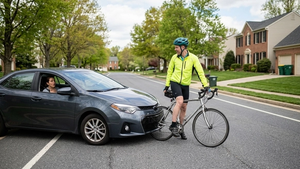
Understanding Missouri’s Pure Comparative Negligence System
Missouri stands as one of the most plaintiff-friendly states in the nation when it comes to personal injury recovery. This is due to its adoption of a "pure" comparative negligence system. Unlike states that bar recovery if a victim is more than 50% or 51% responsible, Missouri allows an injured party to seek damages even if they carry the lion's share of the blame. Theoretically, a plaintiff who is 99% at fault for an incident can still recover 1% of their total damages from a defendant who is only 1% at fault.
This legal doctrine ensures that responsibility is distributed equitably based on each party's contribution to the accident. While it might seem counterintuitive to allow a primarily at-fault driver or individual to sue, the logic behind the law is rooted in the idea that every negligent party should be held accountable for the specific portion of harm they caused. If a defendant is 10% responsible for a catastrophic injury, Missouri law dictates that they should pay for that 10%, regardless of how negligent the plaintiff was.
For residents and visitors in the Show-Me State, understanding these nuances is critical for valuing a potential claim. Whether you were involved in a multi-car pileup on I-70 or a slip-and-fall in a St. Louis storefront, the degree of your own negligence will reduce your check, but it will rarely eliminate your right to receive one. To understand how your specific level of responsibility might change your settlement, you can use a Missouri motor vehicle accident calculator to see the math in action.
Affected by a Legal Tips Issue?
Our specialized tool can help you estimate the potential worth of your case based on current laws and precedents.
The Mathematical Reality of the 99% Rule
The "pure" in pure comparative negligence refers to the lack of a "bar" or threshold. In many neighboring states, such as Indiana, the law follows a modified version. In those jurisdictions, Indiana's 51% threshold means that if you are even slightly more at fault than the other party, you recover nothing. Missouri rejects this all-or-nothing approach.
Consider a scenario where a plaintiff suffers $1,000,000 in medical bills, lost wages, and pain and suffering after a collision. If a jury determines the plaintiff was 90% at fault because they were speeding, but the defendant was 10% at fault for failing to use a turn signal, the plaintiff is still entitled to a judgment. In this case, the $1,000,000 total award is reduced by the plaintiff’s 90% fault, leaving a recoverable amount of $100,000.
This system prevents defendants from escaping liability entirely just because the plaintiff also made a mistake. It encourages safer behavior from all parties, knowing that even a small percentage of negligence can result in a significant financial judgment if the damages are high enough. This is a stark contrast to states like Maryland, where even one percent of fault can completely destroy a victim's right to compensation.
Legal Foundations: Missouri Revised Statutes
The legal authority for Missouri’s comparative fault system is found in both case law and statutory provisions. Historically, Missouri followed the harsh "contributory negligence" rule, which barred any recovery for a plaintiff who was even slightly at fault. This changed in 1983 with the landmark Missouri Supreme Court case Gustafson v. Benda, which abolished contributory negligence in favor of the pure comparative fault system as outlined in the Uniform Comparative Fault Act.
Subsequently, the Missouri legislature codified these principles. Under Missouri Revised Statutes Section 537.765, the law specifically addresses how fault is apportioned in various types of tort actions. The statutes require the trier of fact (the judge or jury) to determine the total amount of damages and then assign a percentage of fault to every party involved, including the plaintiff, defendants, and even non-parties in certain circumstances.
The court then enters judgment against each party liable on the basis of joint and several liability, though Missouri has specific rules regarding how much a defendant must pay if they are less than 50% at fault. This complex interplay of statutes ensures that while a plaintiff can recover at 99% fault, the practicalities of collection and defendant protection are also managed by the state's legal framework.
Comparative Fault vs. Contributory Negligence
To appreciate the benefits of Missouri's system, one must understand the alternatives. There are three primary systems used across the United States:
- Contributory Negligence: Used in only a handful of states (like Alabama, Maryland, and Virginia). If the plaintiff is even 1% at fault, they receive zero dollars. This is often viewed as an archaic and punitive system.
- Modified Comparative Fault: Used in the majority of states (like Illinois, Ohio, and Texas). Plaintiffs can recover as long as their fault does not exceed 50% or 51%. If they cross that line, the claim is barred.
- Pure Comparative Fault: Used in Missouri, California, and Arizona. There is no threshold. You can be 99% at fault and still recover.
Because Missouri follows the pure model, plaintiffs have a much higher likelihood of reaching a settlement. Insurance adjusters in Missouri cannot simply point to a plaintiff's error and deny the claim outright. Instead, they must negotiate the percentage of that error. This shifts the legal battle from "Do you have a case?" to "What is the percentage of your recovery?"
How Missouri Juries Determine Percentages of Fault
In a Missouri courtroom, assigning a percentage of fault is not an exact science; it is a question of fact for the jury. Jurors are instructed to compare the "negligence" or "fault" of all parties. The Missouri Approved Instructions (MAI) provide the framework for how these questions are presented to the jury.
Evidence used to determine fault percentages includes:
- Police Reports: Officers’ observations and citations issued at the scene.
- Eyewitness Testimony: Accounts from neutral third parties who saw the events unfold.
- Expert Analysis: Accident reconstruction experts can use skid marks and vehicle damage to determine speed and impact angles.
- Video Surveillance: Dashcam footage or nearby security cameras.
- Cell Phone Records: Proof of distracted driving or texting while behind the wheel.
Juries are often asked to consider "relative culpability." For example, if one driver was slightly speeding but the other driver was intoxicated and ran a red light, the jury might assign 10% fault to the speeder and 90% to the drunk driver. The final verdict form will explicitly list these percentages, and the judge will perform the subtraction before issuing the final award. This process is a fundamental component of tort law principles as recognized by the American Bar Association.
The Impact of Pure Comparative Negligence on Settlements
Most personal injury cases never reach a jury; they are settled during negotiations with insurance companies. Missouri's pure comparative fault system heavily influences these discussions. In a modified comparative state, an insurance company will fight tooth and nail to prove the plaintiff was 51% at fault, knowing that success means they pay zero.
In Missouri, the incentive changes. Since the insurer knows they will likely have to pay something if they are even 1% at fault, they are often more willing to come to the table. However, they will use every piece of evidence to inflate the plaintiff's fault percentage. If they can convince a plaintiff that a jury will find them 70% at fault, they can justify a much lower settlement offer.
This is why documentation is so vital. A plaintiff who can prove the defendant was 80% responsible is in a much stronger position than one where the fault is split 50/50. Even in a pure system, the goal of a legal team is to minimize the plaintiff’s assigned fault to maximize the actual payout. Understanding your potential recovery is the first step, which you can do using a general case value calculator.
Motor Vehicle Accidents and the Pure Fault Rule
Car accidents are the most common venue for pure comparative negligence disputes in Missouri. The state's busy highways, such as I-44 and I-55, frequently see complex collisions involving multiple vehicles. In these cases, fault is rarely black and white.
Common scenarios where pure comparative negligence applies include:
- Rear-End Collisions: While the trailing driver is usually at fault, if the lead driver had broken brake lights, the lead driver might be assigned 10-20% fault.
- Left-Turn Accidents: A driver turning left must yield to oncoming traffic, but if the oncoming driver was traveling 20 mph over the limit, a Missouri jury may split the fault.
- Pedestrian Strikes: Even if a pedestrian was jaywalking, a driver who had the "last clear chance" to avoid the strike but was distracted by a phone may be found significantly liable.
According to the NHTSA research data, human error is a factor in over 90% of all motor vehicle crashes. Missouri law acknowledges this reality by allowing for shared human error without stripping victims of their right to medical care and financial recovery.
Premises Liability: Slip and Falls in Missouri
Pure comparative negligence also plays a major role in premises liability cases—incidents where someone is injured on another person's property. In Missouri, property owners have a duty to keep their premises reasonably safe for invitees. However, defendants often raise the "open and obvious" defense, arguing that the plaintiff should have seen and avoided the hazard.
In many states, if a hazard is deemed "open and obvious," the property owner owes no duty and the case is dismissed. In Missouri, however, the "open and obvious" nature of a hazard is often treated as an issue of comparative fault rather than a total bar to recovery. If you trip over a large, bright yellow wet-floor sign, a jury might find you 80% at fault for not looking where you were going, but the store could still be 20% at fault for leaving a slick substance on the floor for hours. Because of the pure comparative rule, you could still recover 20% of your damages.
Product Liability and Strict Liability Exceptions
Missouri’s approach to fault gets more complex in product liability cases. When a defective product causes an injury, the theory of "strict liability" often applies. This means the plaintiff doesn't necessarily have to prove the manufacturer was "negligent," only that the product was defective and dangerous.
However, Missouri law still allows for the apportionment of fault in these cases. Under Section 537.765, the defendant can argue that the plaintiff's "contributory fault" should reduce the award. This includes:
- Product Misuse: Using the product in a way that was not intended or foreseeable.
- Failure to Follow Warnings: Ignoring explicit safety instructions provided with the product.
- Assumption of Risk: Using a product despite knowing it was damaged or defective.
Even in these high-stakes cases against major corporations, the pure comparative rule ensures that a consumer’s mistake does not grant the manufacturer total immunity for a dangerous design defect.
The Role of Expert Witnesses in Apportioning Fault
Because the difference between 20% fault and 40% fault can mean hundreds of thousands of dollars, expert witnesses are frequently used in Missouri litigation. These professionals provide the technical basis for the jury's percentage assignments.
- Accident Reconstructionists: Use physics and computer modeling to determine exactly how an accident occurred.
- Human Factors Experts: Testify about reaction times, perception, and how a reasonable person would have reacted under specific conditions.
- Medical Experts: While they primarily testify on damages, they can also speak to whether certain injuries were exacerbated by a plaintiff's failure to wear a seatbelt (which is a specific fault factor in Missouri).
Expert testimony is often the "Show-Me" evidence that Missouri jurors need to decide how to split the pie of responsibility.
Joint and Several Liability in Missouri
A critical companion to pure comparative negligence is the doctrine of joint and several liability. This rule determines how a plaintiff collects money when there are multiple defendants. In Missouri, if a defendant is found to be 50% or more at fault, they can be held "jointly and severally" liable for the entire amount of the judgment. This protects the plaintiff if one defendant is uninsured or bankrupt.
However, if a defendant is found to be less than 50% at fault, they are generally only liable for their specific percentage of the damages (several liability). For example, if you are 0% at fault, Defendant A is 90% at fault, and Defendant B is 10% at fault, Defendant B only has to pay 10%. But if Defendant A is 45% and Defendant B is 55%, the plaintiff could potentially collect the whole 100% from Defendant B if Defendant A has no assets. This nuance is why identifying every possible defendant is vital in Missouri litigation.
Common Misconceptions About Missouri Fault Laws
Many people hesitate to contact a lawyer because they believe their own mistake ends their case. Here are the most common myths debunked:
- Myth: "The police gave me a ticket, so I can't sue."
- Fact: A traffic citation is evidence of negligence, but it is not a total bar. A jury might find that despite your ticket, the other driver’s actions were more egregious.
- Myth: "I wasn't wearing a seatbelt, so it's my fault I'm hurt."
- Fact: Missouri has a specific "seatbelt defense" (Section 307.178). It can reduce your recovery, but usually by no more than 1% of the total damages.
- Myth: "If I'm more than 50% at fault, the insurance company doesn't have to pay."
- Fact: This is true in Illinois or Kansas, but not in Missouri. As long as the other party is at least 1% responsible, their insurer may be liable for that portion.
Why "Case Value" Matters Even at High Fault
In a pure comparative negligence state, the "Total Case Value" is the most important number. If a case is worth $10,000, recovering 10% ($1,000) might not be worth the legal fees. However, in catastrophic injury or wrongful death cases, where damages can reach $5,000,000 or more, even a 10% recovery results in $500,000.
This is why Missouri lawyers often take cases that attorneys in other states would reject. When the injuries are severe, the mathematics of pure comparative negligence can still provide a lifeline for a family, even if the victim made a significant error. Accountability is a two-way street in Missouri, and the law ensures that no negligent actor gets a free pass just because the victim wasn't perfect.
Steps to Protect Your Missouri Injury Claim
If you have been involved in an accident in Missouri, your actions in the minutes and days following the event will directly impact your assigned fault percentage. To protect your right to recovery, follow these steps:
- Call the Police: Always get an official report. If the other driver admits fault at the scene, ensure the officer records that statement.
- Take Photos: Capture the positions of the vehicles, the weather conditions, and any hazards. Visual evidence is much harder for an insurance company to dispute than a verbal account.
- Seek Medical Attention Immediately: A gap in treatment allows insurance companies to argue that your injuries weren't caused by the accident or that you failed to mitigate your damages, which is a form of fault.
- Do Not Admit Fault: Be honest with officers about the facts (e.g., "I was traveling 35 mph"), but do not offer opinions like "I'm so sorry, I didn't see him." These statements will be used against you to increase your fault percentage.
- Consult an Expert: Before accepting a lowball offer based on the adjuster’s claim that you are "mostly at fault," get a professional evaluation of your case value.
Conclusion: Seeking Justice in the Show-Me State
Missouri’s pure comparative negligence system is a testament to the state's commitment to fairness. By allowing plaintiffs to recover even at 99% fault, the law recognizes that life is messy and accidents are rarely the fault of just one person. It ensures that the burden of a catastrophic injury is shared by all those who contributed to it, rather than falling solely on a victim who may have made a single, split-second mistake.
However, navigating this system requires a deep understanding of how fault is calculated and how to fight back against aggressive insurance tactics. If you or a loved one has been injured, do not assume that your own role in the accident prevents you from seeking justice. The value of your claim depends on the total damages and the ability to prove the other party’s share of the blame.
To understand what your claim might be worth under Missouri's unique laws, take the first step toward recovery today. Use our Missouri injury case calculator to get a free, instant estimate of your potential settlement value and see how pure comparative negligence applies to your situation.
Disclaimer: This blog post is for informational purposes only and does not constitute legal advice. For specific legal guidance regarding your situation, please consult with a qualified attorney.