Introduction to Oregon Uninsured Motorist Coverage
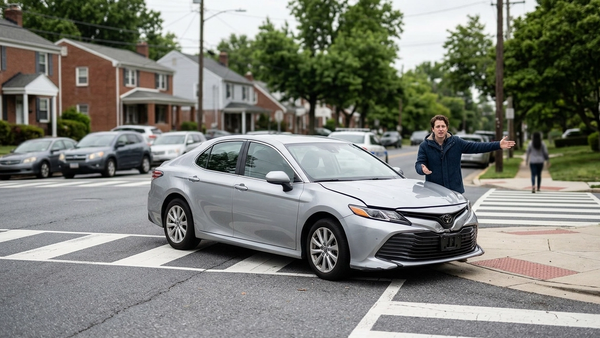
Being involved in a car accident is a traumatic experience, but finding out the at-fault driver has no insurance adds a layer of financial stress that many are unprepared to handle. In Oregon, the law recognizes this risk, making it mandatory for every driver to carry uninsured motorist (UM) coverage. This insurance isn't for the other person; it is specifically designed to protect you, your family, and your passengers if you are hit by someone who failed to follow state financial responsibility laws.
Oregon remains one of the more protective states in the nation regarding driver recovery. Because of the state’s rigorous statutory requirements, even if the person who hit you has zero assets and zero insurance, you may still have a path to full financial recovery through your own policy. This guide provides a deep dive into the nuances of uninsured driver accident recovery in the Pacific Northwest, explaining how limits are calculated, how legislation has changed over the years to favor victims, and what steps you must take to ensure your carrier pays what you are owed.
Affected by a Motor Vehicle Issue?
Our specialized tool can help you estimate the potential worth of your case based on current laws and precedents.
Understanding the Difference Between UM and UIM
While often grouped together in insurance documents, Uninsured Motorist (UM) and Underinsured Motorist (UIM) coverage serve two distinct purposes under Oregon law. UM coverage applies when the at-fault party has no liability insurance at all, such as a driver who let their policy lapse or a hit-and-run driver who cannot be identified. In these cases, your insurance company steps into the shoes of the at-fault driver’s non-existent insurance company.
Underinsured Motorist (UIM) coverage, on the other hand, kicks in when the at-fault driver has insurance, but their policy limits are too low to cover the full extent of your damages. For example, if you suffer $100,000 in medical bills and lost wages, but the driver who hit you only carries the Oregon state minimum of $25,000, their policy is considered "underinsured." According to the Cornell Law School Legal Information Institute, these coverages are essential for bridging the gap between a victim's actual losses and the available liability limits.
Oregon Mandatory Insurance Requirements and Limits
Oregon law is very specific about the minimum amounts of coverage a driver must carry. These limits are designed to provide a baseline of protection, though they are often insufficient for catastrophic injuries. Under Oregon Revised Statutes, every motor vehicle liability policy must include:
- Bodily Injury Liability: Minimum $25,000 per person and $50,000 per accident.
- Property Damage Liability: Minimum $20,000 per accident.
- Personal Injury Protection (PIP): Minimum $15,000 per person.
- Uninsured Motorist Coverage: Minimum $25,000 per person and $50,000 per accident.
It is important to note that your UM limits must match your liability limits unless you specifically waive that right in writing. If you carry $100,000 in liability coverage to protect your own assets, Oregon law generally requires your insurer to provide you with $100,000 in UM/UIM coverage as well. Understanding these minimums is the first step in protecting your rights after a crash.
The Evolution of Oregon UIM: Senate Bill 411
One of the most significant changes in Oregon insurance law occurred with the passage of Senate Bill 411 in 2016. Before this law took effect, Oregon was an "offset" state. This meant that if you had $50,000 in UIM coverage and the at-fault driver had $25,000, your insurer could subtract the other driver’s $25,000 from your $50,000, leaving you with only $25,000 in available UIM funds.
Today, Oregon is an "add-on" state. This is a massive win for consumers. Now, your UIM limits are added to the at-fault driver’s liability limits. Using the same example, if you have $50,000 in UIM and the other driver has $25,000, you now have access to a total of $75,000 in coverage ($25,000 from them plus your full $50,000 from your own policy). This ensures that victims actually receive the benefit of the premiums they have been paying for years. To see how these numbers might impact your specific situation, you can use an Oregon motor vehicle accident calculator to estimate your potential recovery.
How Stacking Insurance Policies Works in Oregon
"Stacking" refers to the practice of combining the limits of multiple insurance policies or multiple vehicles on a single policy to increase the total amount of available coverage. In many states, this is a common way to maximize a settlement. However, Oregon’s rules on stacking are more restrictive than some other jurisdictions.
In Oregon, "inter-policy" stacking (combining two different policies from different companies) is generally not allowed if the policies contain standard anti-stacking language. Similarly, "intra-policy" stacking (combining limits for three cars on one policy) is prohibited by most carriers and upheld by Oregon courts. While some states allow victims to multiply their limits by the number of cars they own, Oregon typically limits you to the highest single limit on your policy. This differs significantly from other regions, as seen in the Georgia uninsured motorist stacking rules, where add-on policies provide different stacking opportunities.
What Damages Does UM Coverage Pay For?
When you file a UM or UIM claim in Oregon, you are entitled to the same types of damages you would have been able to recover from the at-fault driver. This is intended to make the victim whole, as if the accident never happened or as if the at-fault driver had perfect insurance. These damages are generally categorized into two groups:
Economic Damages
These are the objective, verifiable financial losses resulting from the accident. They include:
- Past and future medical expenses (hospital stays, surgeries, physical therapy).
- Lost wages for time taken off work to recover.
- Loss of future earning capacity if the injury results in a permanent disability.
- Out-of-pocket costs for household services you can no longer perform.
Non-Economic Damages
These are subjective losses that do not have a fixed dollar amount but are often the most significant part of a claim. According to the American Bar Association, these damages include:
- Pain and suffering.
- Emotional distress and mental anguish.
- Loss of enjoyment of life.
- Loss of consortium (impact on relationship with a spouse).
Hit and Run Accidents and the "Phantom Vehicle" Rule
Oregon has very specific requirements for UM claims involving hit-and-run accidents or "phantom vehicles" (vehicles that cause an accident without making physical contact). If you are forced off the road by a driver who then flees the scene, your UM coverage should apply, but you must meet a higher burden of proof to prevent insurance fraud.
To successfully file a phantom vehicle claim in Oregon, you must provide "corroboration." This means you need more than just your own testimony. Corroboration can include a witness who saw the other car, physical evidence like paint transfer or car parts left at the scene, or video footage from a dashcam or nearby business. Additionally, Oregon law requires that you report the hit-and-run to the police within 72 hours (or as soon as reasonably possible) and notify your insurance company quickly to maintain your right to a claim.
The Role of Personal Injury Protection (PIP) in Oregon
Before your UM or UIM coverage even begins to pay for medical bills, Oregon’s mandatory Personal Injury Protection (PIP) coverage kicks in. PIP is "no-fault" insurance, meaning it pays out regardless of who caused the accident. In Oregon, the minimum PIP limit is $15,000, which covers medical expenses for up to one year following the date of the injury.
PIP also provides wage loss benefits if you are disabled for at least 14 consecutive days. It typically pays 70% of your lost wages, up to a monthly maximum (usually around $3,000). Your UM/UIM carrier is usually entitled to an offset or "reimbursement" for PIP benefits paid, though Oregon’s "made-whole" doctrine often prevents insurers from taking this money back if the victim has not been fully compensated for all their losses. Understanding how these layers of insurance overlap is critical for any insurance bad faith evaluation if your carrier refuses to coordinate benefits correctly.
Filing a UM/UIM Claim: A Step-by-Step Process
Filing a claim against your own insurance company can feel adversarial because, in this context, it is. Once you file a UM claim, your insurance company’s goal shifts from protecting you to minimizing the amount they have to pay out. Following a strict process is vital:
- Immediate Reporting: Notify the police and your insurer immediately after the crash.
- Seek Medical Attention: Gaps in treatment are the number one reason UM claims are devalued or denied.
- Gather Evidence: Take photos of the scene, collect witness contact information, and keep copies of all medical records.
- Documentation: Keep a diary of your pain levels and how the injury affects your daily life.
- Formal Demand: Your legal team will send a demand letter to your insurer outlining your damages and policy limits.
According to the National Highway Traffic Safety Administration, maintaining accurate records is the most effective way to ensure insurance companies adhere to safety and compensation standards.
Comparative Fault and Oregon UM Claims
Oregon follows a "modified comparative negligence" system, specifically the 51% rule. This rule applies to UM claims just as it would in a standard lawsuit. Under Oregon Revised Statute 31.600, you can recover damages as long as your percentage of fault is not greater than the combined fault of the other parties.
However, your recovery will be reduced by your percentage of fault. For example, if your total damages are $100,000 but you are found to be 20% at fault for the accident, your insurance company will only be required to pay you $80,000 under your UM coverage. If you are found to be 51% or more at fault, you are barred from recovering any UM/UIM benefits at all. This makes the investigation phase of the claim incredibly important, as insurers will often try to shift a small percentage of blame onto their own policyholders to save money.
Arbitration vs. Litigation in Oregon UM Disputes
When you and your insurance company cannot agree on the value of your UM claim or whether the other driver was actually at fault, you have two primary paths to resolution: arbitration or litigation. Many Oregon auto policies include a mandatory arbitration clause for UM/UIM disputes.
Arbitration is a more informal process where one or three neutral third parties (usually experienced attorneys or retired judges) hear the evidence and make a binding decision. It is often faster and less expensive than a full jury trial. However, if your policy does not require arbitration, you have the right to file a lawsuit against your insurer in circuit court. Litigation allows for a jury of your peers to decide the value of your case, which can sometimes result in higher awards for pain and suffering but takes significantly longer to resolve.
Why Underinsured Claims Are Often More Complex
While Uninsured Motorist claims are straightforward (there is no other insurance to deal with), Underinsured Motorist (UIM) claims require a specific legal sequence. In Oregon, you generally cannot collect UIM benefits until you have "exhausted" the liability limits of the at-fault driver. This means you must first settle with the at-fault driver’s insurance company for their full policy limit.
Crucially, you must obtain written consent from your own UIM carrier before settling with the at-fault driver. If you sign a release and settle with the other driver without your insurer's permission, you may inadvertently waive your right to collect UIM benefits. This is because your insurer loses its right to "subrogate" (sue the at-fault driver themselves to get their money back). Navigating this "consent to settle" requirement is one of the most common traps for unrepresented victims.
Common Pitfalls to Avoid in Oregon UM Claims
To protect your claim value, you must avoid several common mistakes that insurance adjusters watch for:
- Recorded Statements: You are required to cooperate with your insurer, but you are not required to give a recorded statement that can be used to twist your words. Consult an attorney first.
- Social Media Activity: Posting photos of yourself at the beach or a party while claiming serious injury can be used as evidence that you are exaggerating your pain.
- Missing the Statute of Limitations: In Oregon, the statute of limitations for a contract-based claim like UM coverage is generally six years, but it can be as short as two years if it is treated as a personal injury matter. Always assume the shorter deadline applies to be safe.
- Not Disclosing Pre-existing Conditions: If you have a prior back injury, be honest. Trying to hide it makes you look untrustworthy and can tank your case value.
How to Value Your Oregon Uninsured Motorist Claim
Determining the "value" of a UM claim involves more than just adding up medical bills. Attorneys and insurance adjusters use different formulas to arrive at a settlement range. The most common is the "multiplier method," where economic damages are multiplied by a factor (usually 1.5 to 5) depending on the severity of the injury, to account for pain and suffering.
For example, if you have $20,000 in medical bills and a broken leg that required surgery, an adjuster might use a multiplier of 3, valuing the pain and suffering at $60,000 and the total claim at $80,000. Other factors that influence value include the clarity of fault, the credibility of witnesses, and the specific venue where the claim is filed. To get a realistic baseline for your specific injuries and policy limits, utilize professional valuation tools to see how Oregon's unique laws apply to your damages.
Conclusion: Taking Action After an Oregon Accident
Oregon’s uninsured motorist laws are designed to be a safety net, but that net only works if you know how to pull the strings. Between the mandatory PIP requirements, the transition to an "add-on" UIM state, and the strict corroboration rules for phantom vehicles, these claims are legally dense. You are not just fighting a "bad driver"; you are often fighting your own insurance company’s bottom line.
If you have been injured by an uninsured or underinsured driver in Oregon, do not guess at the value of your claim or the limits of your coverage. Professional guidance ensures that you do not miss deadlines or settle for a fraction of what your policy allows. Your insurance company has a team of experts working to save them money—you deserve a team focused on securing your future.
Ready to understand the real value of your claim? Calculate your Oregon car accident settlement value today and get the clarity you need to move forward.
Disclaimer: This blog post is for informational purposes only and does not constitute legal advice. For specific legal guidance regarding your situation, please consult with a qualified attorney.