Understanding the Chain of Distribution in Product Liability
When you are injured by a defective consumer good, the legal landscape can feel overwhelming. One of the most critical questions in any personal injury claim involves identifying the correct party to hold accountable. In the world of product liability, this involves analyzing the "chain of distribution." The chain of distribution refers to the path a product takes from its inception as a raw material or blueprint to the moment it reaches the consumer's hands.
Under the legal doctrine of strict liability, any party involved in this chain may potentially be held liable for injuries caused by a product defect. This is a significant protection for consumers because it ensures that you do not have to prove exactly where the negligence occurred; if the product was defective when it left the defendant's control and caused injury during foreseeable use, liability may attach. Understanding who resides in this chain—manufacturers, wholesalers, distributors, and retailers—is the first step in building a successful case.
Affected by a Product Liability Issue?
Our specialized tool can help you estimate the potential worth of your case based on current laws and precedents.
The Role of the Product Manufacturer
The manufacturer is typically the primary target in a product liability lawsuit. This entity is responsible for the design, assembly, and quality control of the item. In modern commerce, products are rarely made by a single company from start to finish. A "manufacturer" might be the company that assembled the final product or a company that produced a specific component part, such as a faulty lithium-ion battery in a smartphone or a defective airbag in a vehicle.
There are generally three types of defects for which a manufacturer can be held liable:
- Design Defects: These are inherent flaws in the product’s blueprint that make it dangerous even if manufactured perfectly.
- Manufacturing Defects: These occur when a mistake happens during production, making a single unit or a batch of units different from the intended design.
- Marketing Defects (Failure to Warn): These involve inadequate instructions or a lack of warning labels regarding the product's hidden dangers.
If you have been injured, documenting a defective product claim accurately is essential for proving that the manufacturer's choices directly led to your damages.
Retailer Liability: Why the Seller is Responsible
Many consumers are surprised to learn that they can sue the store where they purchased a defective item, even if that store had nothing to do with the product's creation. Under strict liability laws in many states, a retailer is considered part of the stream of commerce. The rationale behind this is that retailers choose which products to stock and profit from their sale; therefore, they should share the burden of compensating victims when those products fail.
Suing a retailer is often strategically beneficial. For example, a large national retailer may have more accessible insurance coverage or be easier to serve with legal papers than a foreign manufacturer. Furthermore, if the manufacturer has gone out of business or filed for bankruptcy, the retailer might be the only viable source of compensation for the victim. It is important to note that even if a retailer did not know the product was dangerous, they can still be held liable if the product was defective at the time of sale.
Wholesalers and Distributors: The Middlemen
Between the factory and the retail shelf lies a network of distributors and wholesalers. These entities handle the logistics of moving goods in bulk. Like manufacturers and retailers, they are integral links in the chain of distribution. If a distributor stores a product improperly—such as failing to keep perishable food at the correct temperature or exposing sensitive electronics to moisture—they may introduce a defect into the product.
Even if the distributor did not actively cause the defect, they are still part of the commercial chain that brought the dangerous item to you. In many jurisdictions, the law allows you to name every party in the chain as a defendant. Your legal team can then use the discovery process to determine exactly which party bears the ultimate financial responsibility through indemnity agreements or comparative fault analysis.
Component Part Manufacturers and Sub-Contractors
Modern products are complex. A vehicle contains thousands of parts made by hundreds of different suppliers. If your injury was caused by a specific failed component—such as a defective braking system or a toxic chemical in a toy—the maker of that specific part may be liable.
This adds a layer of complexity to your claim. You must prove that the specific component was defective and that its failure caused the overall product to become dangerous. Legal experts often look at product liability settlements involving similar components to estimate the potential value of a claim against a sub-contractor. Frequently, the final manufacturer and the component manufacturer will point fingers at each other, which is why naming both in a lawsuit is a common tactic to ensure no party escapes accountability.
Strict Liability vs. Negligence Theories
Most product liability cases are built on the theory of "strict liability." According to the Cornell Law School Legal Information Institute, strict liability focuses on the product itself rather than the behavior of the manufacturer. If the product is unreasonably dangerous, the defendant is liable regardless of the care they took in making it.
However, some cases also involve "negligence." Negligence occurs when a company fails to act with reasonable care. Examples include:
- Skipping safety inspections to save money.
- Using inferior materials to increase profit margins.
- Ignoring early reports of injuries from consumers.
Proving negligence can sometimes lead to "punitive damages," which are designed to punish the defendant for particularly egregious behavior. Understanding which theory applies to your situation is vital for maximizing the value of your case.
The Impact of Product Recalls on Your Lawsuit
A recall occurs when a manufacturer or a government agency, such as the Consumer Product Safety Commission, determines that a product is unsafe and must be removed from the market. While a recall is strong evidence that a product is defective, it does not automatically win your case. You must still prove that the defect mentioned in the recall was the specific cause of your injury.
Conversely, the lack of a recall does not mean you cannot sue. Many dangerous products remain on the market for years before a formal recall is issued. In fact, private lawsuits are often the catalyst that forces a company to acknowledge a defect and start a recall process. Learn more about how product recalls impact your injury claim value to see how government intervention might assist your legal strategy.
Foreign Manufacturers and Jurisdictional Hurdles
In our global economy, many products are manufactured in countries like China, Vietnam, or Mexico. Suing a foreign company presents significant legal challenges. International service of process can be expensive and time-consuming, and enforcing a U.S. judgment in a foreign court is notoriously difficult.
This is where suing the domestic retailer or distributor becomes vital. U.S.-based companies that import and sell foreign goods are often the only way for a victim to secure a settlement. Under the law, these importers take on the liability of the foreign manufacturer because they are the ones introducing the product into the American market. If you were injured by an imported product, your attorney will focus on identifying the U.S. entities that facilitated the sale.
Proving a Manufacturing Defect
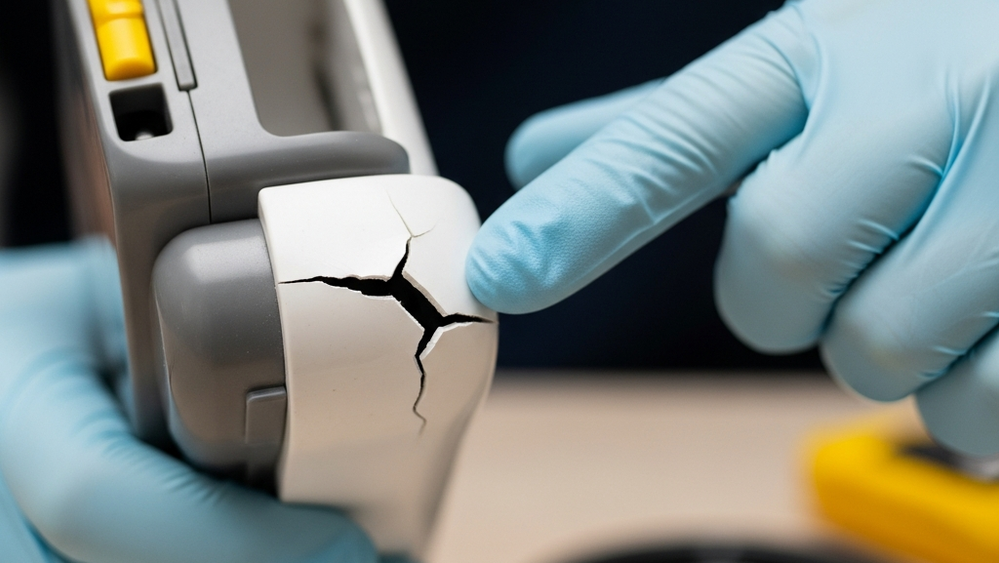
A manufacturing defect is a "one-off" error. It means the product's design was safe, but something went wrong on the assembly line. Perhaps a bolt wasn't tightened, or a contaminant entered a batch of medicine. To win a case based on a manufacturing defect, you must show that your specific unit deviated from the intended design in a way that made it dangerous.
Preserving the product is the most important step in these cases. If you throw away the broken item, you may lose your ability to prove the defect existed. Forensic engineers will examine the item to find physical evidence of the malfunction. For example, in cases involving vehicle failures, agencies like the National Highway Traffic Safety Administration provide data that helps experts distinguish between normal wear-and-tear and a genuine manufacturing flaw.
Proving a Design Defect
Unlike a manufacturing defect, a design defect affects every unit of a product ever made. This means the entire product line is inherently dangerous. In these cases, the legal argument often centers on the "risk-utility test." Courts look at whether the risk of the design outweighs its utility and whether a safer, cost-effective alternative design was available.
Experts will testify about how the product could have been made safer. For instance, if a lawnmower lacked a standard blade guard that would have prevented an injury, and that guard only cost a few dollars to implement, the manufacturer may be liable for a design defect. These cases often turn into large class actions because so many people are affected by the same flawed blueprint.
Marketing Defects: The Duty to Warn
A product might be perfectly designed and manufactured, yet still be considered "defective" if it lacks proper warnings. Manufacturers have a duty to warn consumers about non-obvious dangers associated with the foreseeable use of the product. This includes warnings about potential side effects of medications or instructions on how to safely operate heavy machinery.
If a company knows of a danger and fails to include a prominent warning label, they have committed a marketing defect. This also applies to "over-promotion," where a company's marketing suggests a product is safer than it actually is, leading consumers to take unnecessary risks. If you didn't receive a warning that could have prevented your accident, you likely have a strong claim for compensation.
Identifying Multiple Defendants to Maximize Recovery
In many states, the rule of "joint and several liability" applies. This means that if you sue the manufacturer, the distributor, and the retailer, and the jury awards you $1 million, you can collect the full amount from any one of the defendants, regardless of their individual percentage of fault. This is crucial if one defendant has limited insurance while another has "deep pockets."
Identifying all possible defendants involves extensive research into corporate structures, subsidiary relationships, and shipping manifests. A comprehensive approach ensures that you have the best chance of actually collecting the money awarded to you. You can estimate the potential scale of your recovery by using a product liability calculator to account for your medical bills and lost wages.
Common Defenses in Product Liability Cases
Defendants in these cases are usually large corporations with significant legal resources. They will likely employ several common defenses to avoid paying a settlement:
- Product Misuse: They may argue that you used the product in a way that was not intended or foreseeable.
- Alteration: They might claim that you or someone else modified the product after it left the store, and that modification caused the defect.
- Assumption of Risk: This defense suggests you knew the product was dangerous but chose to use it anyway.
- Statute of Limitations: If you wait too long to file, the court will bar your claim regardless of the defect's severity.
Working with an experienced legal team helps you anticipate these defenses and build a rebuttal before the case even reaches a courtroom.
The Importance of Expert Testimony
You cannot win a product liability case on your word alone. These trials are "battles of the experts." You will likely need testimony from engineers, medical professionals, and accident reconstructionists. These experts explain to the jury why the product failed and how that failure resulted in your specific injuries.
Experts can be expensive, which is why most product liability attorneys work on a contingency fee basis. They front the costs of hiring these professionals and only get reimbursed if they win your case. This allows regular people to go up against massive corporations on a level playing field. Without high-quality expert analysis, most product liability claims will be dismissed by a judge before they ever reach a jury.
Steps to Take After an Injury from a Defective Product
If you have been hurt by a product, the actions you take in the first 24 to 48 hours are critical. First, seek medical attention immediately; your medical records serve as the primary evidence of your damages. Second, do not throw the product away. Keep all packaging, instructions, and receipts. If possible, take photos of the product and the scene of the accident.
Next, avoid speaking with insurance adjusters from the manufacturing company. Their goal is to get you to admit fault or accept a lowball settlement before you understand the full extent of your injuries. Instead, consult with a legal professional who can help you identify the parties in the chain of distribution and calculate the true value of your claim.
Evaluating Your Potential Case Value
The value of a product liability case is determined by several factors, including the severity of your injuries, the amount of your medical expenses, your lost income, and the degree of the defendant's negligence. In cases involving permanent disability or significant scarring, non-economic damages like pain and suffering can also be substantial.
Every case is unique, and the specific laws of your state regarding damage caps and comparative fault will play a major role in the final outcome. To get a better understanding of what your claim might be worth based on your specific circumstances, we encourage you to use our free online tools.
If you believe a defective product caused your injury, don't wait. Use our product liability calculator today to begin evaluating your case and take the first step toward the justice and compensation you deserve.
Disclaimer: This blog post is for informational purposes only and does not constitute legal advice. For specific legal guidance regarding your situation, please consult with a qualified attorney.