Understanding the Open and Obvious Doctrine in Florida
Florida premises liability law is built on the foundation that property owners owe a duty of care to their visitors. However, this duty is not absolute. One of the most powerful defenses used by property owners and insurance companies in the Sunshine State is the "Open and Obvious Doctrine." This legal principle suggests that if a hazard is so visible and apparent that a reasonable person should have seen and avoided it, the property owner may not be held liable for injuries resulting from that hazard.
For an injury victim, the application of this doctrine can be devastating. It shifts the focus from the property owner’s negligence in allowing a dangerous condition to exist to the victim’s perceived failure to look where they were going. Historically, this doctrine was used as a complete bar to recovery, meaning if the hazard was obvious, the victim got nothing. While Florida’s legal landscape has evolved toward comparative negligence, the doctrine remains a central pillar in defense strategies, often significantly reducing the value of a claim or leading to a summary judgment in favor of the defendant.
Navigating these waters requires a deep understanding of how Florida courts define "obviousness" and where the property owner’s responsibility begins and ends. If you have been injured on someone else's property, it is vital to assess how a visible hazard might impact your recovery. You can begin this process by using our Florida premises liability calculator to estimate how your specific circumstances influence your potential settlement.
Affected by a Premises Liability Issue?
Our specialized tool can help you estimate the potential worth of your case based on current laws and precedents.
The Legal Definition of a "Visible Hazard"
In the context of Florida law, a hazard is considered "open and obvious" when its danger is apparent to and would be recognized by a reasonable person exercising ordinary perception and intelligence. This is an objective standard. It does not matter if the specific victim actually saw the hazard; the question is whether a typical person in the same situation should have seen it.
Common examples of visible hazards in Florida slip-and-fall cases include:
- Large puddles of water on a clear, sunny day inside a store entryway.
- Brightly colored construction cones or tape blocking off an area.
- Uneven pavement changes or curbs that are clearly marked with yellow paint.
- Pallets of merchandise sitting in the middle of a wide, well-lit grocery aisle.
- Large, stationary objects like benches or planters in common walkways.
Florida courts often distinguish between "static" conditions and "dynamic" conditions. A static condition is something that is part of the environment, like a step or a curb. A dynamic condition is something that changes, like a spill or a falling object. The Open and Obvious Doctrine is most frequently applied to static conditions that a visitor should expect to encounter in the normal course of navigating a property.
The Reasonable Person Standard
To determine if a hazard was obvious, Florida law employs the "reasonable person" standard. This hypothetical person is someone who is attentive to their surroundings and takes reasonable precautions for their own safety. According to the Cornell Law School Legal Information Institute, the standard of care is generally determined by what a person of ordinary prudence would have done in the same circumstances.
In a slip-and-fall lawsuit, the defense will argue that the plaintiff failed to act as a reasonable person would. They might point to the fact that the sun was out, the lights were on, or that other people successfully avoided the hazard. They are essentially asking the jury, "How could you miss this?" Understanding this standard is crucial because it helps victims prepare for the inevitable arguments regarding their own negligence. Even if you were distracted by your phone or carrying a large child, the law assumes you should have been watching your path as a "reasonable person" would.
Florida’s 2023 Tort Reform and the 50% Bar Rule
Perhaps the most significant shift in Florida injury law occurred in early 2023. Florida moved from a "pure" comparative negligence system to a "modified" comparative negligence system. This change has a massive impact on cases involving the Open and Obvious Doctrine.
Under the new rules, if a plaintiff is found to be more than 50% at fault for their own injury, they are completely barred from recovering any damages from the property owner. Before this change, a victim who was 90% at fault could still recover 10% of their damages. Now, if an insurance company can convince a judge or jury that a hazard was so obvious that your failure to avoid it constitutes 51% of the negligence, your case is worth zero.
This makes the Open and Obvious defense much more dangerous than it used to be. It is no longer just a tool for reducing the payout; it is a tool for killing the case entirely. Defense attorneys will maximize every detail of the visible hazard to push the victim’s fault percentage over that critical 50% threshold. This shift highlights the need for precise documentation and legal strategy when dealing with premises liability standards and how they intersect with state-specific statutes.
Duty to Warn vs. Duty to Maintain
A common misconception is that if a hazard is obvious, the property owner has no responsibility at all. This is incorrect. Under Florida law, a property owner owes two distinct duties to a business invitee:
- The Duty to Warn: The owner must warn of concealed perils that are or should be known to the owner and which are unknown to the invitee and cannot be discovered through the exercise of due care.
- The Duty to Maintain: The owner must maintain the premises in a reasonably safe condition.
The Open and Obvious Doctrine typically discharges the property owner’s duty to warn. If the puddle is massive and visible, the owner doesn't necessarily have to put a sign next to it because the puddle is the warning. However, the doctrine does not necessarily discharge the duty to maintain the property in a safe condition. If the owner allows a dangerous floor to remain slippery indefinitely, they may still be liable for failing to fix the condition, even if it was visible. This distinction is often the only path to recovery for a victim who slipped on an obvious hazard.
The "Anticipation of Harm" Exception
Florida courts recognize that even if a hazard is obvious, a property owner can still be liable if they should have anticipated that the hazard would cause injury. This is known as the "anticipation of harm" exception. This occurs when the owner should expect that a visitor will be distracted or will choose to encounter the hazard because the advantages of doing so outweigh the apparent risk.
For example, if a grocery store places a high-demand sale item directly behind a visible puddle of water, they should anticipate that customers will be looking at the sale sign (the distraction) rather than the floor. In such cases, the store cannot hide behind the Open and Obvious Doctrine because they created the distraction that led to the encounter with the hazard. Similarly, if a visible hazard blocks the only entrance to a building, the owner should anticipate that people will try to step over or around it because they have no other choice.
Common Types of Obvious Hazards in Litigation
In Florida courtrooms, certain hazards are frequently litigated under the Open and Obvious Doctrine. Understanding these common scenarios can help victims identify the strengths and weaknesses of their own claims.
- Changes in Elevation: This includes curbs, single steps, and uneven sidewalks. Courts often find that reasonable people should expect and look for elevation changes while walking outdoors.
- Natural Accumulations: While Florida doesn't deal with snow, we deal with significant rain. Puddles in parking lots or near entrances during a storm are often deemed obvious.
- Store Displays: Mannequins, end-cap displays, and floor mats are common trip hazards. If they are large and brightly colored, they are likely to be classified as obvious.
- Wet Floors from Cleaning: If a store employee is actively mopping and has placed a single yellow sign, the defense will argue the danger was obvious even if the specific area you stepped on was further from the sign.
When these hazards are involved, the case often hinges on the quality of lighting and the presence of any obscuring factors, such as shadows or overcrowding, that might have made the "obvious" hazard actually difficult to see.
Proving Constructive Notice in Obvious Hazard Cases
Even if a hazard is visible, a victim must still prove that the property owner had "notice" of the condition before the fall occurred. This is governed by Florida Statute 768.0755, which requires evidence that the business had actual or constructive knowledge of the dangerous condition.
Constructive notice can be proven by showing that:
- The dangerous condition existed for such a length of time that, in the exercise of ordinary care, the business establishment should have known of the condition; or
- The condition occurred with regularity and was therefore foreseeable.
In obvious hazard cases, the visibility of the hazard can actually help the plaintiff prove notice. If a spill is large and "obvious," it stands to reason that store employees should have seen it during their regular rounds. Paradoxically, the more obvious a hazard is, the easier it is to argue the owner was negligent for failing to clean it up, even if it also increases the victim's comparative fault.
Comparative Negligence: Splitting the Fault
Because of Florida's modified comparative negligence system, a slip-and-fall case is rarely an all-or-nothing affair unless the 50% bar is hit. Instead, the legal process involves assigning a percentage of fault to both the property owner and the injured party. According to the National Safety Council, falls are a leading cause of unintentional injury, and many factors contribute to the mechanics of a fall.
If a jury determines your total damages are $100,000, but they decide the hazard was obvious and you were 30% at fault for not seeing it, your award would be reduced by $30,000, leaving you with $70,000. The Open and Obvious Doctrine is the primary tool used by defense adjusters to negotiate these percentages down before a case ever reaches a courtroom. They will use photos of the scene to argue that your "inattention" was the primary cause of the accident, hoping you will accept a lower settlement to avoid the risk of the 50% bar at trial.
How Lighting and Weather Affect Obviousness
The environment plays a critical role in whether a hazard is legally "obvious." A dark-colored spill on a dark carpet in a dimly lit restaurant is not the same as a dark-colored spill on a white tile floor in a supermarket. Florida courts look at "ambient conditions" when evaluating these cases.
Factors that can defeat the Open and Obvious defense include:
- Poor Lighting: Burned-out bulbs or insufficient lighting in hallways can turn an obvious hazard into a trap.
- Glare: Heavy sunlight hitting a shiny floor can create a "veiling glare" that hides puddles or objects.
- Weather Conditions: Heavy rain can blur vision or create reflections that obscure hazards on the ground.
- Color Contrast: Hazards that blend into the background (such as clear liquid on a clear floor) are much less likely to be considered obvious.
Evidence of these conditions is vital. This is why taking photos from the exact height and angle of your walk is so important—it shows what you actually saw, not what a drone or a high-mounted security camera saw.
The Role of Expert Witnesses
In complex Florida slip-and-fall cases, attorneys often hire expert witnesses to challenge the Open and Obvious defense. These experts typically fall into two categories: Human Factors Experts and Professional Engineers.
A Human Factors Expert studies how people perceive their environment. They can testify about "looming," where an object in the path of travel isn't perceived until the last second, or how the human eye naturally tracks displays at eye level rather than the floor. They can provide scientific backing to the idea that a hazard was not obvious under the specific conditions of the fall.
Professional Engineers or floor safety experts may use tools like a digital tribometer to measure the "coefficient of friction" of a floor. If a floor is dangerously slippery even when dry, the "obviousness" of a spill becomes less relevant because the floor itself was a violation of safety standards. This technical evidence is essential in overcoming the simple "you should have seen it" argument.
Documenting the Scene for a Strong Case
If you have slipped and fallen on a hazard that the owner might claim was obvious, your actions in the minutes following the accident are critical. The goal is to document the context of the hazard to prove it was either hidden or that your distraction was foreseeable.
- Take Wide-Angle and Close-Up Photos: Show the hazard itself, but also show the surrounding area. Are there bright signs nearby? Is the lighting dim?
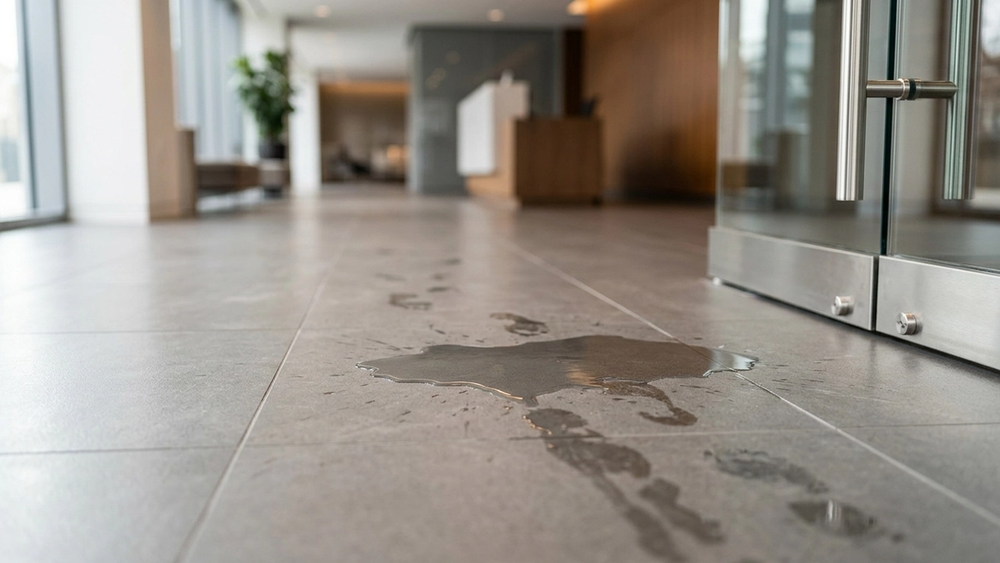
- Identify the Source: If it was a spill, look for footprints or dirt in the liquid, which suggests it had been there for a long time (proving constructive notice).
- Check for Warnings: Document the absence of "Wet Floor" signs or cones.
- Identify Witnesses: Get names and contact info for anyone who saw you fall or noticed the hazard earlier.
- Report the Incident: Ensure a manager fills out an incident report and ask for a copy or take a photo of it. Be careful what you say; do not apologize or admit fault (e.g., don't say "I wasn't looking where I was going").
This evidence is the primary tool used to counter the Open and Obvious defense during settlement negotiations. It allows your attorney to point to specific reasons why a reasonable person might have missed the danger.
Impact of the Doctrine on Settlement Values
The Open and Obvious Doctrine is a "value killer" in personal injury negotiations. When an insurance adjuster evaluates a slip-and-fall claim, they apply a "multiplier" or a discount based on how likely a jury is to find the plaintiff partially at fault.
If a case has clear liability (e.g., a hidden hole in a floor), it might settle for 80-90% of its full value. If the hazard was arguably obvious, the adjuster may start by offering only 20-30% of the value, citing your own negligence. This is why it is so important to have a clear picture of what your case is worth before you start talking to an adjuster. You can use our general premises liability calculator to establish a baseline for your damages before the defense begins their efforts to devalue them. For more on how state rules differ, you might look at California's recreational use laws to see how other states handle property owner immunity.
Navigating Insurance Adjuster Tactics
Insurance adjusters are trained to use the Open and Obvious Doctrine as a psychological weapon. They will often ask leading questions during recorded statements, such as "If you had been looking at the floor, would you have seen the spill?" If you answer "yes," they will use that admission to assign 100% of the fault to you.
It is important to remember that you are not required to provide a recorded statement immediately after an accident. In fact, doing so can be detrimental. The adjuster's goal is to close the file as cheaply as possible, and the Open and Obvious Doctrine is their most effective tool for doing so. They will highlight every detail that makes the hazard look visible in hindsight, ignoring the reality of the situation at the time of the fall. Expert legal representation is often the only way to effectively push back against these tactics and keep the focus on the property owner's failure to maintain a safe environment.
Steps to Take if the Defense Claims a Hazard was Obvious
If you find yourself in a legal battle where the defense is using this doctrine, do not lose hope. There are several ways to counter the argument:
- Focus on the Duty to Maintain: Remind the court that even if a hazard is visible, the owner has a duty to fix it.
- Highlight Distractions: Identify what the store was doing to draw your attention away from the floor (e.g., eye-level marketing, overhead music, narrow aisles).
- Challenge Lighting and Contrast: Use photos and expert testimony to show that the hazard wasn't as visible as the defense claims.
- Analyze Store Procedures: Look for the store’s cleaning logs. If they didn't inspect the area for four hours, their negligence in maintenance outweighs your failure to see the spill.
By systematically breaking down the defense's arguments, you can protect your right to compensation. The Open and Obvious Doctrine is a hurdle, but it is not always a brick wall. With the right evidence and a clear understanding of Florida's modified comparative negligence rules, you can still secure a fair settlement.
Conclusion: Evaluating Your Florida Claim
The Florida Open and Obvious Doctrine remains one of the most significant challenges for slip-and-fall victims. While the state's 2023 tort reform has made it easier for property owners to bar recovery entirely, the law still provides pathways for victims to hold negligent owners accountable. Whether through the "anticipation of harm" exception or by focusing on the duty of maintenance, you can fight back against the "obviousness" defense.
If you or a loved one has been injured, do not let the insurance company convince you that the fall was entirely your fault. Every case is unique, and the interaction of lighting, distractions, and store policy can change the outcome of your claim. To get a better understanding of what your case might be worth and how visible hazards affect your recovery, evaluate your claim value today. Our tools are designed to help you understand the real-world value of your legal rights so you can make informed decisions about your future.
Disclaimer: This blog post is for informational purposes only and does not constitute legal advice. For specific legal guidance regarding your situation, please consult with a qualified attorney.