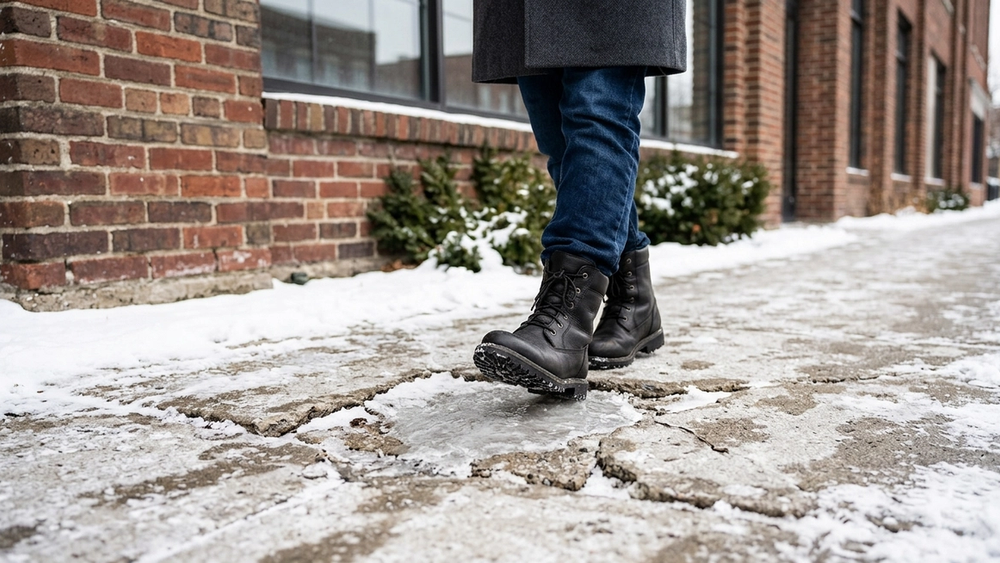
New York Sidewalk Law: Understanding Administrative Code Section 7-210
For decades, if you tripped and fell on a New York City sidewalk, the default defendant was almost always the City itself. However, in 2003, the legal landscape shifted dramatically with the enactment of New York City Administrative Code Section 7-210. This law transferred the legal obligation to maintain sidewalks from the municipality to the owners of the property abutting the sidewalk. Today, if you are injured due to a sidewalk defect, your first question must be: who owns the property next to where I fell?
Under Section 7-210, property owners are required to maintain sidewalks in a "reasonably safe condition." This includes the duty to repair cracks, holes, and uneven pavement, as well as the duty to remove snow and ice. If an owner fails to do so and that failure results in an injury, the owner is held strictly liable for the damages. This legislative change was designed to ensure that those who benefit most from the sidewalk—the adjacent businesses and property owners—take active responsibility for public safety.
However, this rule is not universal. The law distinguishes between commercial entities and certain residential owners. Understanding these nuances is the first step in building a successful premises liability claim. Without identifying the correct liable party, a victim may waste months pursuing the wrong entity, only to have their case dismissed after the statute of limitations has expired.
Affected by a Premises Liability Issue?
Our specialized tool can help you estimate the potential worth of your case based on current laws and precedents.
The Commercial Property Owner’s Responsibility
Commercial property owners in New York face the highest level of scrutiny regarding sidewalk maintenance. Whether it is a small storefront, a massive office building, or a multi-unit apartment complex, these owners are legally mandated to keep the walkway in front of their premises clear of hazards. This responsibility extends to the entire sidewalk area, from the property line to the curb, though the curb itself often remains the City's responsibility.
Commercial owners are expected to perform regular inspections. In the eyes of the law, "I didn't know the sidewalk was broken" is rarely a valid defense. If a defect was visible and had existed for a long enough period that a reasonable person should have discovered and fixed it, the law deems the owner to have "constructive notice." This means they are liable just as if they had seen the hole themselves and chosen to ignore it.
Furthermore, commercial owners cannot delegate this liability to a tenant or a maintenance company in a way that prevents an injured person from suing the owner. While an owner might have a contract stating a tenant is responsible for shoveling snow, the injured victim still sues the owner under Section 7-210. The owner may then seek "indemnification" from the tenant, but for the victim, the primary target remains the property owner of record.
The Residential Property Owner Exemption
One of the most critical exceptions to New York’s sidewalk liability rules involves small residential properties. Section 7-210 provides an exemption for owners of one-, two-, or three-family residential real property that is (1) in whole or in part, owner-occupied, and (2) used exclusively for residential purposes. If you slip in front of a house that meets these criteria, the City of New York—not the homeowner—may still be the liable party.
This exemption exists to protect individual homeowners from the potentially bankrupting costs of a major personal injury lawsuit. However, the "owner-occupied" requirement is strictly enforced by New York courts. If a landlord owns a three-family house but lives elsewhere, they lose this protection and are treated like a commercial owner. Similarly, if a portion of the house is used for a business, such as a ground-floor doctor's office, the exemption typically does not apply.
If you find yourself injured in front of an exempt residential property, your legal path becomes more complex. You are no longer suing a private citizen under Section 7-210; instead, you are likely pursuing a claim against a government entity, which involves significantly different procedural requirements and much shorter deadlines.
When is the City of New York Actually Liable?
Despite the 2003 law, the City of New York is far from immune to sidewalk-related lawsuits. There are several specific scenarios where the municipality remains the proper defendant. These include:
- Exempt Residential Properties: As mentioned, falls in front of owner-occupied 1-3 family homes often fall back on the City.
- City-Owned Property: If you slip in front of a public school, a municipal building, a public park, or a police station, the City is the owner and is liable under the same standards as a private owner.
- The Curb: Generally, the vertical and horizontal concrete that makes up the curb (the edge of the street) is considered City property, even if the sidewalk it attaches to belongs to a private owner.
- Tree Wells: Liability for tree wells can be tricky. While the City generally maintains street trees, the adjacent owner may be liable if they created the hazard or if they have a specific maintenance agreement.
Suing the City requires following the rules of the New York General Municipal Law. This includes filing a "Notice of Claim" within 90 days of the accident. Failing to meet this tiny window of opportunity can permanently bar you from recovery, regardless of how severe your injuries are. For more information on navigating these complex timelines, you can use our New York premises liability calculator to see how your specific location and injury type impact your potential recovery.
Prior Written Notice and the "Big Apple Map"
If you are suing the City of New York for a sidewalk defect, you face a hurdle that private owners do not: the "Prior Written Notice" requirement. Under the New York City Administrative Code Section 7-201, the City cannot be held liable for a sidewalk defect unless it received written notice of the specific hazard at least 15 days before the accident occurred.
How does a victim prove the City knew about a crack in the pavement months in advance? The answer often lies with the "Big Apple Map." For years, a group known as the Big Apple Pothole and Sidewalk Protection Committee systematically mapped sidewalk defects across all five boroughs. They would then file these maps with the Department of Transportation. If a symbol for a "raised sidewalk" or "cracked pavement" appeared on the map at your exact location, the City was considered to have prior written notice.
While the Big Apple Map is used less frequently today than in previous decades, the principle remains. A plaintiff must prove through municipal records, 311 complaints, or previous repair orders that the City was officially informed of the danger. This is a high evidentiary bar that requires the expertise of a legal team capable of performing deep-dive records searches at the NYC Department of Transportation.
Proving Negligence: Actual vs. Constructive Notice
To win a sidewalk slip and fall case in New York, you must prove that the defendant was negligent. Negligence, in this context, means the owner knew—or should have known—about the dangerous condition and failed to fix it within a reasonable amount of time. This is broken down into two types of notice: actual and constructive.
Actual Notice occurs when the owner created the defect or was explicitly told about it. For example, if a neighbor called a shop owner to report a broken piece of concrete, or if the shop owner tripped on it themselves earlier in the day, they have actual notice. Constructive Notice is more common. It exists when a defect is "visible and apparent" and has existed for a sufficient length of time prior to the accident to permit the owner’s employees to discover and remedy it. Cornell Law School provides further clarity on the four pillars of negligence required in these cases.
In New York, defendants often try to move for "summary judgment," asking the judge to throw out the case because they claim they didn't have notice. To beat this, victims must often rely on expert testimony from engineers or weather experts who can testify that a crack is old based on the presence of dirt and weeds, or that ice must have formed hours before the fall based on temperature records.
Snow and Ice Removal: The "Storm in Progress" Rule
Snow and ice cases are among the most common sidewalk claims in New York, but they are also among the most difficult to win. New York follows the "Storm in Progress" doctrine. This rule states that a property owner's duty to remove snow and ice is suspended while a storm is actually happening. An owner is not required to be out in the middle of a blizzard with a shovel; they are granted a reasonable period of time after the storm ends to clear the walkway.
This creates a frequent legal battle over when a storm "ended." If there was a lull in the snowfall for an hour, was the storm over? If it was misting or drizzling, does that count as a storm? Defendants will use meteorological data from the National Oceanic and Atmospheric Administration to argue that the weather was still active at the time of your fall.
However, there is an exception. If the owner attempts to clear the snow while the storm is in progress and does a negligent job—such as piling snow in a way that it melts and refreezes into a hidden ice patch—they can be held liable for "creating or exacerbating" the hazard. Proving this requires immediate documentation of the scene to show the state of the snow removal efforts.
NYC’s "Four-Hour" Snow Removal Window
While the "Storm in Progress" rule is a general common law principle, New York City has a specific ordinance that dictates the timing of snow removal. Administrative Code Section 16-123 establishes a window for clearing sidewalks. If the snow stops falling between 7:00 AM and 4:49 PM, the owner has four hours to clear it. If it stops between 5:00 PM and 8:59 PM, they have fourteen hours. If it stops between 9:00 PM and 6:59 AM, they must have it cleared by 11:00 AM the following morning.
This specific timeframe provides a clear benchmark for negligence. If you slipped at 3:00 PM on an icy sidewalk when the snow had stopped at 9:00 AM, the owner has clearly violated the four-hour rule. This violation is powerful evidence in a personal injury claim.
It is also important to note that the law requires the removal of ice, or at least the spreading of sand, salt, or ashes if the ice is too frozen to remove. Simply shoveling the top layer of snow while leaving a sheet of black ice underneath is a failure of the owner’s duty. Victims should always check if there are nearby security cameras that might have captured the timing of the storm and the owner's (or lack of) response.
Tree Roots and City-Owned Trees: A Complex Dynamic
In New York City, many sidewalk defects are caused by the roots of street trees. These roots can lift concrete slabs by several inches, creating a "trip hazard." For a long time, the City and property owners fought over who was responsible for these specific defects. Property owners argued that since they weren't allowed to prune the City's trees, they shouldn't be responsible for the damage the trees caused.
In 2019, the City of New York clarified this through a policy change and a new program. While the owner is generally responsible for the sidewalk under Section 7-210, the City has taken on the responsibility for repairing sidewalk damage caused specifically by the roots of trees on City-owned property in front of 1-3 family homes. However, for commercial properties, the owner often remains responsible for the sidewalk even if a City tree caused the damage.
This creates a "fingers pointing in both directions" scenario. The City may blame the owner for not reporting the defect, and the owner will blame the City’s tree. If you were injured by a tree root, it is essential to have a professional survey the area to determine the species of the tree and whether it is officially a City-managed street tree or a private tree planted by the owner. The CDC notes that environmental hazards like uneven surfaces are a primary cause of injurious falls in urban environments.
Special Use: When Owners Use the Sidewalk for Business
Even in cases where the City might normally be liable (such as the residential exemption), a property owner can still be held responsible under the "Special Use" doctrine. This applies when an owner uses a portion of the public sidewalk for their own private benefit. Common examples of special use include:
- Driveways: If a sidewalk is reinforced or lowered to allow cars to enter a private garage.
- Vaults and Grates: Metal doors in the sidewalk leading to a basement or utility meters.
- Outdoor Cafes: When a restaurant places tables and chairs on the walkway.
- Display Racks: When a bodega uses the sidewalk to sell produce or goods.
When an owner makes a "special use" of the sidewalk, they have a legal duty to maintain that specific area in a safe condition. If you trip on a metal hinge of a delivery vault, you are likely suing the building owner, regardless of whether they are a 1-family residential owner. The law argues that since they are deriving a unique benefit from that portion of the public space, they must shoulder the burden of its safety.
Comparative Negligence: What if You Weren't Looking?
New York is a "Pure Comparative Negligence" state. This means that even if you were partially at fault for your own fall, you can still recover damages. However, your total award will be reduced by your percentage of fault. For example, if a jury finds that a sidewalk crack was dangerous (making the owner 70% liable) but that you were distracted by your phone (making you 30% liable), you would receive 70% of the total verdict amount.
Defense attorneys will almost always try to blame the victim. They will argue the defect was "open and obvious," meaning anyone looking where they were going would have seen it and avoided it. They may look at your footwear (were you wearing high heels in a snowstorm?) or your speed (were you running for a bus?).
Unlike some states where you are barred from recovery if you are 50% or 51% at fault, New York allows you to recover even if you are 99% at fault. If you had $100,000 in damages and were 99% at fault, you would still be entitled to $1,000. Understanding how fault is apportioned is vital for managing settlement expectations. For a broader look at how New York handles these and other injury cases, see our guide on New York's three-year statute of limitations.
Filing Deadlines: The 90-Day Notice of Claim
Time is the enemy of a sidewalk slip and fall case. If your claim is against a private commercial owner, you generally have the standard New York personal injury statute of limitations of three years to file a lawsuit. However, if the City of New York, the New York City Housing Authority (NYCHA), or any other municipal entity is involved, the clock moves much faster.
You must file a formal Notice of Claim within 90 days of the accident. This document puts the City on notice that you intend to sue and gives them the opportunity to investigate. After filing the Notice of Claim, you must wait at least 30 days before filing a lawsuit, and the lawsuit itself must be started within one year and 90 days of the accident. These "Statutes of Repose" are strictly enforced; there are very few exceptions for missing these deadlines.
Many victims wait until their medical treatment is nearly finished before calling a lawyer. In New York, this can be a fatal mistake for a legal claim. If you realize on day 95 that the City was the responsible party, you may be out of luck unless you can convince a judge to allow a "Late Notice of Claim," which is an expensive and difficult legal uphill battle.
Types of Recoverable Damages in NY Sidewalk Claims
In New York, damages for sidewalk injuries are intended to make the victim "whole" again. These are generally divided into two categories: economic and non-economic damages.
Economic Damages are quantifiable financial losses. These include hospital bills, physical therapy costs, out-of-pocket medication expenses, and lost wages if the injury forced you to miss work. It also includes "future loss of earnings" if the injury results in a permanent disability that prevents you from returning to your previous career. To understand the baseline for these medical assessments, New York courts often refer to the New York State Department of Health standards for injury treatment.
Non-Economic Damages are more subjective. They cover "pain and suffering," loss of enjoyment of life, and emotional distress. In cases of severe injury, such as a broken hip requiring surgery or a traumatic brain injury (TBI) from hitting the concrete, these damages often make up the bulk of a settlement. Unlike some other states, New York does not have a "cap" on non-economic damages in premises liability cases. However, if your injury is related to a motor vehicle (e.g., a car hitting a sidewalk), you may encounter the New York no-fault serious injury threshold, which serves as a barrier for minor claims.
Case Value Factors: Medical Records and Evidence
What is a New York sidewalk fall worth? There is no simple answer, but several factors consistently drive case value up or down:
- The Severity of the Defect: A 3-inch gap in the pavement is much easier to prove as a hazard than a 1/2-inch crack. Photographs with a ruler or a common object (like a coin) for scale are essential.
- The Nature of the Injury: Soft tissue injuries like sprains are valued lower than "hard" injuries like fractures, herniated discs, or anything requiring surgery (internal fixation with plates and screws).
- The Permanency of the Injury: A scar on the face or a permanent limp significantly increases the "pain and suffering" component of a claim.
- The Location: Juries in different New York counties (e.g., Bronx vs. Westchester) are statistically known to award different average amounts for similar injuries.
- Insurance Policy Limits: A small local bodega might only have a $500,000 liability policy, whereas a major developer like The Related Companies will have tens of millions in coverage.
To get a clearer picture of what your specific situation might be worth, visit our slip and fall settlement guide. This tool helps victims understand the multiplier effect of medical bills on their final settlement.
Step-by-Step Checklist After a NY Sidewalk Fall
If you have just fallen on a New York sidewalk, your actions in the next 24 to 48 hours will define the success of your legal claim. Follow this checklist to protect your rights:
- Seek Medical Attention: Even if you feel "fine," the adrenaline may be masking a fracture or a head injury. A gap in treatment is a primary reason insurance adjusters deny claims.
- Photograph the Scene: Take photos of the defect from multiple angles. Capture the sidewalk, the adjacent building's address, and the weather conditions.
- Identify Witnesses: Get names and phone numbers of anyone who saw you fall or who came to help you afterward.
- Report the Incident: If you fell in front of a store, tell the manager. If you are on City property, call 311. However, do not sign any statements or accept blame.
- Save Your Footwear: The defense will want to see what you were wearing. Do not throw away or clean the shoes you were wearing at the time of the fall.
- Avoid Social Media: Do not post about your accident or your injuries. Insurance companies hire investigators to scour social media for evidence that you are "faking" or that your injury isn't as severe as you claim.
- Consult an Expert: Sidewalk law is remarkably technical. A professional evaluation can determine if Section 7-210 applies or if you need to file a 90-day Notice of Claim.
By following these steps and understanding the complexities of New York law, you can ensure that you are positioned to receive the full value of your claim. Whether you were injured in Brooklyn, Manhattan, or Queens, the path to justice starts with identifying who was truly responsible for the ground beneath your feet. To start your journey toward recovery, use our free case evaluation tool today.
Disclaimer: This blog post is for informational purposes only and does not constitute legal advice. For specific legal guidance regarding your situation, please consult with a qualified attorney.