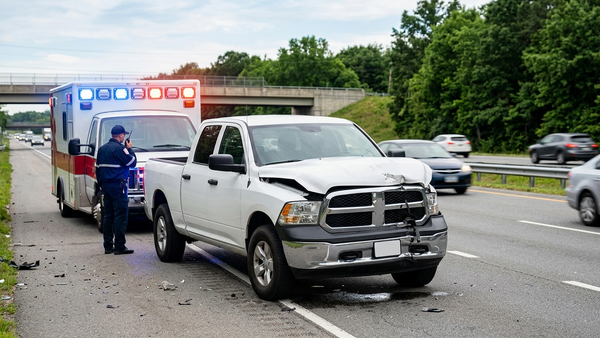
Understanding the Pennsylvania Choice No-Fault System
Pennsylvania operates under a unique "choice no-fault" insurance system, a regulatory framework that grants policyholders the power to decide their legal rights following a motor vehicle accident at the time they purchase their policy. Unlike pure no-fault states where your own insurance always pays for medical bills and your ability to sue is strictly limited by law, Pennsylvania allows drivers to choose between two distinct categories of coverage: Full Tort and Limited Tort. This decision is one of the most critical financial and legal choices a Pennsylvania resident can make, as it directly determines the potential value of a personal injury claim years before an accident even occurs.
In Pennsylvania, every driver is required to carry a minimum amount of Medical Benefits coverage—often referred to as Personal Injury Protection (PIP) in other states. This portion of the policy is truly "no-fault," meaning your own insurance company pays your medical bills regardless of who caused the collision. However, the "Choice" refers to your right to seek "non-economic damages," which include compensation for pain and suffering, loss of enjoyment of life, and emotional distress. Selecting the wrong option to save a few dollars on monthly premiums can lead to the loss of tens of thousands of dollars in a future settlement. To understand how these laws interact with your potential claim, you can use a Pennsylvania motor vehicle accident calculator to see the difference in recovery amounts.
Affected by a Motor Vehicle Issue?
Our specialized tool can help you estimate the potential worth of your case based on current laws and precedents.
The History of the Pennsylvania Motor Vehicle Financial Responsibility Law
The current landscape of Pennsylvania insurance was shaped by the Motor Vehicle Financial Responsibility Law (MVFRL), codified under Title 75, Chapter 17 of the Pennsylvania Statutes. Enacted in the early 1990s, the law was intended to curb rising insurance premiums by offering consumers a way to trade away some of their legal rights in exchange for a lower price. Before this law, all Pennsylvania drivers essentially had "Full Tort" rights. The introduction of Limited Tort created a tiered system that has confused consumers for decades.
The legislative intent was to reduce the volume of "small" lawsuits involving minor injuries, such as soft tissue damage or whiplash, which were seen as driving up the costs for everyone. By opting into Limited Tort, a driver agrees that they will only sue for their out-of-pocket medical bills and lost wages unless their injury meets a specific definition of "seriousness." If you have lived in other states, you may find this similar to the New York no-fault threshold, where a "serious injury" must be proven before a lawsuit can proceed.
What is Limited Tort? The Legal Restriction
Limited Tort is the "budget" option in Pennsylvania. By selecting Limited Tort, you are essentially waiving your right to recover money for pain and suffering in the event of an accident. Under this selection, you are still entitled to recover "economic damages," which are quantifiable financial losses. These include:
- Medical expenses that exceed your PIP coverage limits.
- Lost wages and future earning capacity.
- Property damage to your vehicle.
- Out-of-pocket expenses for household help or transportation required due to the injury.
However, you are barred from seeking compensation for non-economic damages. This is a massive disadvantage because, in many personal injury cases, the pain and suffering component represents the largest portion of the total settlement. For example, if you are out of work for two weeks and have $2,000 in lost wages, but spend six months in grueling physical therapy dealing with chronic back pain, a Limited Tort policy might restrict your recovery to just that $2,000. Under Full Tort, that same injury could result in a much larger settlement because the jury or insurance adjuster can consider the months of agony you endured.
What is Full Tort? The Unrestricted Right
Full Tort is exactly what it sounds like: it preserves your full, traditional legal rights to seek justice following an accident. When you choose Full Tort, there are no "thresholds" or hurdles you must jump over to sue an at-fault driver for pain and suffering. If someone else’s negligence causes you harm, you can hold them accountable for every way that injury has impacted your life.
With Full Tort, the severity of the injury does not dictate whether you can sue; it only dictates the amount of the lawsuit. Even "minor" injuries that do not result in broken bones or surgery are eligible for pain and suffering compensation if you have a Full Tort policy. This is particularly important for injuries like herniated discs or nerve damage, which can cause significant lifestyle changes without necessarily appearing "catastrophic" on an initial X-ray. According to the Insurance Institute for Highway Safety, the legal environment and tort rights significantly impact the ultimate payout of third-party liability claims.
The "Serious Injury" Threshold Explained
If you have Limited Tort, you are not permanently barred from pain and suffering damages if your injury is severe enough. The law allows Limited Tort drivers to seek non-economic damages if they suffer what is defined as a "serious injury." However, the definition of "serious" in Pennsylvania is notoriously difficult to meet. The statute defines it as a personal injury resulting in death, serious impairment of body function, or permanent serious disfigurement.
What constitutes a "serious impairment of body function"? Pennsylvania courts look at several factors:
- The body function that was impaired (e.g., the ability to walk, lift, or breathe).
- The extent of the impairment (is it partial or total?).
- The duration of the impairment (is it temporary or permanent?).
- How the impairment affects the victim's daily activities (can they still work, drive, or care for children?).
Often, insurance companies will argue that even significant injuries—like a broken arm that heals in three months—do not constitute a "serious impairment" because the victim eventually returned to their normal life. This leaves many Limited Tort victims in a "legal limbo" where they are clearly suffering but do not meet the high bar required to get compensated for that suffering.
Critical Exceptions to Limited Tort (The "Bypass")
Even if you or a household member selected Limited Tort on your policy, there are several statutory exceptions that can automatically "convert" your coverage to Full Tort for a specific accident. These are found in 75 Pa. C.S. § 1705(d). You may be eligible for Full Tort benefits despite your policy selection if:
- The at-fault driver is convicted of or accepts Accelerated Rehabilitative Disposition (ARD) for driving under the influence (DUI).
- The at-fault driver’s vehicle is registered in a state other than Pennsylvania.
- You were an occupant of a commercial vehicle (such as a bus, taxi, or rental truck) at the time of the crash.
- You were a pedestrian or a bicyclist struck by a motor vehicle.
- The at-fault driver intended to injure themselves or another person.
- The at-fault driver has no insurance (uninsured).
These exceptions are vital. For instance, if you are hit by a driver from New Jersey or Ohio, your Limited Tort status is instantly waived, allowing you to seek full pain and suffering damages. Navigating these exceptions requires careful legal analysis, as the insurance company is unlikely to volunteer this information during a claim negotiation.
Premiums vs. Protection: The Financial Trade-off
The primary reason people choose Limited Tort is the cost. In Pennsylvania, Limited Tort can save a driver anywhere from 10% to 40% on the "bodily injury" portion of their premium. For a family with multiple cars and teen drivers, this could amount to hundreds of dollars a year in savings. However, when viewed as an investment in asset protection, the trade-off is often poor.
Consider the "cost of the risk." If a driver saves $200 a year for ten years, they have saved $2,000. If that driver is then involved in a serious accident that results in two years of chronic pain, the "value" they walked away from by choosing Limited Tort could be $50,000 or more. Because accidents are unpredictable, the nominal monthly savings of Limited Tort rarely justify the massive loss of legal leverage. When you use a motor vehicle accident calculator, you will see that pain and suffering often accounts for 50% to 70% of a total settlement value in successful cases.
First Party Benefits and PIP in Pennsylvania
Regardless of your tort choice, you must understand your First Party Benefits (FPB). This is the mandatory medical coverage that pays your bills immediately after an accident. Pennsylvania law requires a minimum of $5,000 in medical benefits, though most experts recommend carrying much more—often $50,000 or $100,000.
Because Pennsylvania is a "no-fault" state for medical treatment, you do not have to wait for a lawsuit to be resolved to get your hospital bills paid. Your own car insurance is the "primary" payer, even over your health insurance. This system is designed to keep the healthcare system moving and ensure that trauma centers get paid. This is a different approach than the Florida 14-day rule, which requires medical care within a very tight window to preserve benefits. In PA, while there is no 14-day limit, seeking immediate treatment is still the best way to prove the link between the accident and your injuries.
How Tort Choice Impacts Your Case Value
When a lawyer or an insurance adjuster evaluates a Pennsylvania car accident claim, the very first thing they look at is the tort selection. If the victim has Limited Tort and the injuries are not clearly catastrophic (like paralysis or loss of a limb), the case value is significantly lower. The insurance company knows that the victim faces a high hurdle in court, so they will offer much smaller settlements, often just covering the remaining medical bills and a small "nuisance" payment.
If the victim has Full Tort, the adjuster’s risk increases. They know that if the case goes to a jury, the jury can award a specific dollar amount for every day the victim was in pain. This increases the victim’s bargaining power and usually leads to a faster, more substantial settlement offer. Tort choice effectively sets the "ceiling" for your potential recovery before you even start the car.
Impact on Minor Children and Household Members
Your tort choice does not just affect you; it usually covers everyone living in your household who does not have their own insurance policy. This includes your spouse, your children, and any relatives residing with you. If you choose Limited Tort, you are choosing Limited Tort for your children. If your child is injured in a car accident as a passenger, their right to sue for pain and suffering will be restricted by the choice you made on your policy.
There is one minor exception: if a child is a pedestrian and is struck by a car, they are generally treated as Full Tort regardless of the parent's policy. However, if they are inside a vehicle, the parent's choice follows them. This makes the Full Tort selection a critical part of family financial planning and protection.
Comparative Negligence in PA Car Accidents
Even if you have Full Tort, your recovery can be reduced by your own level of fault. Pennsylvania follows a "Modified Comparative Negligence" rule (51% bar). This means that as long as you are 50% or less at fault for the accident, you can recover damages. However, your total award will be reduced by your percentage of fault.
For example, if a jury decides your pain and suffering is worth $100,000, but they find you were 20% at fault for the accident (perhaps for speeding), your final award would be $80,000. If you are found to be 51% or more at fault, you recover nothing. This highlights that while Full Tort gives you the right to sue, you still must prove the other driver was the primary cause of the harm. Legal standards for negligence can be explored through resources like Cornell Law School's Wex.
The Role of Uninsured and Underinsured Motorist Coverage
Many Pennsylvania drivers carry the minimum liability insurance required by law ($15,000 per person/$30,000 per accident). If you are seriously injured by one of these drivers, $15,000 will not even begin to cover your losses. This is why Uninsured Motorist (UM) and Underinsured Motorist (UIM) coverage is so important. UM/UIM coverage steps into the shoes of the at-fault driver’s insurance and pays you from your own policy.
Your tort choice applies to your UM/UIM claims as well. If you have Limited Tort, you generally cannot seek pain and suffering damages from your own insurance company through your UIM coverage unless you meet the "serious injury" threshold. Combining Full Tort with high UM/UIM limits is the gold standard for protecting yourself on Pennsylvania roads.
Comparison: PA vs. New York and New Jersey Systems
Pennsylvania is one of only three states with a "choice" system (the others being New Jersey and Kentucky). New York uses a standard no-fault system with a mandatory "serious injury" threshold (Article 51), meaning no one in NY has an automatic "Full Tort" right; everyone must prove a serious injury to sue for pain and suffering.
New Jersey’s system is very similar to Pennsylvania’s, but with even more complex "thresholds" that can be difficult to navigate. In most other states, such as Ohio or Maryland, there is no no-fault medical coverage (PIP), and everyone has the right to sue for pain and suffering from dollar one. Pennsylvania’s hybrid system offers the best of both worlds—immediate medical pay and the right to sue—but only if the consumer is educated enough to select Full Tort.
The "Deemed" Rule: What if You Don't Choose?
What happens if you apply for insurance but forget to check the box for Full or Limited Tort? Or what if the insurance company fails to provide you with the proper notice of your rights? Under the Pennsylvania MVFRL, if a choice is not explicitly made and documented with a signed waiver, the policyholder is "deemed" to have chosen Full Tort.
Insurance companies are legally required to provide a specific form (the Section 1705 notice) that explains the difference between the two options. If they cannot produce a signed copy of this form, a lawyer can often successfully argue that you should be treated as a Full Tort driver. This is a common area of litigation where victims who thought they were stuck with Limited Tort discover they actually have full rights due to an administrative error by the insurance company.
Practical Steps: How to Review and Update Your Policy
You do not have to wait for your policy to expire to change your tort status. You can call your insurance agent today and request a switch from Limited Tort to Full Tort. It is often as simple as signing a new document and paying a small pro-rated increase in your premium. When reviewing your policy, look for the "Tort Option" section on your Declarations Page.
- Check for the "L" or "F": Ensure it clearly states "Full Tort."
- Review Your PIP Limits: Ensure your medical coverage is at least $10,000 to $50,000.
- Examine UM/UIM: Make sure these limits match your liability limits.
- Consult an Expert: If you have been in an accident, have an attorney review your policy immediately to see if an exception applies.
Conclusion and Free Case Evaluation
Selecting Full Tort is a small price to pay for the peace of mind that comes with knowing your legal rights are protected. If you have already been in an accident, do not assume that a "Limited Tort" selection on your policy is the end of the road. Between the statutory exceptions and the possibility of meeting the serious injury threshold, there are many ways to secure a fair settlement.
Understanding the value of your claim is the first step toward recovery. Our tools can help you analyze how Pennsylvania’s unique laws impact your specific situation. If you have been injured in a crash, use our free Pennsylvania motor vehicle accident calculator to estimate your potential case value and speak with a legal expert today.
Disclaimer: This blog post is for informational purposes only and does not constitute legal advice. For specific legal guidance regarding your situation, please consult with a qualified attorney.