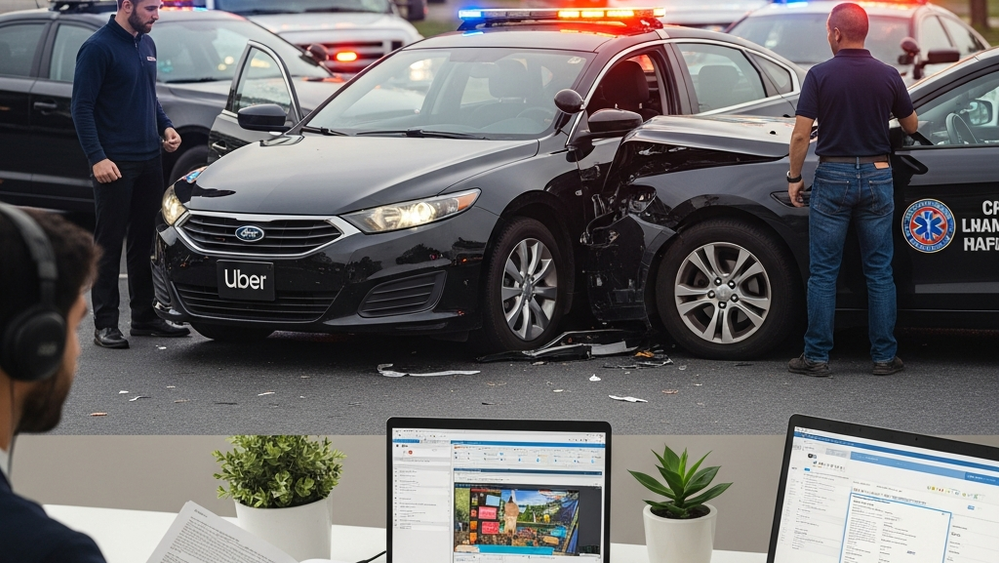
Understanding the Complex World of Rideshare Accidents
The rise of Transportation Network Companies (TNCs) like Uber and Lyft has revolutionized how we move through our cities. However, this convenience comes with a unique set of legal complexities when an accident occurs. Unlike a typical two-car collision, a rideshare accident involves multiple layers of insurance, fluctuating employment statuses, and high-stakes corporate interests. As a passenger, you are in a unique position: you are almost never at fault for the crash, yet you may find yourself caught in the middle of a finger-pointing battle between insurance adjusters.
This guide serves as a comprehensive resource for passengers injured while using rideshare services. We will explore how insurance coverage works, what your rights are under the law, and the steps you must take to ensure you are fairly compensated for your medical bills, lost wages, and pain and suffering.
Affected by a Motor Vehicle Issue?
Our specialized tool can help you estimate the potential worth of your case based on current laws and precedents.
1. The Legal Status of Rideshare Drivers
To understand your rights, you must first understand the legal relationship between the driver and the rideshare company. Most Uber and Lyft drivers are classified as independent contractors, not employees. This distinction is the bedrock of the rideshare business model, as it allows companies to distance themselves from direct liability for their drivers' actions.
However, because of the "common carrier" nature of transportation, many states have enacted specific legislation requiring TNCs to provide significant insurance coverage. While the driver is an independent contractor, the TNC platform provides a safety net that is significantly larger than a standard personal auto insurance policy. Navigating this means understanding the general car accident settlement process while accounting for the additional TNC regulations.
2. The Three Phases of Rideshare Insurance Coverage
Insurance coverage in a rideshare accident is not static; it depends entirely on the status of the app at the moment of the collision. This is known as the "Period" system.
Period 1: App Open, Waiting for a Request
In this phase, the driver has the app open but has not yet accepted a ride. If an accident occurs here, the driver’s personal insurance is primary. However, Uber and Lyft provide contingent liability coverage if the personal policy denies the claim. This usually includes up to $50,000 per person/$100,000 per accident in bodily injury liability.
Period 2: Request Accepted, En Route to Pickup
Once a driver hits "Accept" on a ride request, the coverage increases significantly. During this time, the TNC usually provides up to $1 million in third-party liability coverage.
Period 3: Passenger in the Vehicle
This is the most critical period for you. From the moment you enter the vehicle until the moment the ride is ended in the app, you are covered by the full $1 million liability policy. This policy is designed to cover your medical expenses and damages regardless of whether your driver or another motorist was at fault. This high limit is one reason why these cases share similarities with commercial vehicle claims, which often involve higher policy limits than standard passenger car accidents.
3. Passenger Rights: You Are Rarely at Fault
As a passenger, you have a distinct advantage in a personal injury claim: the "fault" almost never rests with you. Unless you actively interfered with the driver (such as grabbing the steering wheel), you are an innocent victim. This means that even if the insurance companies are arguing over establishing legal liability, your right to recovery remains intact. You are entitled to seek damages from whichever party is found negligent, and in many cases, you can recover from multiple parties if they share the blame.
4. Immediate Steps to Take After an Uber or Lyft Crash
The actions you take in the minutes following a crash can make or break your ability to secure a fair settlement.
- Check for Injuries: Your health is the priority. Call 911 immediately if anyone is hurt.
- Report to Police: Ensure an official police report is filed. This is an objective record of the event that insurance companies cannot easily ignore.
- Screenshot the App: This is vital. Take a screenshot of your active ride, the driver’s name, the car's license plate, and the trip ID. This proves you were in "Period 3" coverage.
- Gather Evidence: Take photos of the vehicle damage, the scene, the weather conditions, and any visible injuries. If there was pedestrian involvement or other witnesses, get their contact information.
- Seek Medical Attention: Even if you feel "fine," the adrenaline of a crash can mask serious injuries like internal bleeding or whiplash. A medical record created shortly after the crash is the strongest evidence of your injuries.
5. Understanding the $1 Million Liability Policy
The $1 million policy offered by Uber and Lyft is a "combined single limit" policy. This means it covers bodily injury and property damage for all parties involved in the accident. As a passenger, this pool of money is available to cover your:
- Emergency room visits
- Hospital stays and surgeries
- Physical therapy and rehabilitation
- Diagnostic tests (MRI, CT scans)
- Lost wages if you are unable to work
- Pain, suffering, and emotional distress
It is important to note that this policy also typically includes Uninsured/Underinsured Motorist (UM/UIM) coverage. If your Uber driver is hit by a hit-and-run driver or someone without insurance, the TNC’s UM/UIM policy steps in to cover your damages up to that $1 million limit.
6. Proving Liability in a Rideshare Case
While your status as an innocent passenger is clear, identifying which insurance company is responsible is often difficult. Liability may fall on:
- The Rideshare Driver: If they were speeding, distracted by the app, or violated traffic laws.
- Another Driver: If a third party struck your rideshare vehicle.
- The TNC: In rare cases of negligent hiring or failure to maintain safety standards.
- Vehicle Manufacturers: If a mechanical failure, such as a tire blowout, caused the crash. In such instances, the case might involve defective vehicle components rather than simple driver error.
7. Common Challenges for Rideshare Passengers
Despite the large insurance policies, getting paid is rarely easy. Insurance adjusters are trained to minimize payouts. Common tactics include:
- The "Independent Contractor" Defense: Claiming the driver wasn't technically "on the clock" at the exact micro-second of the crash.
- Pre-existing Conditions: Arguing that your injuries were not caused by the crash but were already present.
- Disputing Medical Necessity: Claiming that your treatments (like chiropractic care or physical therapy) were unnecessary.
- Finger-Pointing: The TNC insurance and the other driver's insurance may spend months arguing over who is 60% at fault versus 40% at fault, delaying your payment.
8. Calculating the Value of Your Settlement
How much is your rideshare accident claim worth? There is no one-size-fits-all answer, but several factors influence the final number:
- Severity of Injuries: Permanent disabilities or scarring lead to much higher settlements.
- Economic Damages: The total of your bills and lost income.
- Non-Economic Damages: The impact the accident has on your quality of life.
- Insurance Limits: While the $1 million limit is high, if there were four passengers all seriously injured, that money must be split among everyone.
In many ways, these evaluations follow the same logic as motorcyclists sharing the road who face catastrophic injuries; the more life-altering the injury, the higher the case value.
9. The Role of the "Common Carrier" Doctrine
In many jurisdictions, rideshare companies are considered "common carriers," similar to buses or trains. Common carriers are held to a higher standard of care than the average driver. They have a legal duty to provide the highest degree of safety for their passengers. If an Uber or Lyft driver fails to meet this heightened standard, it becomes much easier for your legal team to prove negligence and secure a settlement.
10. Dealing with the Insurance Adjuster
You will likely receive a call from an insurance adjuster shortly after the accident. They may sound friendly and concerned, but their goal is to get you to settle for the lowest possible amount.
Never give a recorded statement without a lawyer. These statements are often used to trip you up later in the process. Additionally, do not sign any "release of liability" or accept a quick check until you have completed your medical treatment and know the full extent of your damages. Once you sign, you cannot go back for more money if you discover you need surgery six months later.
11. Third-Party Liability: When Other Factors are at Play
Sometimes, the accident isn't the fault of any driver. If a stoplight malfunctions or a road is designed dangerously, a government entity might be liable. If a mechanical defect caused the crash, the manufacturer of the car or its parts might be the target of a lawsuit. Our team often looks at establishing legal liability across all potential parties to maximize the recovery for our clients. For example, if a defective tire caused the driver to lose control, the value of the claim could increase significantly through a product liability action.
12. State-by-State Variations in Rideshare Law
While Uber and Lyft operate nationally, the laws governing them vary by state.
- No-Fault States: In states like Florida or New York, your own Personal Injury Protection (PIP) insurance may be the first line of defense for medical bills, even if you weren't driving.
- Comparative Negligence States: Some states reduce your settlement if you were partially at fault (though, as established, this is rare for passengers).
- Mandatory Minimums: Many states now have specific statutes (like California’s AB 5 or AB 2257) that dictate exactly how much insurance a TNC must carry.
13. The Importance of Maximum Medical Improvement (MMI)
You should never settle your case until you reach Maximum Medical Improvement (MMI). This is the point where a doctor determines your condition has stabilized and is unlikely to improve further. Only at this point can you accurately calculate your future medical costs and the long-term impact on your earning capacity. Settling before MMI is a common mistake that leaves thousands of dollars on the table.
14. Why You Need a Rideshare Accident Attorney
Rideshare companies have legal teams dedicated to protecting their bottom line. To level the playing field, you need an advocate who understands the nuances of TNC law. An experienced attorney will:
- Investigate the crash using accident reconstruction experts.
- Subpoena data from Uber or Lyft to prove the driver’s status and speed.
- Negotiate with aggressive insurance adjusters.
- Ensure all medical liens are handled so you keep more of your settlement.
- File a lawsuit if the insurance company refuses to offer a fair amount.
15. Frequently Asked Questions (FAQ)
What if I wasn't wearing a seatbelt?
While you should always wear a seatbelt, not wearing one does not automatically disqualify you from seeking damages. However, in some states, it may be used to reduce your compensation through "comparative negligence" if the insurance company can prove your injuries would have been less severe with a belt on.
What if the Uber driver was my friend?
Many people feel guilty suing a driver they know. It is important to remember that you are not suing the person; you are seeking compensation from the $1 million insurance policy that the rideshare company provides for exactly this purpose.
How long do I have to file a claim?
Every state has a Statute of Limitations. This is a deadline by which you must file a lawsuit. If you miss this deadline, you lose your right to recover forever. These windows can be as short as one year or as long as four, depending on your location.
Conclusion: Secure Your Recovery Today
Rideshare accidents are physically, emotionally, and legally exhausting. As a passenger, you have clear rights, but the path to exercising those rights is filled with hurdles designed by multi-billion dollar corporations. You don't have to navigate this journey alone.
At CaseValue, we help victims understand the true worth of their claims. If you have been injured in an Uber or Lyft, our network of legal experts is ready to help you hold the responsible parties accountable. Your health and your future are worth fighting for.
Contact us today for a free, no-obligation case evaluation. Let us help you determine the value of your case and get you the compensation you deserve.
Disclaimer: This blog post is for informational purposes only and does not constitute legal advice. For specific legal guidance regarding your situation, please consult with a qualified attorney.