The Unique Reality of Motorcycle Injury Claims
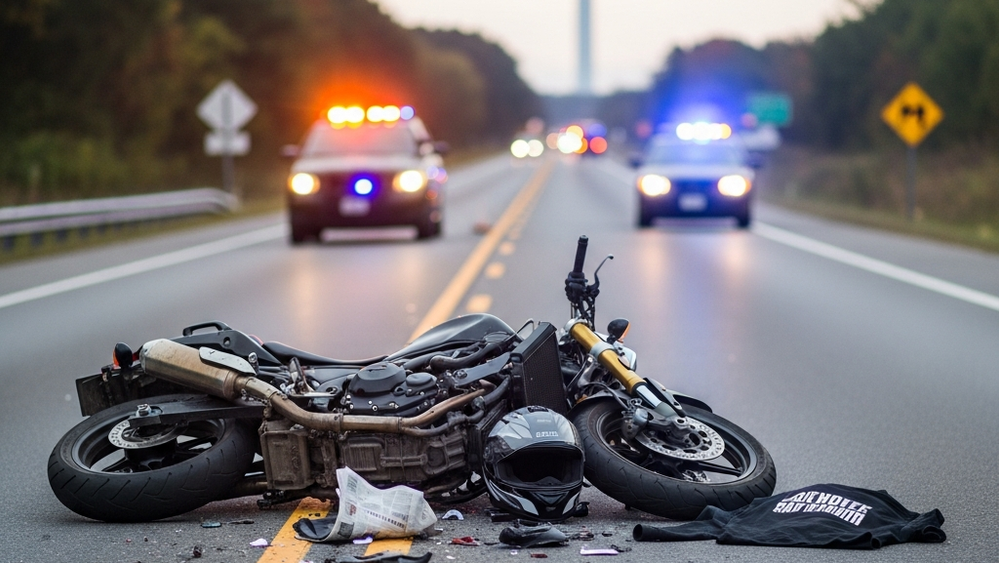
Motorcycle accidents are fundamentally different from typical passenger vehicle collisions. While a car crash involves two multi-ton steel cages designed for impact absorption, a motorcycle offers no such protection. The physics of these incidents means the rider almost always sustains the brunt of the force. Because of this, the legal landscape surrounding motorcycle injury claims is often more complex, high-stakes, and subject to unique societal biases.
In the legal world, motorcycle claims are frequently characterized by high-value damages. Because injuries are typically severe—ranging from road rash and broken limbs to traumatic brain injuries (TBI) and spinal cord damage—the "value" of the claim is significantly higher than a standard "fender bender." However, obtaining that value is rarely straightforward. Insurance companies are well aware of the potential payouts and often deploy aggressive tactics to minimize their liability. This handbook is designed to equip riders with the knowledge they need to navigate the recovery process, understand their rights, and ensure they are not unfairly penalized for choosing two wheels over four.
The "Biker Bias" Challenge
One of the most significant hurdles in a motorcycle claim is the cultural stigma often referred to as "biker bias." Many insurance adjusters, and even some jurors, hold preconceived notions that motorcyclists are inherently reckless, speed-prone, or "thrill-seekers" who assume the risk of injury just by getting on a bike. Overcoming this bias is a critical component of a successful claim. It requires building a case based on objective evidence, professional reconstruction, and a clear demonstration of the other party’s negligence.
Affected by a Motor Vehicle Issue?
Our specialized tool can help you estimate the potential worth of your case based on current laws and precedents.
Immediate Actions: The Foundation of Your Recovery
The moments following a motorcycle accident are chaotic, but they are also the most critical for your physical health and your legal claim. What you do at the scene—and in the 24 hours following—sets the trajectory for your recovery.
Prioritize Medical Attention
Even if you believe you are uninjured, you must seek medical evaluation immediately. Adrenaline can mask severe internal injuries, such as organ damage or intracranial hemorrhaging. From a legal perspective, a delay in treatment is the number one excuse insurance companies use to deny claims. They will argue that if you didn't go to the doctor immediately, your injuries must not have been serious or were caused by a separate event later that day.
Document the Scene Thoroughly
If you are physically able, use your smartphone to document everything. This includes:
- The Vehicles: Take photos of the damage to your motorcycle and the other vehicle(s) involved.
- The Environment: Photograph skid marks, debris fields, road conditions, weather, and any obstructed traffic signs.
- The Surroundings: Look for nearby businesses or residences that might have surveillance cameras or doorbell cameras that captured the incident.
- Witness Information: Collect names and contact details for anyone who saw the crash. Independent witnesses are often more credible than the drivers involved.
The Police Report
Always call the police to the scene. An official police report provides a neutral third-party account of the incident. While the officer’s opinion on fault isn't always the final word in a civil case, it serves as a foundational piece of evidence. Be sure to stick to the facts when speaking with the officer; do not apologize or speculate about your speed or position.
Establishing Liability: Who Is Responsible?
To recover compensation, you must prove that another party’s negligence caused your injuries. Negligence in a motorcycle context often involves a driver failing to exercise reasonable care on the road. This might include failing to check a blind spot, tailgating, or making a left-hand turn directly into a rider’s path.
Negligence and the Duty of Care
All drivers owe a "duty of care" to others on the road, including motorcyclists. When a driver violates traffic laws—such as speeding or running a red light—they have breached that duty. For a deeper look at how these rules are applied in the legal system, you can review our guide on establishing legal responsibility.
Proving the Breach
In motorcycle cases, proving the breach of duty often requires accident reconstruction experts. Because motorcycles move differently than cars, an expert can analyze the physics of the crash, the resting positions of the vehicles, and the damage patterns to prove that the driver, not the rider, was at fault. This is essential for rebutting the "he came out of nowhere" defense often used by negligent drivers.
Understanding Comparative Fault and the Impact on Your Claim
Many motorcycle accidents involve "comparative fault" or "contributory negligence." These are legal doctrines that determine how compensation is handled if both parties share some degree of blame for the accident. For example, if a car turns left in front of you, but you were traveling 5 MPH over the speed limit, a jury might find you 10% responsible for the accident.
How Comparative Fault Works
- Modified Comparative Fault: Most states allow you to recover damages as long as you are less than 50% or 51% at fault. Your total compensation is then reduced by your percentage of fault (e.g., a $100,000 award reduced by 10% fault results in $90,000).
- Pure Comparative Fault: Some states allow you to recover even if you are 99% at fault, though your award would be reduced by that 99%.
- Contributory Negligence: A handful of states follow a strict rule where if you are even 1% at fault, you are barred from recovering any compensation at all.
Understanding these rules is vital when calculating the potential value of your claim, as insurance adjusters will fight hard to assign even a small percentage of blame to the rider to save money.
Common Motorcycle Injuries and Their Long-Term Impact
Motorcycle injuries are often life-altering. The legal system categorizes these damages based on their severity and the long-term impact on the victim's life. Understanding the medical side of your claim is essential for ensuring your settlement covers future needs.
Traumatic Brain Injuries (TBI)
Even with a high-quality helmet, the force of an impact can cause the brain to strike the inside of the skull. TBIs can range from mild concussions to permanent cognitive impairment, personality changes, and loss of motor function. These injuries often require lifelong care and rehabilitation.
Road Rash and Soft Tissue Damage
Road rash is not just a scrape; it is a serious friction burn. Severe road rash (third-degree) can strip away skin down to the muscle or bone, leading to high infection risks, permanent scarring, and the need for skin grafts. The psychological impact of permanent scarring is a significant component of non-economic damages.
Orthopedic and Spinal Injuries
Broken bones are common in motorcycle crashes, particularly in the legs, pelvis, and arms (often called "biker's arm" when a rider braces for impact). Spinal cord injuries are the most devastating, often resulting in partial or full paralysis. These cases require meticulous documentation of future medical expenses, home modifications, and loss of earning capacity.
Calculating the Value of Your Motorcycle Claim
How much is a motorcycle injury claim worth? There is no simple calculator, as the value depends on a wide array of factors. Generally, damages are divided into two categories: economic and non-economic.
Economic Damages (The Paper Trail)
These are objective, quantifiable financial losses resulting from the accident:
- Medical Bills: Past hospital stays, surgeries, physical therapy, and medication.
- Future Medical Care: Estimates for long-term treatment, home health care, or future surgeries.
- Lost Wages: Income lost while you were unable to work.
- Lost Earning Capacity: If your injuries prevent you from returning to your previous profession or working at all in the future.
- Property Damage: The cost to repair or replace your motorcycle and any gear (helmet, leathers, etc.).
Non-Economic Damages (The Human Cost)
These are subjective losses that do not have a fixed price tag but are often the largest portion of a high-value claim:
- Pain and Suffering: Compensation for the physical pain endured.
- Emotional Distress: Anxiety, depression, or PTSD following the crash.
- Loss of Enjoyment of Life: The inability to engage in hobbies, family activities, or riding.
- Disfigurement: Compensation for permanent scarring or loss of limb.
To understand how these factors combine to form a final number, it is helpful to look at how the settlement process functions for motor vehicle collisions generally, while keeping in mind that motorcycle damages are often exponentially higher.
Navigating Insurance Company Tactics
Insurance companies are for-profit entities. Their goal is to close your file as quickly and cheaply as possible. When dealing with a rider, they often use specific strategies designed to exploit the complexity of motorcycle accidents.
The "Quick Settlement" Trap
Shortly after the accident, an adjuster may offer you a check. It might seem like a fair amount at the time, but it almost certainly won't cover your future needs. Once you sign a release and accept a settlement, you cannot go back for more money—even if you discover you need surgery six months later. Never sign anything until you have reached Maximum Medical Improvement (MMI).
Recorded Statements
You are not legally required to provide a recorded statement to the other driver's insurance company. Adjusters are trained to ask "trick" questions that can lead you to admit fault or downplay your injuries. For a step-by-step approach to managing these interactions, see our guide on insurance claims.
Surveillance and Social Media
If you claim you have a back injury that prevents you from working, but you post a photo of yourself at a barbecue or a sporting event, the insurance company will use it against you. They may even hire private investigators to follow you. It is best to stay off social media entirely while your claim is pending.
When Commercial Vehicles Are Involved
If your accident involved a delivery van, a semi-truck, or a rideshare vehicle, the complexity of your claim increases significantly. In these cases, you are not just suing a driver; you are potentially suing a corporation. These entities carry much larger insurance policies, but they also have massive legal teams dedicated to fighting claims.
Commercial claims involve different regulations, such as Federal Motor Carrier Safety Administration (FMCSA) rules, and may require investigating the company's hiring and maintenance logs. Understanding why commercial claims are worth more can help you realize the importance of aggressive legal representation in these high-stakes scenarios. For instance, an accident involving an Amazon delivery vehicle involves specific liability hurdles that a standard car crash does not.
The Role of Evidence and Expert Testimony
Because of the "biker bias" mentioned earlier, a motorcycle claim relies heavily on objective, scientific evidence. This often goes beyond just photos of the scene.
Accident Reconstruction
Experts use computer modeling to recreate the crash. They can calculate the speed of the vehicles based on crush depth and the distance you were thrown from the bike. This data is often used to prove that a rider was traveling at a safe speed, contradicting the other driver’s testimony.
Medical Experts
Doctors and vocational experts are often brought in to testify about the nature of your injuries. They explain to the insurance company (or a jury) exactly how a spinal injury will affect your ability to work for the next 30 years, providing the scientific basis for a million-dollar demand.
Electronic Data Recorders (EDR)
Many modern cars have "black boxes" that record data in the seconds leading up to a crash, such as braking, speed, and steering angle. Securing this data from the other driver's vehicle before it is deleted or the car is crushed is a vital step in proving liability.
The Legal Process: From Demand to Litigation
Most motorcycle injury claims are settled out of court, but the process of getting there is a marathon, not a sprint.
- Investigation: Your legal team gathers all evidence, medical records, and expert reports.
- Demand Package: Once you have reached MMI, a formal demand is sent to the insurance company outlining the facts and the total compensation required.
- Negotiation: A series of back-and-forth offers. If the insurance company refuses to offer a fair amount, a lawsuit is filed.
- Discovery: Both sides exchange evidence and take depositions (sworn testimony) from the parties and witnesses.
_Note: Most cases settle during the discovery phase as the evidence becomes clear._
- Trial: If no settlement is reached, the case goes before a judge and jury.
Motorcycle Safety Equipment and Your Claim
One of the most common questions riders ask is whether their choice of gear will affect their claim. Specifically, does not wearing a helmet reduce your payout?
Helmet Laws and Comparative Negligence
In states with mandatory helmet laws, failing to wear one is often considered negligence per se. In states without such laws, insurance companies will still argue that you contributed to your own injuries by not wearing protective gear. However, this argument only applies to head and neck injuries. If you broke your leg because a car hit you, the fact that you weren't wearing a helmet is irrelevant to the liability for that specific injury.
Protective Clothing
Similarly, wearing "all the gear, all the time" (ATGATT) can actually help your claim. It demonstrates to a jury that you are a responsible, safety-conscious rider, which helps dismantle the "reckless biker" stereotype.
Frequently Asked Questions (FAQ) for Injured Riders
How long do I have to file a claim?
Every state has a "statute of limitations." This is the deadline for filing a lawsuit. If you miss this window—which is typically between one and four years—you lose your right to recover compensation forever. It is vital to consult with a professional early to ensure all deadlines are met.
What if I was lane splitting?
Lane splitting is only legal in a few states (like California). If you were lane splitting in a state where it is illegal, the insurance company will use this to assign 100% fault to you. However, if the other driver was also acting negligently (e.g., texting), you may still be able to recover a portion of your damages under comparative fault rules.
Can I still file a claim if I don't have a motorcycle endorsement?
Yes. While you may receive a citation for riding without the proper license, it does not automatically make you at fault for the accident. The focus of the civil claim is who caused the collision, not whether you had the correct paperwork.
Should I talk to the other driver's insurance adjuster?
Generally, no. You should provide them with basic information (your name and contact info), but you should refer all questions about the accident and your injuries to your legal representative. This prevents you from making statements that could be used against you later.
What if the driver who hit me doesn't have insurance?
Many riders carry Uninsured/Underinsured Motorist (UM/UIM) coverage. If the at-fault driver has no insurance or not enough insurance to cover your massive medical bills, your own policy will step in to bridge the gap. This is why having high UM/UIM limits is the most important insurance decision a rider can make.
Conclusion: Secure Your Future with a Professional Case Evaluation
A motorcycle accident changes everything in an instant. The path to physical and financial recovery is long, and you shouldn't have to walk it alone while fighting insurance companies that are incentivized to pay you as little as possible. Whether you are dealing with mounting medical bills, the inability to work, or the pain of a long recovery, you deserve to know the true value of your claim.
At CaseValue, we specialize in helping injury victims understand the legal landscape and connect with the resources they need to win. Don't let a negligent driver or a biased insurance company dictate your future. Your rights as a rider are protected by law, and we are here to help you enforce them.
Ready to understand what your claim is worth? Get a free, no-obligation case evaluation today and take the first step toward the recovery you deserve.
Disclaimer: This blog post is for informational purposes only and does not constitute legal advice. For specific legal guidance regarding your situation, please consult with a qualified attorney.