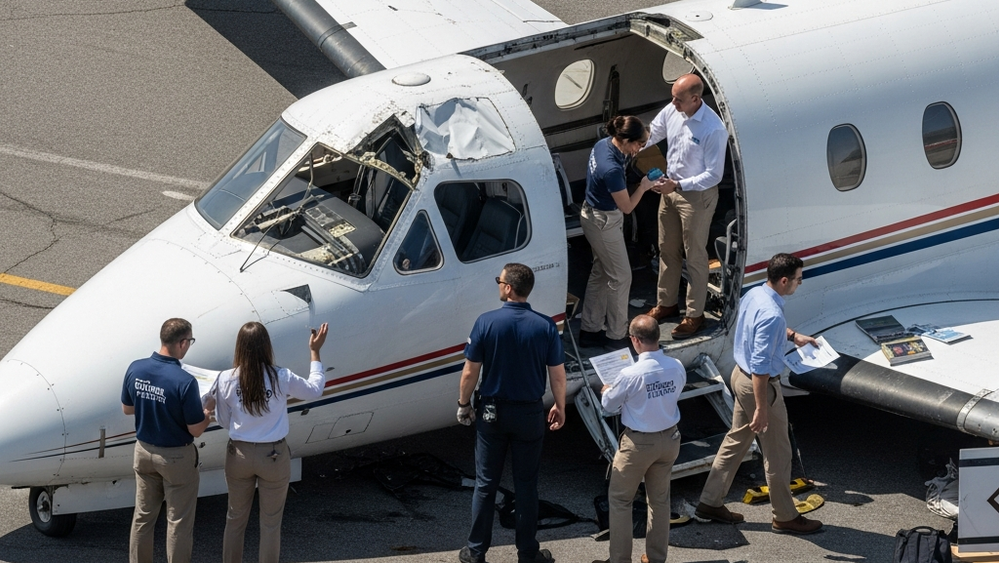
Tragic Private Jet Accident Claims Seven Lives in North Carolina
A heartbreaking tragedy has unfolded in North Carolina as seven individuals, including a former NASCAR driver, were killed in a private jet crash, according to recent reports. The aircraft went down under circumstances that are currently being scrutinized by federal investigators to determine the exact cause of the impact. This devastating loss has sent shockwaves through the racing community and the local region as families begin to process the magnitude of the disaster. As the wreckage is recovered, the focus shifts toward identifying whether mechanical failure, environmental factors, or human error played a role in this catastrophe. Such high-profile incidents often highlight the inherent risks involved in private aviation and the rigorous safety standards that must be upheld.
Affected by a Wrongful Death Issue?
Our specialized tool can help you estimate the potential worth of your case based on current laws and precedents.
Determining Responsibility in Complex Aviation Disasters
Establishing liability in a private aviation disaster requires a multi-faceted investigation into the pilot's actions, the aircraft's maintenance history, and the owner's operational standards. Legal theories often involve negligence, where a failure to exercise reasonable care leads directly to the fatal outcome, or product liability if a defective component is identified. In many cases, the corporate entity that owned or managed the jet may be held vicariously liable for the actions of its flight crew or for failing to maintain the vessel properly. Expert witnesses, including aeronautical engineers and flight data analysts, are typically required to reconstruct the flight path and identify the precise moment of failure. Furthermore, if the crash was caused by faulty equipment, manufacturers could face significant claims similar to those seen in major product liability verdicts.
Essential Steps for Families Following an Aircraft Fatality
For families grappling with the sudden loss of a loved one in such a complex event, taking immediate legal steps is crucial to protecting future recovery options. It is essential to wait for the preliminary findings from the National Transportation Safety Board (NTSB), as their report will provide a foundational understanding of the crash dynamics. Families should also secure all personal records and documentation related to the victims while avoiding early settlement offers from insurance companies that may undervalue the claim. Determining fault in these scenarios is significantly more complicated than a standard vehicle accident and requires specialized legal knowledge. Consulting with an attorney who understands the nuances of commercial-scale claims can ensure that no stone is left unturned during the discovery phase.
Financial Recovery for Families in Wrongful Death Aviation Claims
Compensation in wrongful death aviation cases is often substantial, reflecting the immense financial and emotional toll placed on the surviving family members. Damages typically cover medical expenses incurred prior to death, funeral costs, and the loss of future earnings and financial support the victim would have provided. Additionally, families may seek recovery for non-economic damages, such as the loss of companionship, guidance, and emotional distress caused by the sudden tragedy. In instances where gross negligence or willful misconduct is proven, punitive damages may also be awarded to penalize the responsible parties and deter future safety violations. Because every situation is unique, the total value of a settlement depends heavily on the victim's age, career path, and the specific circumstances of the liability involved.
Navigating Federal Aviation Regulations and North Carolina Statutes
Aviation litigation is governed by a complex web of federal regulations set by the FAA and state-specific statutes like the North Carolina Wrongful Death Act. Under North Carolina law, there are specific time limits, or statutes of limitations, that dictate how long a family has to file a formal lawsuit after a fatal incident occurs. Federal law also plays a significant role, as the NTSB has primary jurisdiction over the investigation, though their findings are not always admissible in civil court proceedings. It is vital to understand how these layers of law interact, especially when dealing with interstate travel and multiple corporate defendants. Navigating these requirements demands a strategic approach to ensure that the filing complies with both state procedural rules and federal oversight standards.
Assess Your Potential Claim with Our Case Evaluator
If you or someone you know has been affected by a catastrophic aviation accident, the path to justice starts with understanding the potential value of your legal claim. Our website offers a comprehensive, free-to-use case evaluator designed to help victims and their families assess the damages they may be entitled to recover. By inputting the details of your situation, you can gain immediate insights into the settlement ranges that apply to your specific circumstances. Don't leave your financial future to chance or allow insurance companies to dictate the terms of your recovery. Use our tool today to take the first step toward securing the accountability and compensation your family deserves during this incredibly difficult time.
Disclaimer: This blog post is for informational purposes only and does not constitute legal advice. For specific legal guidance regarding your situation, please consult with a qualified attorney.