Introduction to Hotel and Resort Premises Liability
When you book a stay at a hotel or resort, you are paying for more than just a room; you are paying for a safe environment. However, vacation injuries are surprisingly common, ranging from minor slips to catastrophic accidents. Under the legal doctrine of premises liability, hotel owners and operators have a strict legal obligation to maintain their property in a reasonably safe condition for guests.
Navigating a legal claim against a hospitality giant can be daunting. These corporations often have massive legal teams and insurance adjusters dedicated to minimizing payouts. To protect your rights and understand the potential value of your claim, it is essential to understand how premises liability laws apply specifically to the hospitality industry. Whether you were injured at a boutique hotel or a sprawling international resort, the principles of negligence and duty of care remain the foundation of your recovery. This guide explores the complexities of hotel injury claims, providing you with the knowledge needed to pursue justice.
Affected by a Premises Liability Issue?
Our specialized tool can help you estimate the potential worth of your case based on current laws and precedents.
The Legal Standard: Duty of Care and Invitee Status
In the realm of personal injury law, the relationship between a hotel and its guest is one of the most protected. Guests are legally classified as "invitees." This means you have been invited onto the property for the commercial benefit of the owner. Because of this status, the hotel owes you the highest possible duty of care under the law.
This duty of care requires hotels to:
- Maintain the premises in a reasonably safe condition.
- Regularly inspect the property to discover hidden or burgeoning hazards.
- Repair any known dangerous conditions promptly.
- Provide adequate warning for hazards that cannot be immediately fixed (such as a 'wet floor' sign).
Unlike a social guest at a private home (a licensee), a hotel guest is entitled to a property that has been actively vetted for safety. If a hotel fails to conduct regular inspections and a guest is injured by a hazard that "should have been" discovered, the hotel can be held liable for negligence. You can learn more about how specific state laws impact these values by using a premises liability calculator.
Common Causes of Injuries at Hotels and Resorts
Resorts are complex ecosystems with diverse environments, each presenting unique risks. While we often think of slip and fall accidents, hotel liability covers a much broader spectrum of incidents. Understanding the common categories of injuries can help you identify if your specific accident qualifies for a legal claim.
- Slips, Trips, and Falls: These occur due to spilled liquids in lobbies, frayed carpeting in hallways, uneven sidewalk pavement, or poor lighting in stairwells.
- Swimming Pool Accidents: These are among the most severe and can involve drowning, near-drowning, or slip-and-fall injuries on wet decks. Resorts must follow strict safety protocols, such as those outlined by the Consumer Product Safety Commission.
- Negligent Security: If a hotel is located in a high-crime area or has a history of incidents, it must provide adequate security. Failure to do so can lead to guest assaults or robberies.
- Elevator and Escalator Malfunctions: Mechanical failures due to poor maintenance can cause sudden stops, drops, or tripping hazards.
- Furniture and Fixture Failures: Collapsing chairs, falling televisions, or defective bed frames can cause significant physical trauma.
Proving Negligence in a Hospitality Setting
To win a premises liability case against a hotel, you must prove four specific elements. This is often referred to as the "four pillars" of negligence. If even one element is missing, your claim may struggle to succeed in court.
- Duty: You must show the hotel owed you a duty of care (typically established by showing you were a registered guest or an authorized visitor).
- Breach: You must prove the hotel breached that duty by failing to act as a reasonably prudent hotel operator would. This usually means showing they knew or should have known about a hazard and failed to fix it.
- Causation: You must demonstrate that the hotel's breach of duty was the direct cause of your injury. If you tripped, you must show the trip was caused by the uneven floor and not your own unrelated stumble.
- Damages: You must have suffered actual losses, such as medical bills, lost wages, or physical pain and suffering.
Establishing a property owner notice of hazard is often the most difficult part of this process. It requires proving that the danger existed long enough that the staff should have noticed it during their normal rounds.
Slip, Trip, and Fall Hazards in Hotels
Slip and fall accidents are the leading cause of premises liability claims in the hospitality industry. Hotels are high-traffic areas where floor conditions change constantly. A guest tracking in rain, a housekeeper leaving a cleaning solution on the tile, or a leaking ice machine can create a localized danger in seconds.
Specific hazards often cited in these cases include:
- Lobby Spills: High foot traffic near entrances and coffee bars leads to frequent spills that require constant monitoring.
- Torn or Bunched Carpet: In older resorts, carpet that has lost its tension can create "bubbles" that catch a guest's toe, leading to a forward fall.
- Stairwell Hazards: Burnt-out lightbulbs or missing handrails in emergency exits or secondary stairwells are common sites for serious falls.
- Bathroom Safety: Bathtubs without non-slip surfaces or grab bars that pull out of the wall when used can lead to devastating head or back injuries.
For more information on valuing these specific types of claims, see our guide on slip and fall settlements.
Swimming Pool and Recreational Area Liability
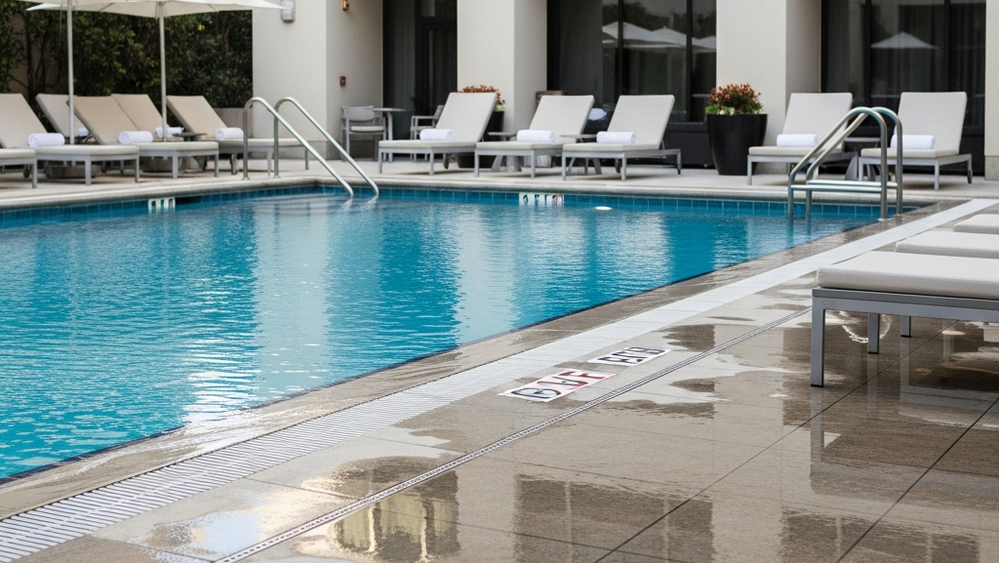
Resort pools are a major draw for families, but they are also sites of extreme risk. Because pools are considered "attractive nuisances," owners must take extra precautions to prevent unauthorized access and ensure the safety of those using the facility. Negligence in a pool setting often involves a failure to adhere to local and federal safety regulations.
Liability can arise from:
- Lack of Proper Fencing: If a child wanders into a pool area that was not properly secured, the resort may be liable even if the child was not a guest.
- Inadequate Signage: Failing to post depth markers or "No Diving" signs in shallow areas.
- Chemical Imbalance: Excess chlorine can cause skin and eye burns, while too little can lead to the spread of dangerous bacteria.
- Defective Drains: Powerful suction from pool drains can trap a swimmer underwater, a risk specifically addressed by federal laws like the Virginia Graeme Baker Pool and Spa Safety Act.
If the unthinkable happens, families may need to explore swimming pool drowning lawsuits to hold the facility accountable for their negligence.
Negligent Security and Criminal Attacks
Hotels have a duty to protect guests from foreseeable criminal acts. This does not mean a hotel is responsible for every crime that occurs on its property, but it must take reasonable steps to prevent them. If a hotel is aware of criminal activity in the area but fails to upgrade its security, a victim of an assault may have a valid claim.
Negligent security often involves:
- Broken Locks: Room doors or sliding balcony doors that do not latch properly.
- Unmonitored Entrances: Side doors left propped open by staff or guests, allowing unauthorized entry.
- Poor Lighting: Dark hallways or parking garages that provide cover for criminal activity.
- Lack of Surveillance: CCTV cameras that are either non-functional or not monitored in real-time.
When a guest is targeted in a parking structure or hallway, the resulting legal action often centers on parking lot assault liability. These cases frequently result in higher settlement values due to the traumatic nature of the injury.
Elevator and Escalator Malfunctions
Many high-rise hotels rely heavily on elevators and escalators. These are complex machines that require rigorous maintenance schedules. When a hotel cuts corners on maintenance to save money, guests pay the price. Common mechanical failures include "misleveling," where the elevator stops several inches above or below the floor level, creating a trip hazard.
Other risks include:
- Sudden Drops: Malfunctioning cables or braking systems can cause the car to drop rapidly.
- Door Sensors: Defective sensors can cause doors to close on guests, leading to crushing injuries or broken limbs.
- Escalator Entrapment: Gaps between the moving steps and the side skirt can catch clothing or small feet.
Hotels often try to deflect blame onto the elevator maintenance company. However, under premises liability, the hotel owner typically cannot delegate their duty of safety. They remain responsible for the injuries occurring on their property, though they may later sue the maintenance company for contribution.
Food Poisoning and Sanitation Hazards
Resorts with on-site dining and room service are essentially operating high-volume restaurants. They must comply with strict health and safety codes regarding food storage, preparation, and sanitation. Foodborne illnesses like Salmonella, E. coli, or Norovirus can ruin a vacation and lead to long-term digestive issues or hospitalization.
To prove a food poisoning claim against a hotel, you generally need to show:
- That the food you consumed at the resort was contaminated.
- That the contamination was the result of the hotel’s failure to follow health protocols.
- That the specific food item caused your illness (often confirmed through stool samples or health department reports).
Beyond food, sanitation issues like mold in HVAC systems or improperly cleaned linens can lead to respiratory infections or skin conditions. While harder to prove than a slip and fall, these health hazards are legitimate grounds for a premises liability claim.
ADA Compliance and Accessibility Injuries
Hotels must comply with the Americans with Disabilities Act (ADA), which sets standards for accessible design. When a hotel fails to provide proper ramps, grab bars, or accessible pathways, it creates a dangerous environment for guests with disabilities. An ADA violation is often strong evidence of negligence in a personal injury case.
Examples of accessibility-related negligence include:
- Steep Ramps: Ramps that exceed the maximum allowable grade, causing wheelchairs to tip.
- Missing Handrails: Failing to provide support in areas where it is legally required.
- Obstructed Pathways: Placing furniture or cleaning carts in a way that blocks accessible routes, forcing guests into dangerous alternate paths.
If an ADA violation leads to an injury, the hotel may face not only a personal injury lawsuit but also federal investigations and fines. Ensuring accessibility is a critical component of the hotel's general duty to provide a safe environment for all invitees.
Calculating the Value of a Hotel Injury Claim
Determining the value of a vacation injury claim involves more than just adding up medical bills. A comprehensive valuation considers both economic and non-economic damages. Because resort injuries often happen far from home, there are additional layers of complexity, such as the cost of emergency travel or the loss of a pre-paid vacation.
Factors that influence your settlement value include:
- Medical Expenses: This includes the initial ER visit, follow-up surgeries, physical therapy, and any future care needed.
- Lost Wages: If your injury prevents you from returning to work, you are entitled to compensation for your missed paychecks.
- Pain and Suffering: This compensates you for the physical pain and emotional trauma caused by the accident.
- Loss of Enjoyment of Life: Specifically relevant in vacation cases, this accounts for the loss of the experience you paid for and the inability to participate in activities you enjoy.
- Punitive Damages: In rare cases where a hotel’s conduct was "grossly negligent" (such as ignoring multiple warnings about a balcony railing), a jury may award punitive damages to punish the corporation.
The Role of Evidence in Hotel Injury Cases
Because hotels are controlled environments, the facility often holds the majority of the evidence. To level the playing field, you must act quickly to preserve your own record of the event. Without independent evidence, a hotel's insurance company will likely claim that the hazard didn't exist or that you were at fault.
Essential evidence to gather includes:
- The Incident Report: Always report the injury to management immediately and ask for a copy of the written report.
- Photographs and Video: Take photos of the hazard from multiple angles, including any lack of warning signs or poor lighting.
- Witness Information: Get the names and phone numbers of other guests or staff members who saw the accident or the hazard.
- Surveillance Footage: Your attorney will need to send a "spoliation letter" to prevent the hotel from deleting CCTV footage of the area.
- Maintenance Logs: These records can show if the hotel was following its own safety inspection schedule.
Comparative Negligence: Can the Hotel Blame You?
One of the most common defenses used by hotels is the "Open and Obvious" doctrine. They may argue that the puddle of water or the uneven step was so obvious that any reasonable person should have seen it and avoided it. If they can convince a jury that you were partially at fault for your own injury, your compensation may be reduced.
In states that follow "comparative negligence" rules, your final award is reduced by your percentage of fault. For example, if your claim is worth $100,000 but you are found to be 20% at fault for looking at your phone when you tripped, you would receive $80,000. It is vital to consult with a legal professional to counter these defenses and ensure the hotel is held responsible for its share of the negligence.
Statutes of Limitations and Filing Deadlines
Time is of the essence in hotel injury claims. Every state has a "statute of limitations," which is a hard deadline for filing a lawsuit. If you miss this deadline, you lose your right to seek compensation forever. While many states offer two to four years, some have much shorter windows, especially if the hotel is owned by a government entity (such as a municipal resort).
Furthermore, evidence in hotels disappears quickly. Carpets are replaced, leaks are fixed, and surveillance footage is looped over. Starting your claim immediately ensures that the facts are preserved. Even if you are still receiving medical treatment, you should begin the legal process to protect your rights.
Conclusion: Seeking Justice for Your Vacation Injury
An injury at a hotel or resort can turn a dream vacation into a financial and physical nightmare. However, you do not have to face the recovery process alone. By understanding the principles of premises liability and the duty of care hotels owe their guests, you are better positioned to fight for the compensation you deserve.
From the moment of the injury, every step you take—from reporting the incident to collecting evidence—impacts the ultimate value of your claim. Big hospitality brands have insurance adjusters working to protect their bottom line; you deserve a team that works to protect yours. If you are ready to see what your case might be worth, our tools can help you navigate the complexities of your specific situation.
Calculate your potential recovery today with our premises liability settlement calculator and take the first step toward getting the justice you deserve.
Disclaimer: This blog post is for informational purposes only and does not constitute legal advice. For specific legal guidance regarding your situation, please consult with a qualified attorney.