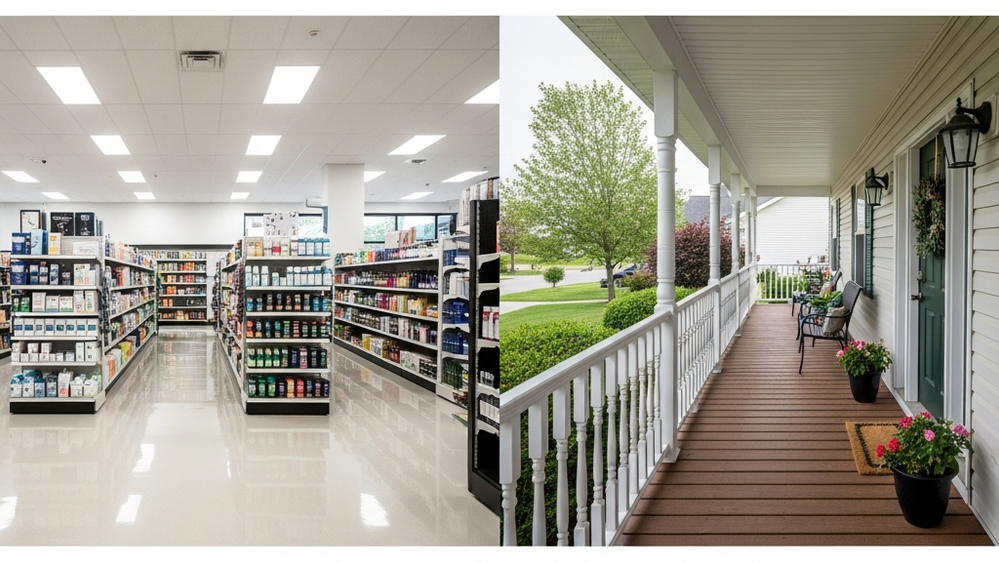
Introduction to Premises Liability: Business vs. Private Property
When you suffer an injury due to a hazardous condition on someone else's land, you are entering the legal world of premises liability. While the physical pain of a broken bone or a head injury remains the same regardless of where it happens, the legal path toward compensation can look drastically different depending on whether the accident occurred at a commercial business or a private residence. Most victims quickly notice a disparity in how these cases are handled, particularly regarding the potential settlement values for slip and fall incidents.
There is a common legal reality in personal injury law: commercial properties almost always pay more than private ones. This isn’t necessarily because the injuries are more severe, but because the legal requirements, insurance structures, and evidentiary standards applied to businesses are much more robust than those applied to homeowners. Understanding these differences is the first step in accurately valuing your claim and ensuring you don’t leave money on the table.
Affected by a Premises Liability Issue?
Our specialized tool can help you estimate the potential worth of your case based on current laws and precedents.
The Legal "Duty of Care" Hierarchy
In premises liability law, your legal status determines the level of protection you are afforded. Generally, the law categorizes visitors into three groups: invitees, licensees, and trespassers. The level of care a property owner owes you depends heavily on which category you fall into at the time of the accident.
Business Invitees
If you are at a grocery store, a shopping mall, or a restaurant, you are considered a "business invitee." You are there for the financial benefit of the owner. Because the business is profiting from your presence, the law imposes the highest possible duty of care on them. They must not only fix known hazards but also actively inspect the property for hidden dangers.
Social Licensees
When you visit a friend's house for dinner, you are a "licensee." You have permission to be there, but your presence doesn't financially benefit the host. In most states, the homeowner only has a duty to warn you of "known" dangers that are not obvious. They generally do not have an affirmative duty to inspect the property for new hazards before you arrive.
Trespassers
While exceptions exist (especially for children), property owners generally owe the lowest duty of care to trespassers. Their primary obligation is to avoid "wanton or willful" harm. This hierarchy is the foundation of why medical treatment costs affect case values more significantly in commercial settings; it is simply easier to prove the owner failed their duty.
Why Commercial Property Insurance Limits Are Higher
The most practical reason commercial properties pay more is simply that there is more money available. A standard homeowners insurance policy typically offers liability coverage ranging from $100,000 to $300,000. While this sounds like a lot, a serious injury involving surgery, long-term rehabilitation, and lost wages can easily exceed these limits.
In contrast, commercial entities often carry general liability policies with limits starting at $1 million and frequently extending into tens of millions through umbrella policies. According to the Legal Information Institute at Cornell Law School, negligence involves a failure to behave with the level of care that someone of ordinary prudence would have exercised. For a business, "ordinary prudence" includes maintaining a high-limit insurance policy to cover the risks of high foot traffic.
The Impact of the "Deep Pocket"
Insurance companies for businesses are used to dealing with high-value claims. They have larger reserves and more sophisticated legal teams. While they fight hard to minimize payouts, they also recognize the risk of a massive jury verdict. This risk often drives settlement offers higher than what an individual homeowner's insurer would even be capable of paying.
The Role of "Constructive Notice" in Business Claims
One of the hardest parts of a premises liability case is proving the owner knew about the danger. In private property cases, you usually have to prove "actual notice"—that the homeowner literally saw the spill or the broken step. In commercial cases, the doctrine of "constructive notice" is your best friend.
Constructive notice means the business should have known about the hazard because it existed for a length of time that a reasonable inspection would have discovered it. For example, if a grocery store has no record of cleaning the floors for three hours and you slip on a spilled liquid, the law may treat them as if they knew it was there. This lower threshold for proving knowledge makes commercial cases more likely to succeed and, consequently, more valuable at the settlement table.
Evidence Availability: CCTV vs. Personal Memory
Evidence is the currency of the legal system. In a business setting, evidence is often automated. Most modern retail environments are equipped with Closed-Circuit Television (CCTV) that records 24/7. This video can be the difference between a "he-said, she-said" dispute and a clear-cut case of negligence.
Digital Breadcrumbs
Businesses also maintain maintenance logs, employee shift records, and incident reports. If a business fails to produce these after an injury, or if the logs show they neglected their safety protocols, it creates significant leverage for the victim. On private property, you are often relying on your own photos and the testimony of the homeowner, who may be motivated to misremember the events to protect their personal finances.
The Importance of Immediate Action
Regardless of the location, you must document the scene. However, in a business, you must ask for an incident report and demand that they preserve any video footage immediately. This paper trail is much harder for an insurance company to ignore during negotiations.
Vicarious Liability and Corporate Responsibility
When you are injured at a business, you aren't just suing an individual; you are often dealing with the legal concept of respondeat superior, or vicarious liability. This means the employer is responsible for the negligent actions of their employees.
If a distracted teenage clerk at a local shop leaves a mop bucket in a dark hallway, the multi-billion-dollar corporation that owns the shop is legally liable. This corporate responsibility adds a layer of professionalism and accountability to the claim. Corporations are risk-averse; they do not want the negative publicity of a trial or the unpredictability of a jury, leading them to settle for higher amounts to keep the matter quiet and resolved.
Homeowners Policies: The "Family and Friend" Complication
Injuries on private property often involve a psychological hurdle: the victim frequently knows the property owner. Whether it is a neighbor, a friend, or a family member, many victims feel guilty about pursuing a claim. They worry about the homeowner losing their house or personal savings.
Insurance vs. Personal Assets
It is vital to remember that in the vast majority of cases, you are suing the insurance company, not the person. However, because homeowners policies are smaller, the insurance company is often more aggressive in trying to settle for the bare minimum, knowing the victim is hesitant to "play hardball" with someone they know. This social pressure often results in victims accepting lower settlements than they deserve.
Maintenance Standards: Professional vs. Amateur
Businesses are subject to strict building codes, safety regulations, and industry standards. For instance, the Occupational Safety and Health Administration (OSHA) sets very specific guidelines for floor safety and walkway maintenance. While these are primarily for employees, they serve as a benchmark for what constitutes a "safe" environment for the public.
Homeowners are not held to professional maintenance standards. If a homeowner has a slightly uneven sidewalk, a court might find it to be an "open and obvious" danger that the visitor should have avoided. A business, however, is expected to have a professional maintenance schedule to identify and fix that same uneven sidewalk. This "professional" vs. "amateur" distinction is a key reason why commercial negligence is easier to quantify and monetize.
Comparative Negligence in Commercial Settings
Insurance adjusters love to blame the victim. This is known as comparative negligence. They will argue that you weren't looking where you were going or that you were distracted by your phone.
- Feature: Duty of Care, Commercial Property: High (Business Invitee), Private Property: Medium (Licensee)
- Feature: Inspection Duty, Commercial Property: Mandatory/Frequent, Private Property: Minimal to None
- Feature: Insurance Limits, Commercial Property: $1M - $10M+, Private Property: $100k - $300k
- Feature: Evidence, Commercial Property: CCTV, Logs, Reports, Private Property: Photos, Testimony
- Feature: Notice, Commercial Property: Constructive (Should have known), Private Property: Actual (Did know)
In a business, your "distraction" might actually be the fault of the business. Retailers spend millions on "point-of-purchase" displays designed specifically to take your eyes off the floor and put them on the products. A skilled lawyer can argue that the business caused your distraction, thereby nullifying the comparative negligence defense and increasing your settlement value.
Calculating the Value of Pain and Suffering
Settlement values are divided into economic damages (medical bills, lost wages) and non-economic damages (pain and suffering). Non-economic damages are often calculated as a multiple of your economic damages. Because commercial cases involve higher insurance limits and clearer negligence, the "multiplier" used for pain and suffering is often higher.
If you have $50,000 in medical bills from a fall at a mega-retailer with clear video of the hazard, a 3x or 4x multiplier for pain and suffering is realistic. If that same injury happens at a private home where notice is harder to prove, the insurer may only offer a 1.5x or 2x multiplier, simply because they know the risk of losing at trial is lower for them.
The Risks of Settling Too Early
Regardless of where you were injured, one of the biggest mistakes you can make is recovering from your injuries before settling your claim. Insurance companies—especially those representing large businesses—will often reach out with a "quick" check within days of the accident.
This check is designed to get you to sign a release of liability. Once signed, you can never ask for more money, even if you find out later that you need a permanent spinal fusion or have a traumatic brain injury. Because commercial claims have higher ceilings, the danger of settling too early is even more pronounced. You could be giving up hundreds of thousands of dollars in future medical coverage for a few thousand dollars of "fast cash."
State-by-State Variations in Premises Law
It is important to note that the "rules of the road" for these claims change based on where you live. Some states are "pure comparative negligence" states, where you can recover money even if you are 99% at fault. Others are "contributory negligence" states, where being even 1% at fault can bar you from any recovery at all.
Additionally, some states have specific "slip and fall" statutes that protect businesses. For example, some jurisdictions require the plaintiff to prove that the business had a "standardized maintenance procedure" and failed to follow it. Navigating these regional nuances is why having a legal expert evaluate the specific facts of your case is essential for maximizing value.
Common Misconceptions About Property Injuries
Many people believe that if they fall on someone's property, the owner is automatically responsible. This is not true. You must prove negligence.
- Misconception 1: "I fell, so they have to pay." You must prove there was an unreasonable hazard.
- Misconception 2: "Private property cases aren't worth the effort." While commercial cases pay more, a $300,000 homeowners limit is still a significant amount of money that can cover most moderate injuries.
- Misconception 3: "I don't need a lawyer for a business fall because it's on camera." The insurance company will still try to argue the hazard was "open and obvious" to avoid paying you.
According to the Centers for Disease Control and Prevention (CDC), one out of five falls causes a serious injury such as broken bones or a head injury. When the stakes are that high, relying on misconceptions instead of legal facts can be a costly error.
Why Expert Testimony Matters More in Commercial Cases
In a high-value commercial case, your attorney will often hire experts to prove your point. This might include a "floor slip resistance" expert who uses a device called a tribometer to measure the friction of the floor where you fell.
It might also include medical experts who can project the cost of your care over the next thirty years. Because businesses have the funds to pay these larger judgments, the investment in these experts is justified. In a private property case with a small policy, the cost of the experts might actually exceed the amount of money left for you, making these cases more difficult to litigate to their full potential.
Conclusion: Maximizing Your Case Value
Whether you were injured at a big-box retailer, a local restaurant, or a neighbor's backyard, the path to a fair settlement requires a deep understanding of premises liability law. Commercial properties pay more because they have a higher duty of care, more available insurance, and better documentation of their own negligence. However, those same businesses have the resources to fight your claim every step of the way.
Don't let an insurance adjuster dictate what your injury is worth. Whether you're dealing with a corporate legal team or a homeowners insurance representative, you need an objective evaluation of your claim's true value. Factors like the location of the accident, the clarity of the evidence, and the severity of your medical bills all play a role in the final number.
Are you wondering how much your claim is worth? Get a free, no-obligation case evaluation today to discover the true value of your premises liability case and ensure you receive the compensation you deserve.
Disclaimer: This blog post is for informational purposes only and does not constitute legal advice. For specific legal guidance regarding your situation, please consult with a qualified attorney.