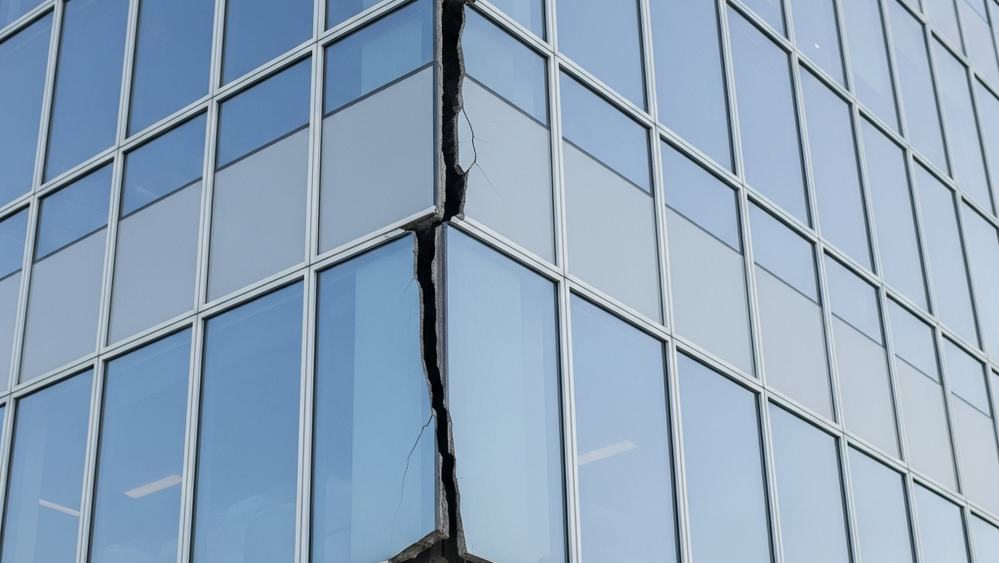
Introduction to Architectural Malpractice and Design Errors
When we enter a high-rise office building, a modern condominium, or a renovated public space, we place an implicit trust in the professionals who designed it. Architects are responsible for more than just aesthetics; they are the primary stewards of a building's safety, structural integrity, and functional longevity. However, when an architect makes a critical error in the design phase or fails to oversee construction adequately, the results can be catastrophic, leading to massive financial losses, physical injuries, or even death.
Architectural malpractice, often referred to as professional negligence, occurs when a design professional fails to meet the standard of care expected of their profession. This is not merely about a building looking different than imagined; it is about technical failures that result in building defects. These defects can range from minor water intrusion issues to full-scale structural collapses. Understanding the nuances of design malpractice lawsuits is essential for property owners, developers, and injured parties seeking to recover damages and hold negligent professionals accountable.
Affected by a Professional Malpractice Issue?
Our specialized tool can help you estimate the potential worth of your case based on current laws and precedents.
The Legal Standard of Care for Architects
The cornerstone of any professional malpractice claim against an architect is the "standard of care." In the legal world, architects are not required to be perfect. The law recognizes that design is a complex, interpretive process. Instead, an architect is required to exercise the same degree of skill, knowledge, and care that is ordinarily exercised by other reputable architects practicing in the same or similar locality under similar circumstances.
To win a lawsuit, a plaintiff must prove that the architect breached this standard. This typically requires expert testimony from another architect who can explain to a judge or jury what a "reasonable" professional would have done in the same situation. If an architect fails to follow established industry protocols, ignores site-specific environmental data, or neglects mandatory safety regulations, they have likely breached their duty of care. This standard applies to all phases of a project, from initial sketches and site analysis to the final walkthrough and issuance of the certificate of occupancy.
Common Types of Architectural Design Errors and Omissions
Malpractice claims against architects generally fall into two categories: errors and omissions. An error is a mistake in the work that was performed, such as an incorrectly calculated load-bearing capacity for a floor. An omission is a failure to include a necessary element, such as forgetting to include a required fire suppression system in the blueprints.
Specific examples of common errors include:
- Improper Site Planning: Failing to account for soil stability, drainage patterns, or local topography, leading to foundation shifts or flooding.
- Inadequate Structural Design: Mistakes in calculating wind loads, seismic requirements, or weight distribution that lead to sagging roofs or wall cracks.
- Material Specification Failures: Choosing materials that are not suited for the local climate or that react poorly with other building components.
- Design Incompatibilities: Creating blueprints where plumbing, electrical, and structural systems conflict with one another, causing delays and costly retrofitting.
For more information on technical failures in the built environment, you may find our engineering malpractice liability guide helpful, as these fields often overlap in complex litigation.
Building Defects: Latent vs. Patent Issues
Building defects are the tangible manifestations of architectural errors. In legal terms, these are often categorized as either "patent" or "latent" defects. Patent defects are those that are obvious and should have been discovered through a reasonable inspection shortly after the completion of the project. Examples include a visible crack in a wall or an incorrectly installed window.
Latent defects are far more insidious. These are hidden flaws that may not become apparent for years after the building is occupied. A common latent defect is improper flashing around windows or roofs that leads to slow, hidden water intrusion. Over time, this moisture causes wood rot and toxic mold growth inside the walls. Because latent defects are hidden, the legal "clock" for filing a lawsuit (the statute of limitations) often does not start until the defect is actually discovered, or reasonably should have been discovered, by the owner.
Structural Failures and Safety Risks
The most severe architectural errors lead to structural failures. When a building’s skeleton—its beams, columns, and foundations—cannot support the loads for which it was designed, the safety of every occupant is at risk. Structural design malpractice often involves a failure to adhere to the fundamental principles of physics and engineering. This can result in localized failures, such as a collapsed balcony, or global failures that necessitate the complete demolition of a structure.
Safety risks also extend to fire protection and egress. If an architect designs a hallway that is too narrow for emergency evacuation or specifies flammable cladding on a skyscraper's exterior, they have created a life-safety defect. These cases often involve rigorous investigations into whether the architect followed the OSHA construction standards and local fire codes. When these failures lead to injury, the case value can skyrocket due to the high costs of medical care and potential long-term disability.
The Role of Building Codes and Regulatory Compliance
Building codes are the minimum legal requirements for design and construction, established to protect public health and safety. Every architect has a non-delegable duty to ensure their designs comply with all applicable local, state, and federal codes. This includes the International Building Code (IBC), the Americans with Disabilities Act (ADA), and specific regional codes like those for hurricane or earthquake resistance.
Failure to comply with these codes is often seen as "negligence per se" in a lawsuit. This means that if the plaintiff can prove the architect violated a code meant to prevent the specific type of harm that occurred, the burden of proof for negligence is significantly lightened. For example, if a staircase is designed with risers that are too high, violating the local residential code, and someone falls and sustains an injury, the violation itself serves as strong evidence of the architect's malpractice.
Liability: Who is Responsible for the Failure?
Determining liability in a building defect case is complex because multiple parties are involved in bringing a structure to life. A lawsuit may name the architect, the structural engineer, the general contractor, and various subcontractors. The legal concept of "joint and several liability" often applies, meaning any one of the negligent parties could be held responsible for the entire amount of the damages if the others are unable to pay.
Architects often try to shift blame to the contractor, arguing that the building was not constructed according to the plans. Conversely, contractors may argue that the plans themselves were "unbuildable" or contained fundamental flaws. This "finger-pointing" is a common feature of construction litigation. Expert forensic analysis is required to determine whether the failure was a design error (the architect's fault) or a construction defect (the contractor's fault). In some cases, even a real estate agent's failure to disclose known defects during a sale can trigger separate but related professional liability claims.
The Economic Loss Doctrine and Contractual Limits
One of the most significant legal hurdles in an architect malpractice case is the "Economic Loss Doctrine." In many states, this rule prevents a plaintiff from suing for negligence if the only damage is "purely economic" (meaning the building itself is damaged or has lost value) and there is no physical injury or damage to other property. In such cases, the plaintiff may be restricted to a breach of contract claim rather than a tort claim.
This distinction matters because contracts often contain clauses that limit an architect’s liability to a specific dollar amount—frequently the amount of their professional fee. However, if the design error caused a ceiling to collapse on a person or damaged their personal property (like a computer lab or heavy machinery), the Economic Loss Doctrine may not apply, allowing the plaintiff to seek full compensatory damages through a malpractice lawsuit. Understanding these nuances is vital when attempting to calculate your potential case value.
Proving Damages and the "Case Within a Case"
To recover compensation, you must prove not just that the architect was negligent, but that the negligence directly caused financial or physical harm. This involves a "but-for" analysis: but for the architect's error, would the damage have occurred? Proving damages in these cases often requires detailed repair estimates, lost rental income calculations, and diminished property value assessments.
In cases where an architect’s error led to a failed project or a lawsuit from a third party, the plaintiff may have to prove a "case within a case." This means showing that if the architect had performed correctly, the property owner would have achieved a better outcome or avoided a specific loss. This is common in commercial development where a design flaw leads to a loss of a major tenant or the inability to secure a permit, resulting in millions of dollars in lost opportunity costs.
Statutes of Repose vs. Statutes of Limitation
In construction and design law, there are two critical deadlines to watch. The Statute of Limitations is the standard deadline for filing a lawsuit once you discover a problem (often 2 to 4 years). However, the Statute of Repose is a harder deadline that sets an absolute limit on how long after the building's completion a lawsuit can be filed, regardless of when the defect is found.
For example, if a state has a 10-year statute of repose for construction defects, and a balcony collapses 11 years after the building was finished, the owner may be barred from suing the architect—even if the design was clearly negligent. These laws vary significantly by state, making it crucial to consult a professional as soon as a defect is suspected. The CDC provides guidance on building safety and history which can be useful when determining the age and structural health of a building for legal purposes.
The Role of Expert Witnesses in Malpractice Litigation
You cannot win an architectural malpractice case without expert witnesses. Because the average juror does not know how to read blueprints or calculate structural loads, the court requires experts to bridge the gap. These experts are typically licensed architects with decades of experience in the specific type of building involved in the suit (e.g., healthcare facilities, residential towers, or industrial warehouses).
The expert's role is to:
- Review the original contract and scope of work.
- Analyze the design documents and specifications.
- Perform a site inspection to compare the built structure with the plans.
- Draft a report detailing exactly where the architect deviated from the standard of care.
- Testify at trial about the causal link between the design error and the resulting damage.
Calculating the Value of an Architect Malpractice Claim
The value of a design malpractice claim is determined by the total cost of making the plaintiff "whole" again. This is divided into economic and non-economic damages. Economic damages are quantifiable and often include the cost of remedial construction, the cost of temporary relocation, lost business profits, and the cost of the forensic investigation itself.
Non-economic damages apply if the architectural error resulted in physical injury or emotional distress (which is more common in residential cases). If a defect causes a fire or collapse that leads to injury, the victim can seek compensation for pain and suffering, medical bills, and lost wages. In extreme cases involving intentional fraud or gross negligence (such as knowingly using banned, flammable materials), a court might even award punitive damages to punish the architect. For a clearer picture of potential recovery, utilize our professional malpractice calculator to begin assessing the financial impact of the error.
Professional Liability Insurance (Errors & Omissions)
Most reputable architects carry Professional Liability Insurance, also known as Errors and Omissions (E&O) insurance. This is the primary source of funds for settlements and judgments in design malpractice cases. Unlike a general contractor’s liability insurance, which covers accidents like a worker falling off a ladder, E&O insurance specifically covers financial losses resulting from the architect's professional mistakes.
When you file a claim, you are often negotiating with the architect's insurance company rather than the individual professional. Insurance adjusters will look for any reason to deny the claim, such as arguing the defect was caused by lack of maintenance or that the owner authorized a design change that contributed to the failure. Navigating these negotiations requires a strong legal strategy and clear documentation of the architect's specific failures.
Steps to Take if You Suspect an Architectural Error
If you discover a building defect or suspect your architect has committed malpractice, your actions in the first 48 hours are critical.
First, document everything. Take high-resolution photos and videos of the defect and any resulting damage. Do not attempt to repair the defect immediately unless it is an emergency, as this could be seen as "spoliation of evidence." You must give the architect and other potentially liable parties the opportunity to inspect the damage.
Second, gather all project documents, including the contract (likely an AIA standard form), all versions of the blueprints, change orders, and email correspondence. These documents form the paper trail of the design process. Third, consult with an independent forensic architect or engineer to get an initial assessment of the cause. Finally, seek legal counsel to protect your rights before the statute of limitations expires. For those dealing with accessibility issues, the Department of Justice offers resources on ADA design requirements that can help identify whether a design is legally non-compliant.
Conclusion and Free Case Evaluation
Architectural malpractice is a specialized area of law that requires a deep understanding of both legal principles and technical design standards. Whether you are a homeowner facing massive repair bills due to a faulty roof design or a commercial developer dealing with a structural failure, you deserve a professional who can navigate the complexities of the legal system to secure the compensation you need.
Don't let an architect's mistake threaten your investment or your safety. Understanding the value of your claim is the first step toward justice. Visit our Professional Malpractice Calculator today for a free evaluation of your case and to understand the potential value of your legal claim.
Disclaimer: This blog post is for informational purposes only and does not constitute legal advice. For specific legal guidance regarding your situation, please consult with a qualified attorney.